
A SITRAK Refrigerated Truck with Thermo King T1200 for Papeete
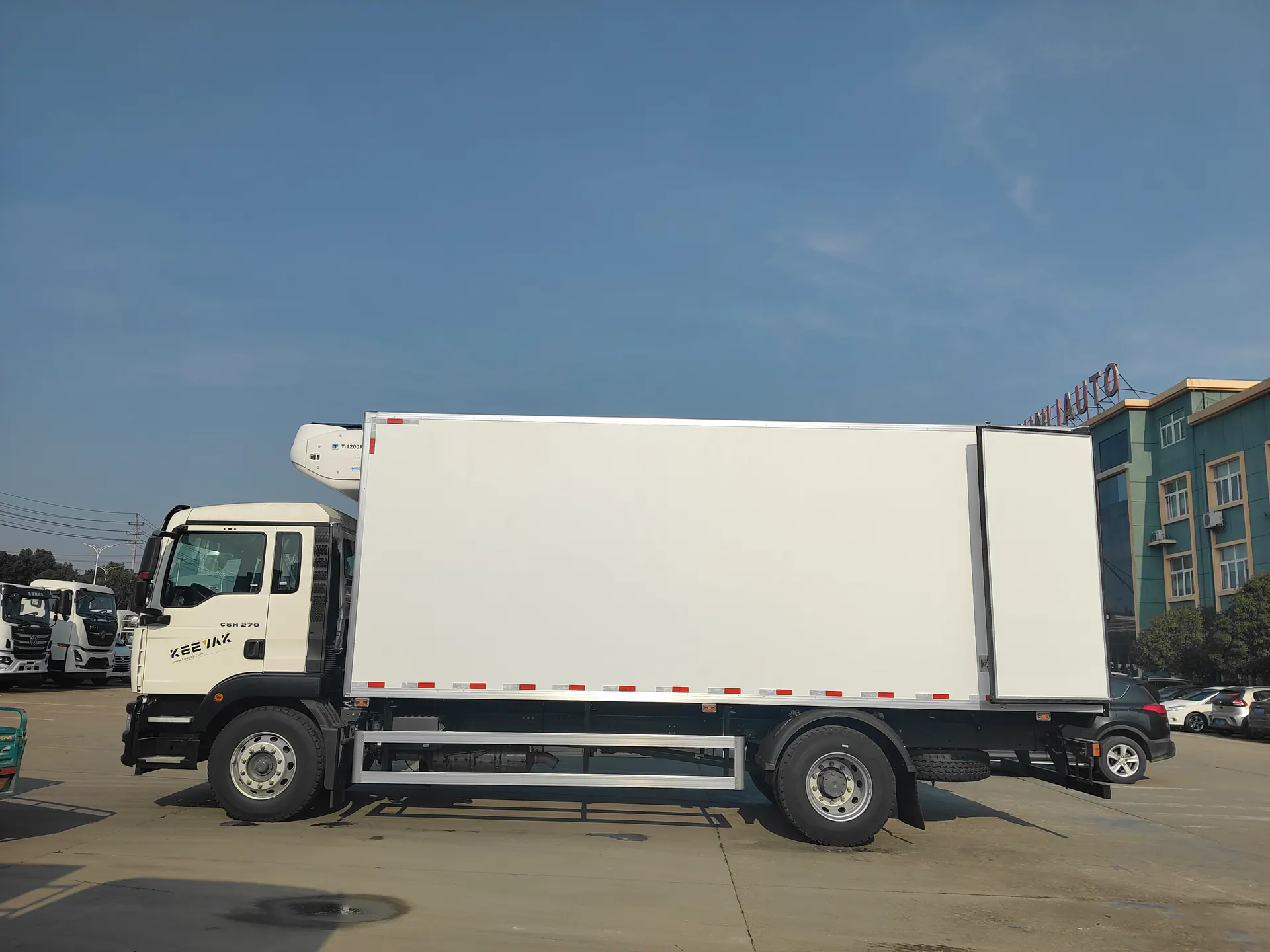
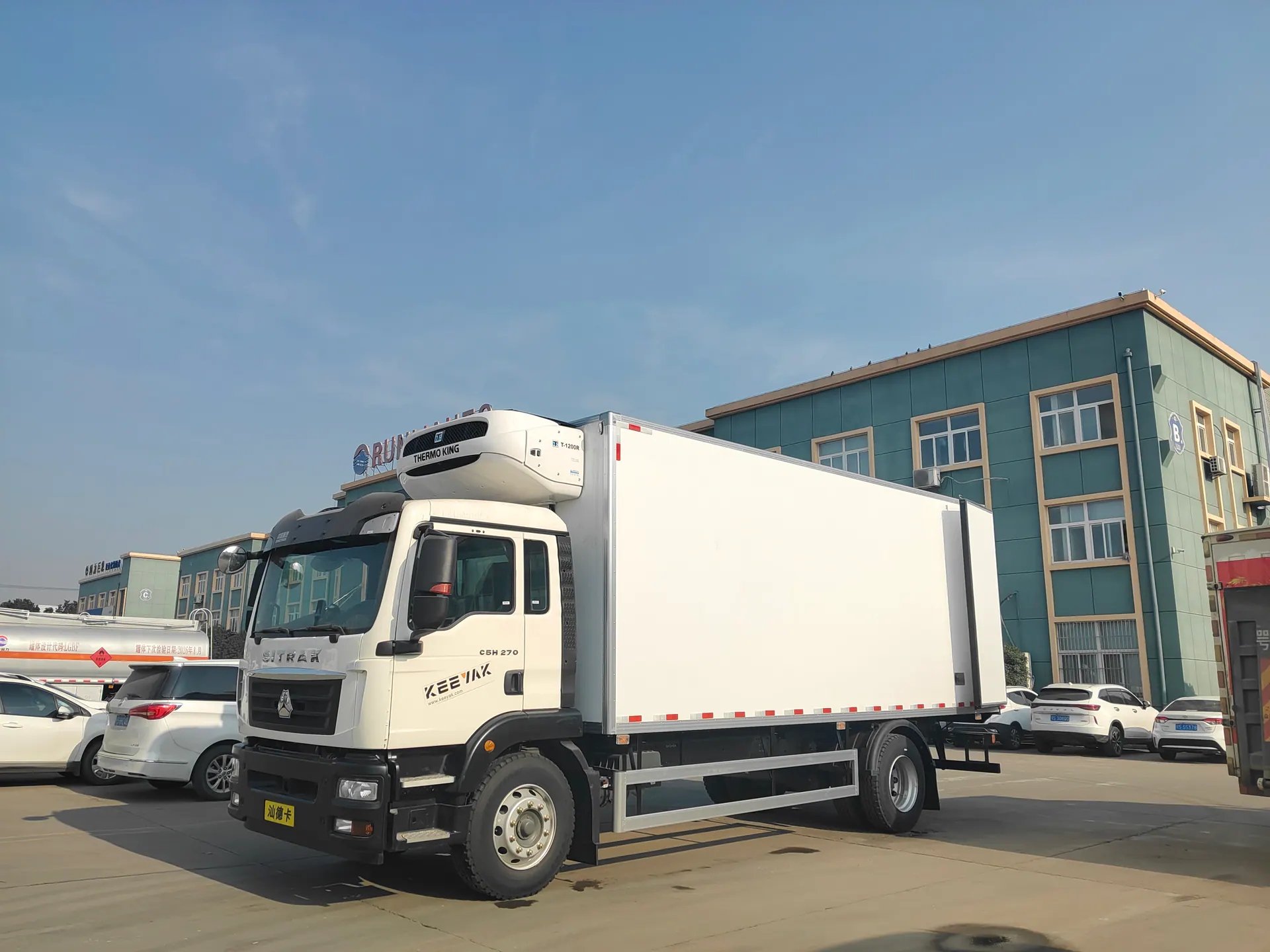
We shipped a SITRAK refrigerated truck to Papeete, French Polynesia, in February 2026. The order combined a SITRAK G5-M cab with a Thermo King T1200 dual-temperature refrigeration unit.

The SITRAK and Thermo King combination
We shipped this refrigerated-truck order to Papeete, French Polynesia, in February 2026. It combined a SITRAK G5-M cab with a Thermo King T1200 dual-temperature refrigeration unit.
The truck was specified with a 5,200 mm wheelbase and an MC07.27-61 engine rated at 199 kW / 270 hp. Its HW11708STC manual transmission has eight forward gears and two reverse gears.
Those chassis details sit alongside the refrigerated-body requirement. For another truck, the cargo and delivery conditions need to be described before the body and refrigeration arrangement are selected.
| Specification | Configuration |
|---|---|
| Cab | SITRAK G5-M with air conditioning |
| Refrigeration unit | Thermo King T1200 dual-temperature |
| Wheelbase | 5,200 mm |
| Engine power | 199 kW / 270 hp |
| Transmission | HW11708STC, 8F/2R |
Vehicle configuration reference
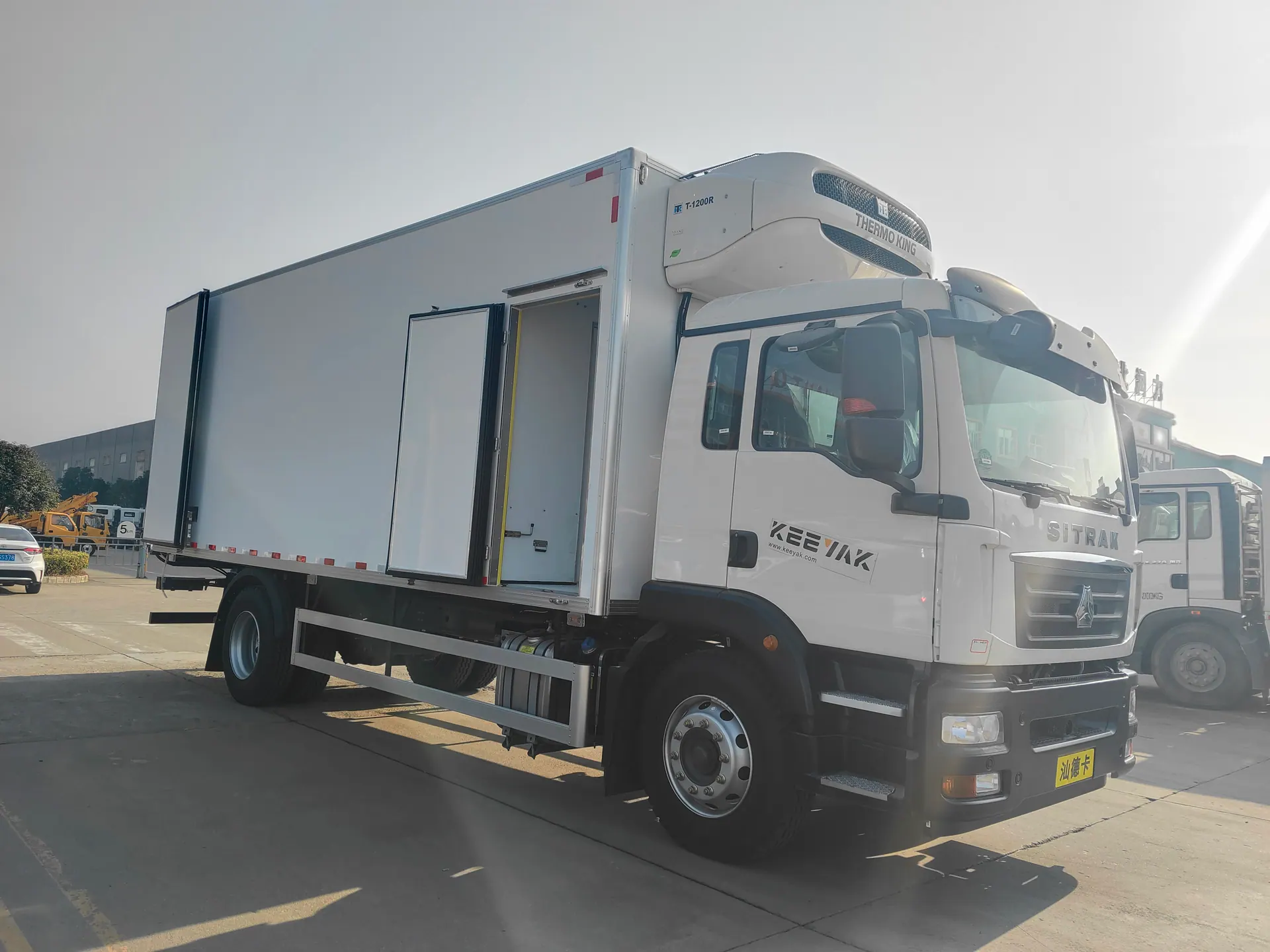
A compartment with rails, partition and middle door
The cargo compartment was specified with two rows of slots, two slide rails, a partition and a middle door. Rear and side ladders were also included.
For a similar layout, describe the cargo groups and the sequence in which they will be unloaded. The partition position and access points should support that sequence, including the space needed to move goods without blocking the intended airflow.
Separate temperature zones need an appropriate cooling, airflow and monitoring arrangement. A partition by itself does not establish independent temperature control. Ask the refrigeration supplier to review the proposed zone sizes and their interaction during deliveries.
For more detail, see Multi-temperature compartments in a refrigerated truck.
Give the unit supplier the route conditions
List the cargo’s required temperature and the condition in which it will be loaded. Include the outside conditions, route duration, number of stops and how long doors are expected to remain open.
The refrigeration selection should be checked at those conditions. Body heat gain, door openings and airflow restrictions matter alongside the volume being cooled. The same nominal box size can have different demands on a direct trip and a route with frequent deliveries.
If warm product must be cooled after loading, describe that as a separate requirement. Do not assume that a transport refrigeration unit selected to maintain preconditioned cargo will also meet an unstated pull-down duty.
For more detail, see Sizing a refrigeration unit for a truck body.
Confirm the finished-body and monitoring details
Ask for the body construction, door seals, partition arrangement and refrigeration installation to appear in the agreed specification. Changes to doors or zone sizes should be reviewed with the cooling arrangement.
Include how temperatures will be monitored and what information is needed at handover. If a temperature test is part of the purchase, agree its conditions, sensor positions and acceptance criteria in advance.
For the intended destination, also identify who can service the proposed refrigeration model and how parts will be obtained. That should be confirmed for the actual unit and location.
From Yangshan to Papeete
The shipment departed from Yangshan for the Port of Papeete. The T1200 unit and compartment equipment are the distinctive configuration details of this order.
For your enquiry, send the cargo types, temperature requirements, loading condition and delivery pattern with the destination. Those inputs let us discuss the chassis, insulated body and refrigeration package together.
Discuss your refrigerated cargo
Tell us the required temperatures, cargo-body dimensions and loading arrangements. We can review the body and refrigeration unit with you.