
A 4,000 L ISUZU Sewage Suction Truck Shipped to Seychelles
We shipped an ISUZU 4×2 sewage suction truck to Seychelles in March 2025. The order specified a 4,000 L tank, and the vehicle was shipped to Port Victoria.

A right-hand-drive ISUZU with a 4,000 L tank
The Seychelles order paired a 4,000 L sewage collection tank with a right-hand-drive ISUZU 4×2 chassis. The truck was specified with a 3,360 mm wheelbase and a single cab with air conditioning.
The powertrain specification included a turbocharged engine rated at 120 hp and a manual transmission with five forward gears and one reverse gear. Air brakes and 7.00R16 tyres were also included. These details describe the configuration ordered alongside the tank.
| Specification | Configuration |
|---|---|
| Tank capacity | 4,000 L |
| Chassis and steering | ISUZU 4×2; right-hand drive |
| Wheelbase | 3,360 mm |
| Cab | Single cab with air conditioning |
| Engine | Turbocharged; 120 hp |
| Transmission | Manual; 5 forward gears, 1 reverse |
| Brakes and tyres | Air brakes; 7.00R16 |
Checking capacity against the work
For this order, the selected tank capacity was 4,000 L. When planning another truck, tank volume is one of the first figures to discuss, along with the material to be collected and the distance to the discharge point.
Tank volume and vehicle payload need separate checks. A volume in litres does not by itself establish the permitted mass of the load: material density, the completed vehicle’s weight and axle limits also matter. Tell us what the truck will collect so the tank and chassis can be reviewed together.
Access is another part of the enquiry. The 3,360 mm wheelbase is a useful configuration detail, but a site-access review also needs the complete vehicle dimensions and the space available to approach and turn at the collection point.
Suction equipment and the collection point
For a repeat enquiry, describe the collection depth, the hose distance and the material being handled. These details are needed to discuss the vacuum system and hose arrangement; tank capacity alone does not specify how quickly a collection job can be completed.
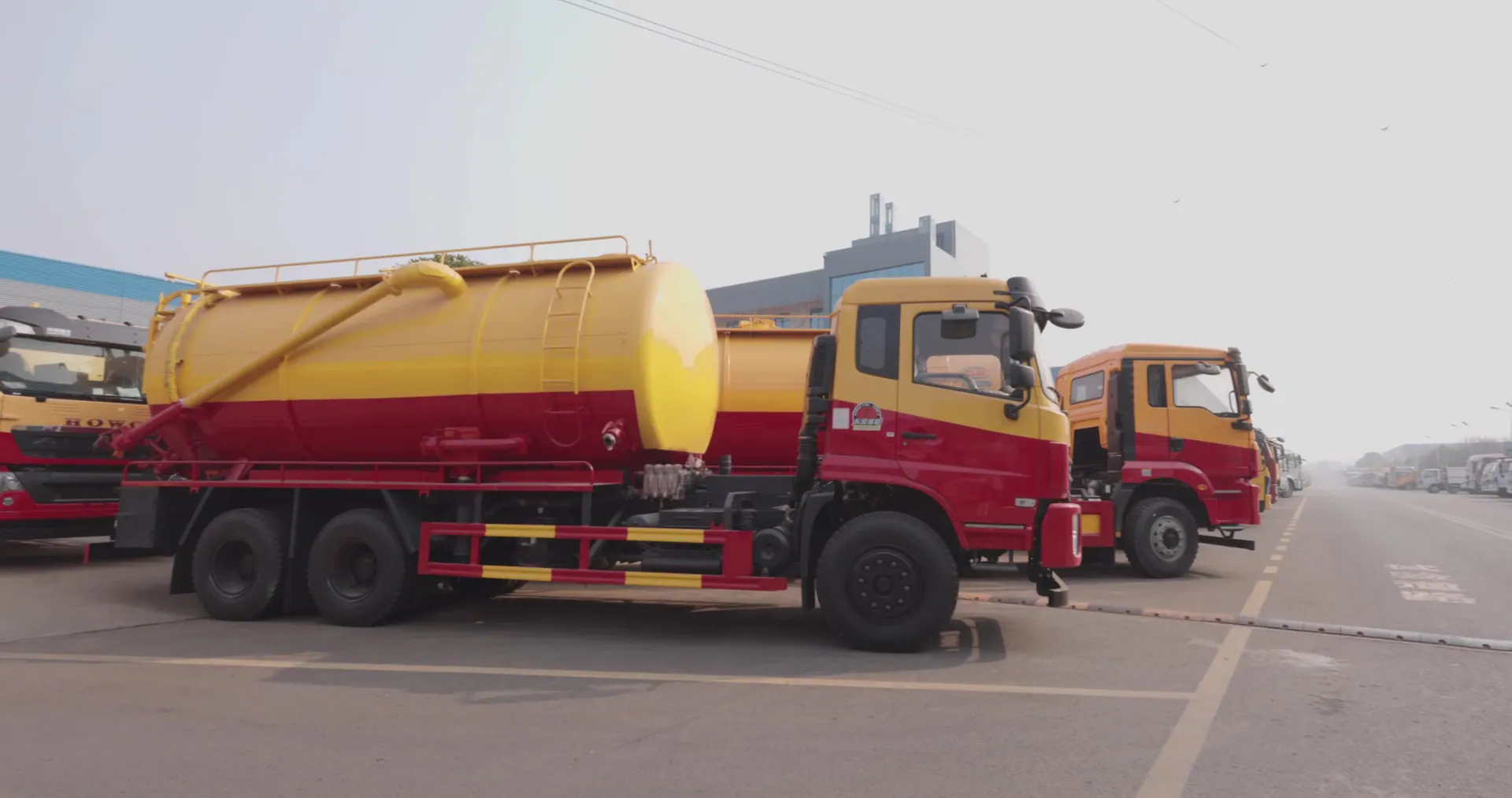
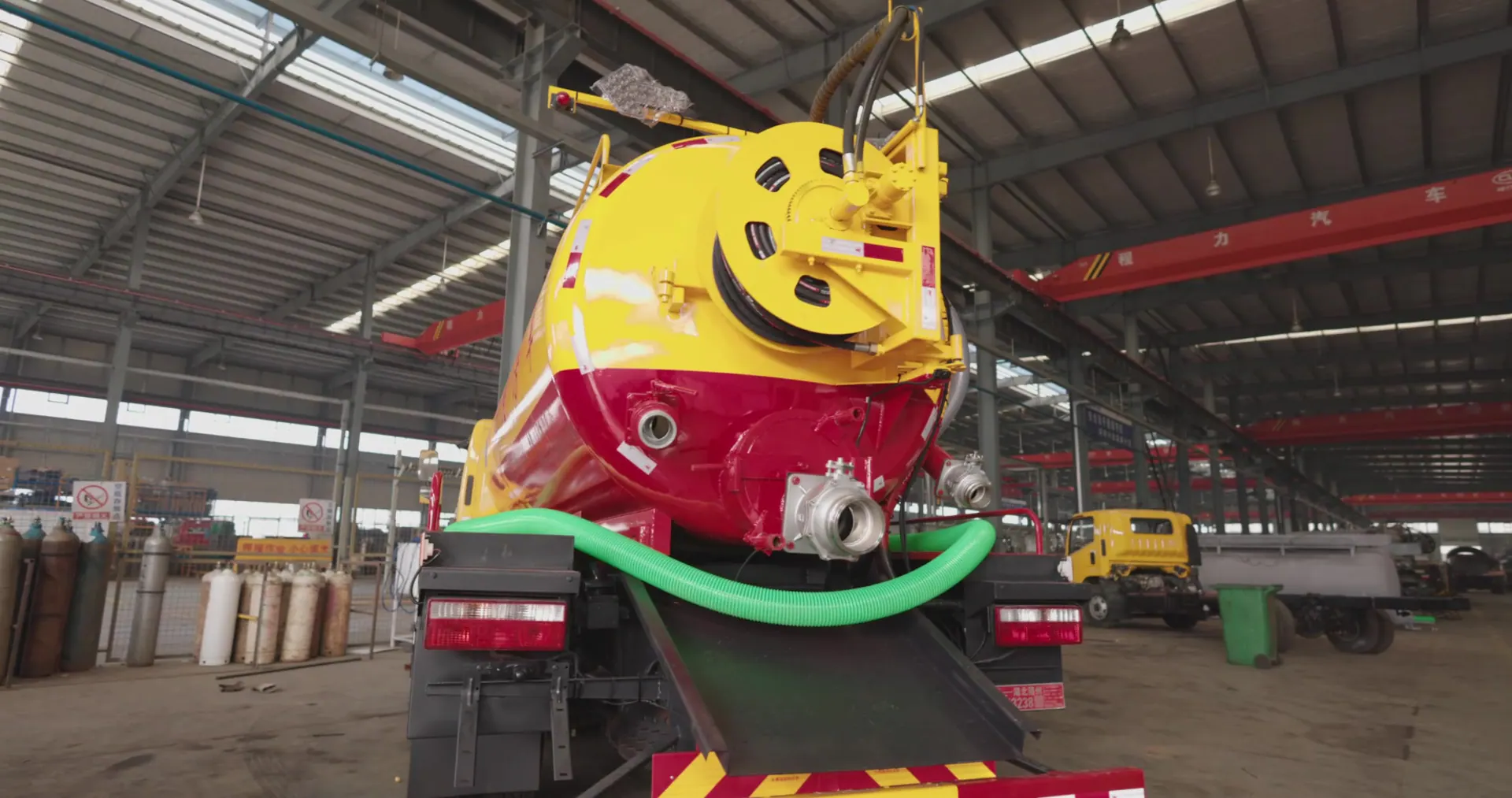
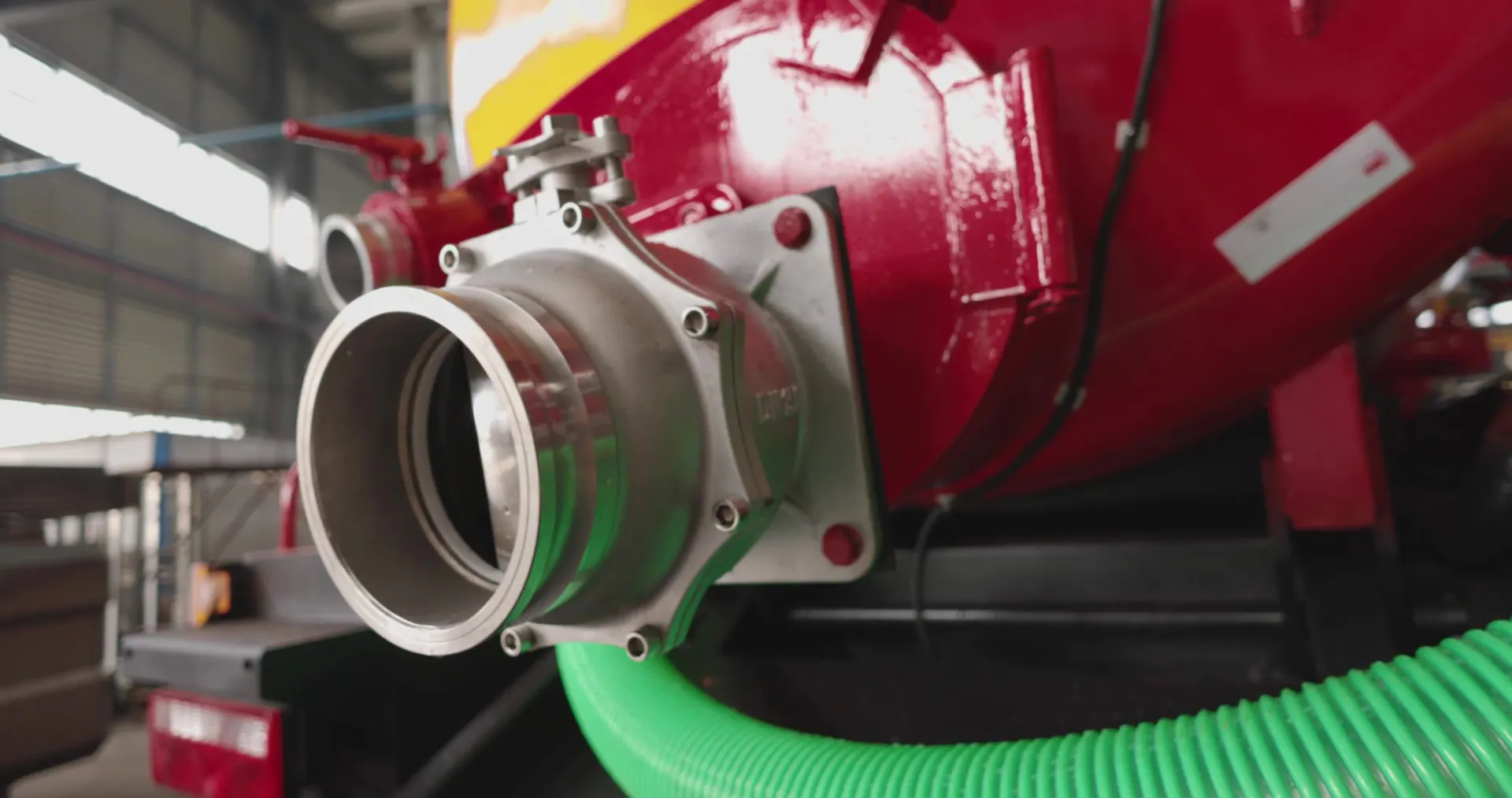
The reference photographs below illustrate a sewage-truck body and examples of valve and hose equipment. For your quotation, we would confirm the proposed pump and equipment specifications alongside the tank and chassis.
Give the hose route as well as the collection depth
For a similar sewage-truck enquiry, a simple site sketch is often more useful than asking for a single suction-depth rating. Mark the truck parking position, the level of the material and the proposed hose route. Include the vertical lift, total hose length, bends and any restriction on where the truck can stand.
The material matters as well: describe whether it is readily flowing liquid or contains sludge and solids. The vacuum system and hose need to be considered for those conditions. A longer or more restricted hose route can change pickup performance, so results from a short, straight hose do not automatically describe another site.
Vacuum and airflow are different figures. Vacuum describes a pressure difference; airflow describes how much air moves under stated conditions. Ask for performance data at the proposed operating conditions and for the protection settings of the installed system, rather than comparing only maximum vacuum and free-air flow.
These terms are explained in our vacuum truck airflow and suction-lift guide.
Plan the collection and discharge cycle
To assess whether a 4,000 L configuration suits your work, describe a typical round from departure to return. Include travel to the collection point, hose setup, collection, packing away, travel to the discharge facility and discharge time. Add any cleaning or waiting time that applies to the route.
This helps distinguish a tank-capacity issue from a collection or travel-time issue. A larger tank may change the number of discharge trips, but it also changes the vehicle configuration and mass that must be checked. A larger vacuum system does not remove the time spent travelling or waiting at the discharge point.
For quotation comparison, ask each supplier to use the same material description and hose arrangement. If a collection-time demonstration is proposed, agree the material, lift, hose length and volume beforehand so the result can be interpreted against your intended work.
For the combined tank, pump and hose review, see our vacuum sewage truck sizing guide.
Shipment to Port Victoria
We shipped the vehicle to Port Victoria, Seychelles, in March 2025. The order brings together the right-hand-drive chassis, 4,000 L tank and the powertrain configuration listed above.
If you are preparing a similar purchase, send the destination port with the collection requirements and any site-access dimensions. That gives us the information to begin a configuration discussion. The guides below explain tank sizing and vacuum-system selection in more detail.
Looking for a sewage suction truck?
Tell us the tank capacity you need and how the collection and discharge work will be carried out.