Runzhixing SCS9450GYY Fuel Tanker Semi-Trailer Exported to Costa Rica — 44,000 L Project

This exported Costa Rica project covers Runzhixing SCS9450GYY fuel tanker semi-trailers linked to a 44,000 L project configuration. The PI records a 12,000 / 8,000 / 8,000 / 4,000 / 12,000 L allocation, 5454 aluminum alloy, three-axle FUHUA air suspension, a liftable front trailer axle, 12,050 × 2,500 × 4,000 mm dimensions, bottom loading and unloading, top loading, recovery and anti-overflow equipment, and a 50# kingpin assembly. The reviewed shipping packet records on-board shipment to Moín in April 2026. Buyers must still confirm the intended liquid, certified fill limits, axle and kingpin loads, material traceability, tests, and tractor interface for a repeat order.

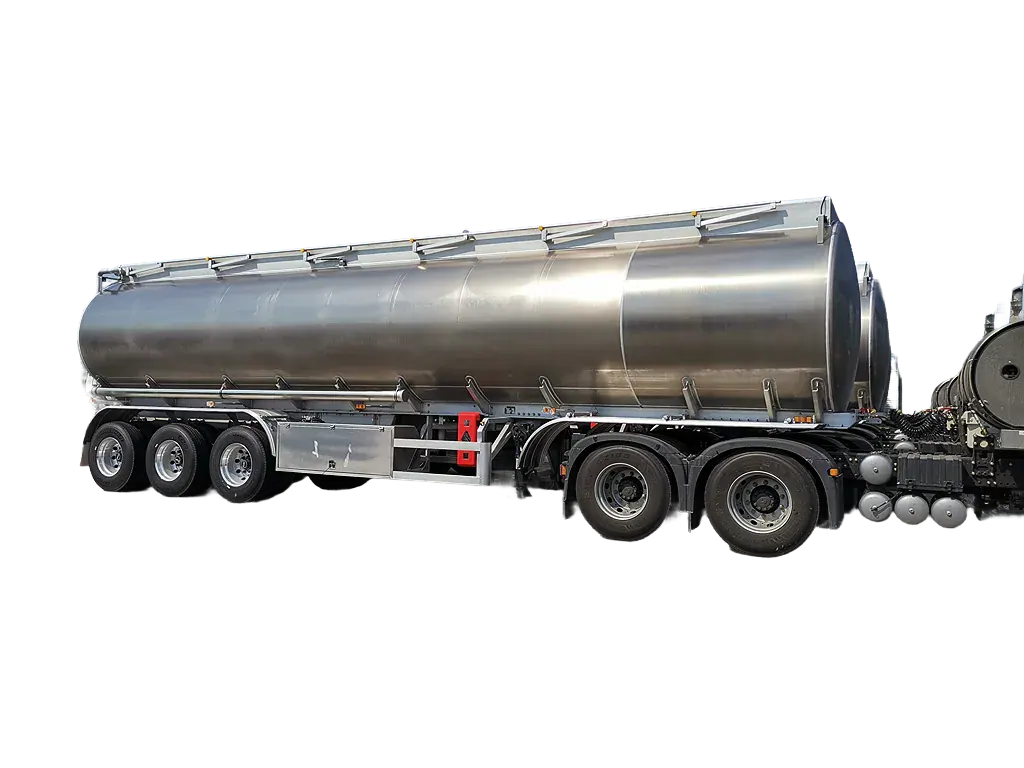
Runzhixing SCS9450GYY fuel tanker semi-trailer configuration presented against a plain background
Destination
Costa Rica
Vehicle
Runzhixing SCS9450GYY
Configuration
44,000 L nominal capacity and 5454 aluminum configuration
Shipment
April 2026
Evidence
Project documents + shipment record

Project at a glance

The project record connects the destination, vehicle and configuration to the documented shipment stage.

FieldRecorded Project Information
DestinationCosta Rica
Project statusExported; sea shipment verified from the linked commercial and carrier records
Destination portPort of Moín, Costa Rica
Shipment monthApril 2026
Final recorded brand and modelRunzhixing SCS9450GYY
Vehicle typeFuel tanker semi-trailer
Primary recorded specification44,000 L nominal capacity and 5454 aluminum alloy
Recorded compartment allocation12,000 / 8,000 / 8,000 / 4,000 / 12,000 L
Running gearThree-axle FUHUA arrangement with air suspension; front axle in the trailer group listed as liftable
Recorded overall dimensions12,050 × 2,500 × 4,000 mm
Evidence reviewedPI, commercial invoice, packing list, certificate of origin, bill of lading, media manifest, and six configuration photographs

Order and shipment record

The matched record reaches the shipped-on-board stage.

StageVerified Record
Order confirmedProject PI records the Costa Rica tanker configuration.
Vehicle configuration recordedThe PI records 44,000 L capacity, 5454 aluminum, dimensions, running gear, compartment allocation, and transfer equipment.
Final model recordedThe linked final commercial and origin records identify Runzhixing SCS9450GYY tanker semi-trailers.
Sea shipment recordedThe bill of lading records clean-on-board shipment.
Destination portPort of Moín, Costa Rica.
Shipment monthApril 2026.

Runzhixing SCS9450GYY recorded technical configuration

These values come from the reviewed project PI.

SpecificationRecorded Value
Destination countryCosta Rica
Final recorded brandRunzhixing
Final recorded modelSCS9450GYY
Vehicle typeFuel tanker semi-trailer
Nominal capacity44,000 L
Tank material5454 aluminum alloy
Recorded compartment allocation12,000 / 8,000 / 8,000 / 4,000 / 12,000 L; the five listed values total 44,000 L
Axles and suspensionThree-axle FUHUA arrangement with air suspension
Lift-axle entryFront axle in the trailer group listed with lifting
CrossbeamAluminum alloy
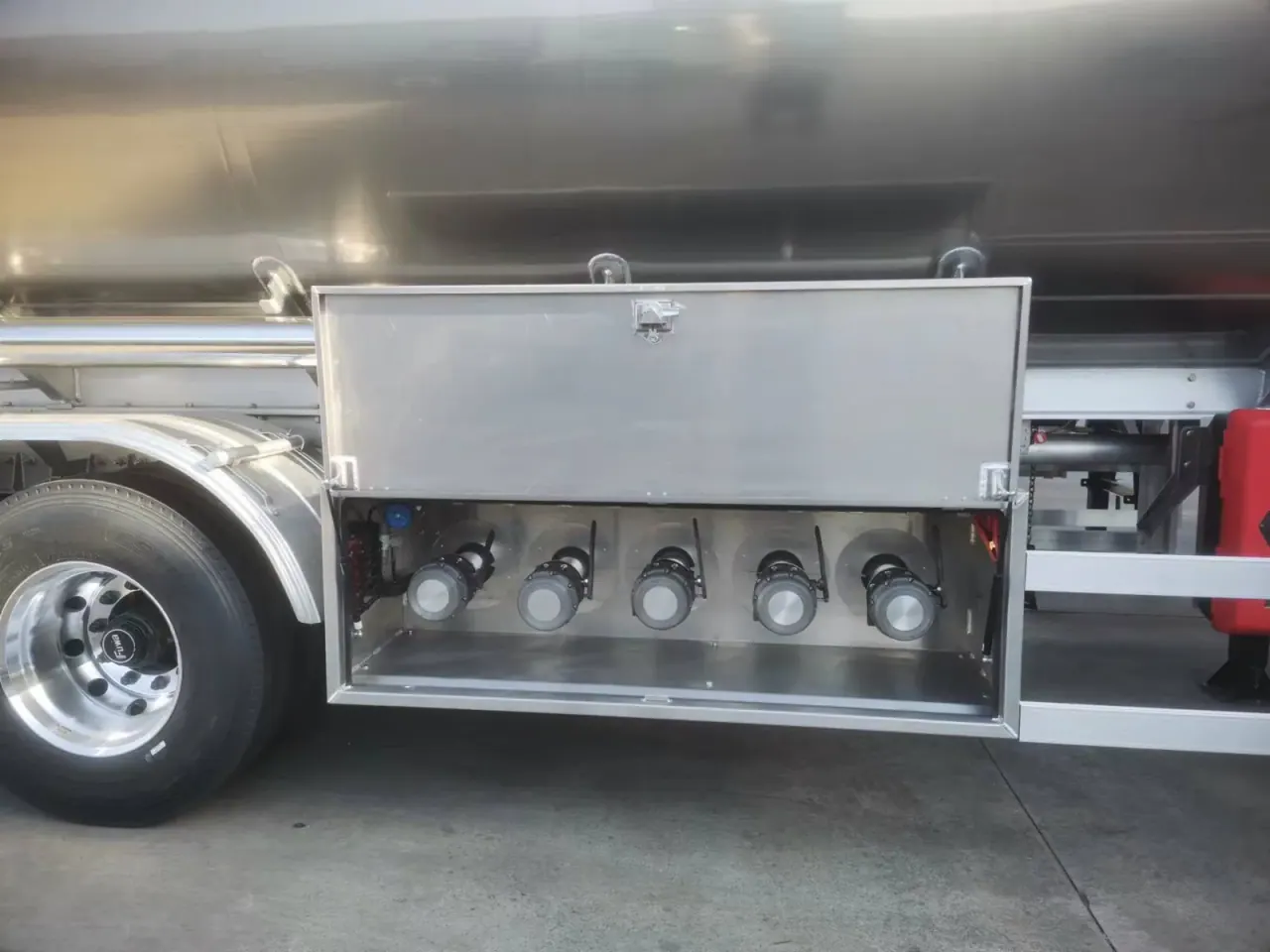
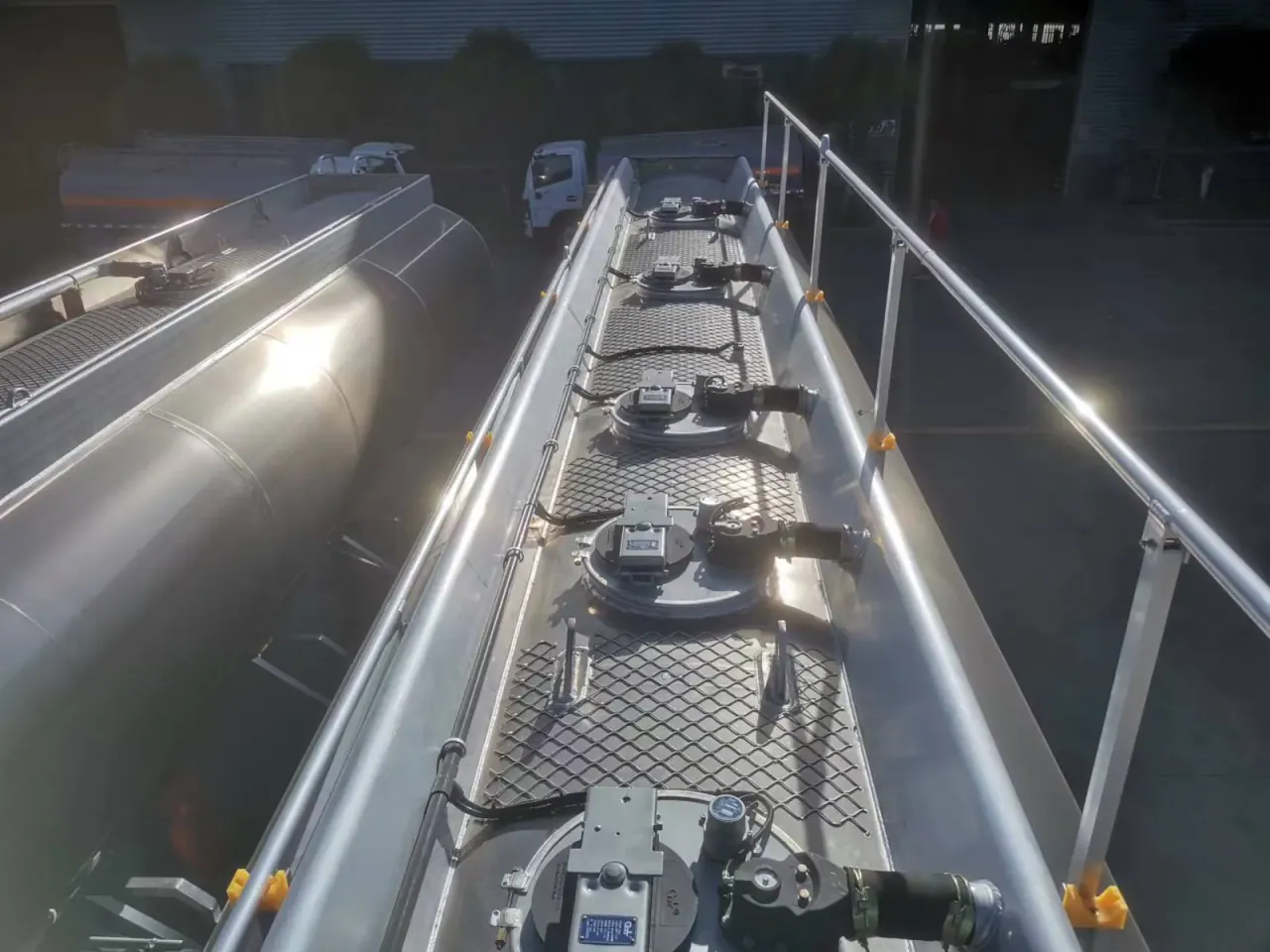
Loading and unloadingBottom loading and unloading; direct loading from the top
Recovery and overfill equipmentOil-and-gas recovery system and anti-overflow system
Discharge-valve positionMiddle of the right side
Kingpin50# assembly
Front protectionAluminum guard plate
Overall dimensions12,050 × 2,500 × 4,000 mm

These recorded case values were identical in the duplicate technical records reviewed. They are not evidence of final manufacture, material traceability, calibration, pressure or leak testing, axle-load approval, inspection, shipment, or delivery.

What These Specifications Mean for Buyers

Recorded SpecificationPractical InterpretationWhat to Confirm for a Similar Order
44,000 L nominal capacity and recorded 12,000 / 8,000 / 8,000 / 4,000 / 12,000 L allocationRecords nominal volume and a compartment-capacity allocation, not permissible cargo mass, calibrated capacity, or usable fill for every liquidExact liquid and density, reference temperature, filling limits, signed compartment drawing, calibration table, tare, kingpin load, and axle reactions
5454 aluminum alloyRecords the tank material, which cannot be verified by appearanceApplicable alloy standard and temper, plate thicknesses, mill certificates, plate traceability, welding procedures, and inspection records
12,050 × 2,500 × 4,000 mm overall dimensionsDefines the recorded external envelope, which affects turning, route clearance, import handling, and registration reviewCertified dimensions, tolerances, rear swing, ground clearance, terminal access, and route restrictions
Bottom loading and unloading, top loading, recovery equipment, anti-overflow system, and right-side discharge valveRecords the transfer arrangement without defining component ratings, compatibility, or test statusTerminal interface, exact product, valve and vent ratings, interlocks, hose scope, recovery connection, overfill logic, and acceptance tests
50# kingpin assemblyIdentifies the recorded coupling entry but does not prove compatibility with a particular tractor or legal combinationKingpin standard, fifth-wheel height, coupling load, turning clearance, brake and electrical interfaces, and tractor limits
Costa Rica destinationSets the market for import, registration, technical, and dangerous-goods reviewCurrent first-entry route, trailer category, inspection, markings, tank tests, and operating permissions

Configuration Suitability and Limitations

This Configuration May Be Suitable For

This 44,000 L fuel tanker semi-trailer may suit bulk movement of an authorised compatible petroleum product when the recorded compartment allocation, bottom-loading and discharge arrangement, recovery connection, tractor, legal masses, and route have been engineered together. The five listed capacity values may support segregated loading or delivery sequencing, but they still require a signed compartment drawing and calibration table. Suitability also depends on the exact liquid, filling limits, valves, vents, seals, hoses, emergency controls, axle reactions, and local operating permissions.

A Different Configuration May Be Needed When

A smaller volume or different axle and kingpin arrangement may be required when a dense liquid reaches mass limits before the nominal tank volume is filled. Another alloy temper, material, lining, seal, vent, or valve system may be required for a different product. The buyer may also need another compartment plan, pump, meter, recovery interface, loading system, rollover protection, hose arrangement, or tractor specification. Road geometry, bridge limits, terminal interfaces, and Costa Rican requirements can change the recorded dimensions, lift-axle arrangement, and usable filling condition.

What Is a Fuel Tanker Semi-Trailer?

A fuel tanker semi-trailer is a tank body carried on trailer running gear and connected by a kingpin and fifth wheel to a tractor. The tractor supports part of the trailer mass through the coupling, while the trailer axle group carries the remainder. Fuel is loaded through an approved terminal interface and discharged through controlled valves, piping and hoses appropriate to the product and operating method. Internal compartments or surge-control structures can affect liquid movement, load distribution and delivery sequence.

It differs from a rigid fuel tanker truck because the tank and tractor are separate vehicle units. Tractor compatibility, kingpin load, braking and electrical interfaces are therefore part of the complete engineering check. “Road tanker” is a common broader buyer term, but the controlled documents should identify the exact semi-trailer category.

Recorded Intended Use and Typical Applications

Intended Use Recorded for This Project

The record identifies the vehicle as a fuel tanker semi-trailer, but it does not state the exact fuel, delivery cycle, terminals, route or operating organisation. Those inputs must be supplied before compatibility, compartment, filling, discharge and compliance decisions can be completed.

Typical Applications of This Vehicle Type

Typical applications include authorised bulk transfer of compatible petroleum products between storage terminals, distribution depots and fleet-fuelling locations. These are general industry examples, not the recorded use of this order. Different fuels, mixed-product service, aviation fuel, chemicals or food-grade liquids can require materially different tank, cleaning, seal, valve, marking and documentation systems.

Key Specifications Buyers Should Compare

Decision FactorWhy It MattersQuestions to Ask the Supplier
Exact liquid and densityCompatibility and legal carrying mass depend on the product and temperatureWhich product, density range, temperature and hazard classification define the design?
Nominal and calibrated capacityThe recorded allocation totals 44,000 L, but nominal entries may differ from calibrated capacities and permitted fillWhat signed compartment table, calibration method, reference temperature, and maximum filling conditions apply?
Material traceabilityThe project configuration records 5454 aluminum alloy, but appearance cannot prove grade, temper, thickness, or weld qualityWhich certificates trace each tank plate to the controlled bill of materials and welding records?
Compartments and surge controlThe five recorded capacity values affect segregation, liquid movement, loading sequence, and axle reactionsWhich drawing defines each compartment, internal-control arrangement, outlet, and permitted loading combination?
Kingpin, axle, and lift-axle loadsTractor and trailer limits can be reached before the tank is full, and lift conditions change axle distributionWhat are the empty and laden kingpin and axle-group reactions for every fill and axle-position case?
Loading, discharge, recovery, and overfill controlsThe project configuration lists these systems, but product containment depends on compatible rated components and interfacesWhich valves, vents, interlocks, recovery connections, overfill controls, piping protections, and terminal standards apply?
Tests and calibrationMaterial, welding, leak integrity and volume require records, not photographsWhich inspections, pressure or leak tests, calibration and third-party witnesses are included?
Tractor and terminal interfacesCoupling, brakes, electrics, turning clearance and loading equipment must matchWhich tractor, fifth-wheel height, connectors and terminal interfaces were used in the design?

What the Costa Rica importer should confirm before ordering

Confirmation ItemWhy It MattersWho Should Confirm It
First-entry and registration routeMOPT Decree 41837 has a stated first-entry scope for relevant vehicles, trailers and semi-trailersImporter, customs professional, MOPT and National Registry adviser
Current registration-review requirementsThe National Registry circular confirms publication of a guide, but the reviewed link does not provide its complete checklistImporter and National Registry specialist
Dangerous-goods classificationDuties vary with the exact product and its classificationShipper, operator and competent Costa Rican authority
Tank testing, calibration and periodic inspectionOfficial dangerous-products rules address tanker condition, testing, calibration and inspection topicsTank engineer, authorised inspection body and competent authority
Markings and emergency equipmentRTCR 305 addresses dangerous-goods vehicle identification within its scopeOperator and competent transport authority
Axle, kingpin and overall dimensionsLegal road mass and dimensional limits can constrain usable fill and routeLocal vehicle engineer and competent road authority
Tractor, brake and electrical compatibilityThe semi-trailer must match the tractor and inspection category used in Costa RicaFleet engineer, supplier and inspection body
Maintenance and parts capabilitySafe operation depends on valves, hoses, seals, brakes, tyres and trained serviceOperator and qualified local service providers

Common Selection Mistakes

  1. Treating 44,000 L as legal payload. Volume must be converted into realistic liquid mass and checked against tare, kingpin and axle limits.
  2. Treating the recorded compartment allocation as calibrated capacity. The five values require a signed drawing, calibration table, and permitted filling conditions.
  3. Accepting 5454 by appearance. Material grade, temper, thickness, and traceability require certificates and controlled welding records.
  4. Reading an ambiguous “European standards” phrase as certification. No compliance or approval conclusion can be drawn without an identified standard and conformity records.
  5. Leaving the liquid undefined. Compatibility, filling, venting, seals, markings, recovery equipment, and permits depend on the product.
  6. Ignoring the tractor, kingpin, axle, and lift conditions. Fifth-wheel height, coupling load, brakes, electrics, turning clearance, and axle reactions affect the complete combination.
  7. Using factory photographs as test records. Calibration, leak or pressure tests and inspection results require documents.

What Buyers Can Learn From This Project

  • Separate the recorded 44,000 L nominal volume and compartment allocation from calibrated capacity, permissible liquid mass, and usable filling condition.
  • Require traceable material and welding records because neither the project entry nor photographs prove the final 5454 tank construction.
  • Calculate every fill case against kingpin load, all three axle reactions, lift-axle conditions, tyres, brakes, and legal combination mass.
  • Link tank, compartment, loading, recovery, overfill, valve, test, axle, and tractor-interface documents through one controlled specification.
  • Keep the recorded technical data distinct from the unlinked 44 m³ media set and from production, test, shipment, or delivery evidence.
  • Confirm Costa Rican registration and dangerous-goods requirements for the exact liquid and completed semi-trailer before release.

What to confirm for a repeat order

The recorded 44,000 L nominal capacity and 5454 aluminum configuration can be a comparison point, not an automatic specification for another buyer. Recalculate the route, mass, cargo access, Costa Rica acceptance path for the next vehicle.

Inputs, controlled records and responsible parties for a comparable order
WorkstreamInputs to confirmRecord requiredWho confirms it
Transported productOperating task, route conditions, intended load, work cycle and performance target.Controlled duty-cycle and performance requirement sheet.Buyer / fleet operator and vehicle supplier
Tank and materialCargo dimensions, clear door openings, internal layout, lining, restraint and optional equipment.Controlled cargo drawing and signed option list with installation locations.Buyer, vehicle supplier and body or fit-out provider
Mass and stabilityTarget payload or rated capacity, full model codes, completed tare, axle loads and tyre limits.Controlled technical sheet plus completed mass and axle-load calculation.Vehicle supplier, body engineer and buyer
Costa Rica documentsSteering position, service plan and current Costa Rica import and registration checklist.Document-responsibility list and written importer confirmation.Importer, licensed electrician, supplier and competent local authority

Who confirms what before the next import

KEEYAK coordinates the comparison and open-item review. The vehicle supplier owns product records; the buyer owns the duty cycle; the Costa Rica importer and competent local parties own local acceptance and filing decisions.

Responsibility and timing for a comparable import
OwnerResponsibilityWhen
Buyer / fleet operatorDefine the fuel tanker semi-trailer task, cargo, route, payload target, stop pattern and service expectations.Before configuration selection
Vehicle supplier / manufacturerConfirm the exact model and major component codes, controlled technical data, ratings, warranty and product records.Before quotation and production release
Body or fit-out providerConfirm cargo dimensions, door openings, installed options, restraint, finished mass and axle-load effects.Before fit-out approval
Costa Rica importer / customs brokerObtain the current customs, import and filing checklist for the exact completed vehicle.Before shipment commitment
Competent local authority / adviserDecide vehicle acceptance, registration and road-use requirements.Before import and registration
KEEYAK project teamCompare the buyer inputs with the recorded configuration and identify items that still require supplier or local confirmation.During configuration review

Costa Rica Runzhixing SCS9450GYY project FAQ

Where and when were the tanker semi-trailers shipped?

The reviewed bill of lading records clean-on-board shipment to the Port of Moín, Costa Rica, in April 2026. The public page does not disclose the customer, document numbers, VINs, quantity, vessel details, price, freight, or payment terms.

Does 44,000 L mean the tanker can legally carry 44,000 kg?

No. Litres measure volume, while kilograms measure mass. The cargo mass depends on liquid density and temperature, and the permitted fill also depends on tare, compartment limits, tractor compatibility, kingpin reaction, trailer axle loads and legal combination mass. The supplier should show calculations for the intended liquid and each realistic filling case.

What compartment capacities were recorded for this tanker?

The recorded compartment allocation is 12,000 / 8,000 / 8,000 / 4,000 / 12,000 L, which totals 44,000 L. These are project values, not a calibration certificate or permitted filling instruction. Request a signed compartment drawing, calibrated capacity table, reference temperature, outlet map, and axle-load calculation for every proposed loading combination.

Can the photographs confirm the recorded 5454 material?

No. The recorded project configuration specifies 5454 aluminum alloy, but surface appearance cannot identify grade, temper, plate thickness, or traceability. Request material certificates tied to plate identifiers, the applicable material standard, a controlled bill of materials, welding procedures, and inspection records. The documentation should distinguish the tank shell from piping, valves, supports, and other components.

Are these photographs confirmed as the Costa Rica order?

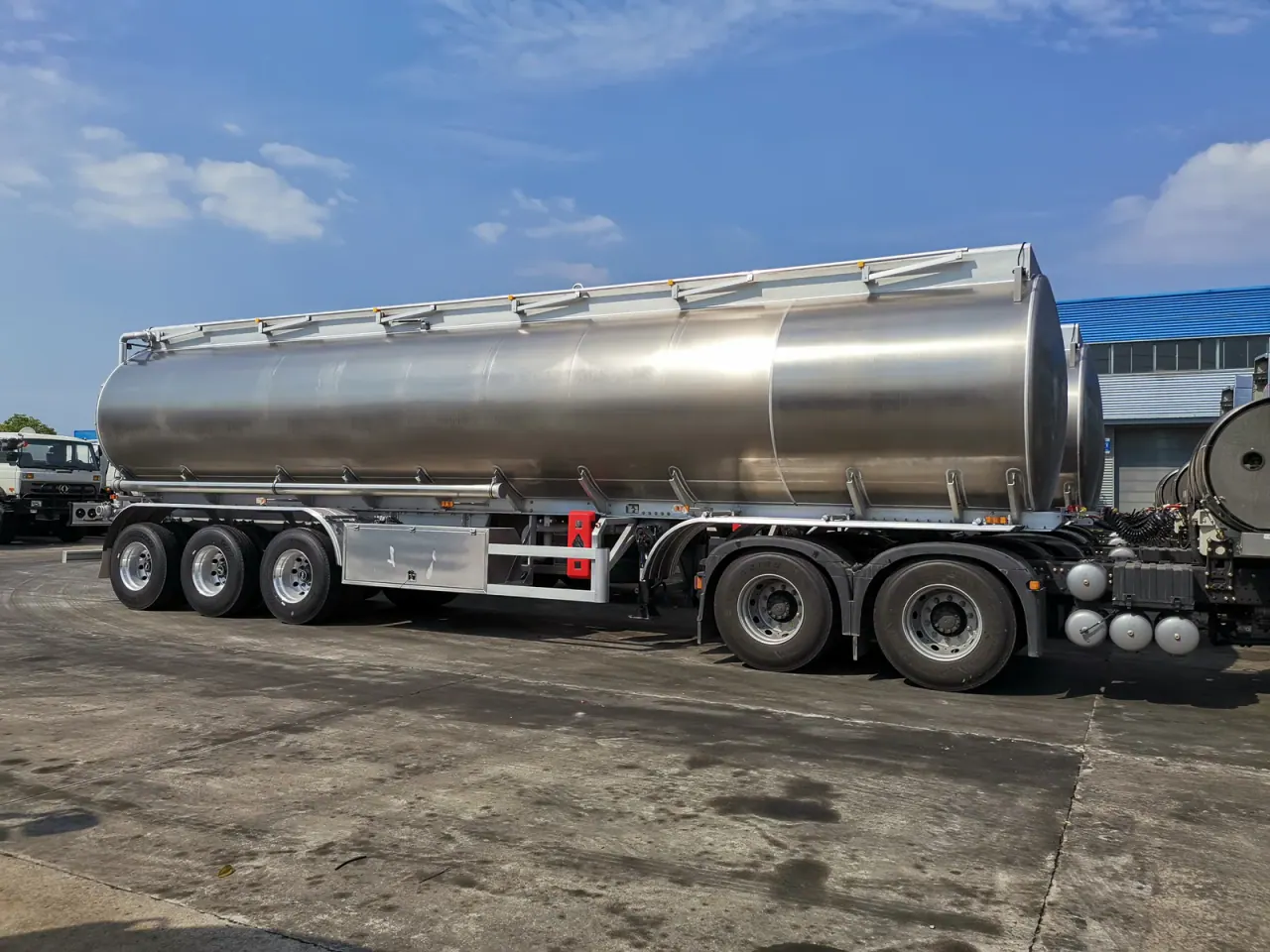
No. The 44 m³ media label and visible three-axle tanker layout are consistent with the recorded configuration, but the image archive has no shared project identifier with the order records.

Does the recorded configuration prove that the tanker passed testing or calibration?

No. The recorded project configuration defines loading, recovery, anti-overflow, discharge, running-gear, and dimensional scope. It does not provide material traceability, welding acceptance, calibrated capacities, pressure or leak-test results, axle-load approval, or third-party inspection. Each required record should identify the completed semi-trailer and the applicable revision.

Which fuel was this tanker intended to carry?

“Fuel tanker” is not enough to finalise compatibility or compliance because different products can require different seals, vents, valves, cleaning controls, markings and operating permissions. The buyer should provide the exact product or authorised product family, density range, temperature range and contamination-control requirements.

What must be confirmed about the tractor and lift axle?

The tractor is not identified in the order, and the lift-axle entry confirms only that the project configuration lists the front axle in the three-axle trailer group with a lifting function. Confirm the tractor, fifth-wheel height, kingpin load, turning clearance, brakes, electrics, axle ratings, lift thresholds, controls, tyres, and reactions for every permitted axle-position and fill case.

Is this tanker already approved for Costa Rican operation?

No approval evidence was provided. The cited Costa Rican sources identify first-entry, registration, dangerous-products transport, tanker inspection and marking topics, but they do not approve this semi-trailer. The importer, operator, qualified engineer, inspection body and competent authorities must confirm the current requirements for the exact product, design and operating route.

Evidence and public boundaries

The recorded project stage and technical configuration are supported by separate records. Customer identity, prices, document numbers, VIN, vessel details and contacts are withheld.

The review used the project PI, final commercial invoice, packing list, certificate of origin, bill of lading, KEEYAK media manifest, and six public-safe configuration images. Customer identity, document numbers, VINs, quantities, prices, payment terms, freight, vessel information, and contacts are withheld. The shipping documents verify export status, port, month, and final model identity; they do not by themselves prove material tests, calibration, inspection acceptance, or destination approval. An ambiguous source phrase referring to “European standards” is not treated as certification.

  1. P1
    Project PIRestricted project record · reviewed 15 April 2026
    Supports
    Costa Rica, Runzhixing SCS9450GYY, Fuel tanker semi-trailer, quantity and the recorded technical configuration.
  2. S1
    Carrier bill of ladingRestricted shipment record · reviewed 15 April 2026
    Supports
    The bill of lading records clean-on-board shipment. Destination port: Port of Moín, Costa Rica Shipment month: April 2026
  3. M1
    KEEYAK media manifest and 4 public-safe configuration imagesAuthorized public-safe media · reviewed 15 April 2026
    Supports
    Visible configuration and layout observations.
  4. D1
    Costa Rica MOPT repository — Decree 41837 Public context · reviewed 15 April 2026
    Supports
    Manufacturer-family or general regulatory context cited in this article.
  5. D2
    Costa Rica National Registry Circular DBM-009-2025 Public context · reviewed 15 April 2026
    Supports
    Manufacturer-family or general regulatory context cited in this article.
  6. D3
    Costa Rica Executive Decree 24715 on road transport of dangerous products Public context · reviewed 15 April 2026
    Supports
    Manufacturer-family or general regulatory context cited in this article.
  7. D4
    Costa Rica RTCR 305:1998 dangerous-goods transport marking rules Public context · reviewed 15 April 2026
    Supports
    Manufacturer-family or general regulatory context cited in this article.

How this project record was prepared

Author
KEEYAKExport Project Documentation
Technical review
KEEYAK Technical TeamConfiguration and evidence review
Updated
Public country context reviewed on the same date
Method
Project facts, shipment facts, configuration media and public context were checked as separate evidence layers.

Looking to plan a similar procurement?

Send the destination, required job or cargo, target payload or capacity, route and site conditions, preferred chassis, operating constraints and importer document checklist. KEEYAK can turn those inputs into a comparable configuration review.