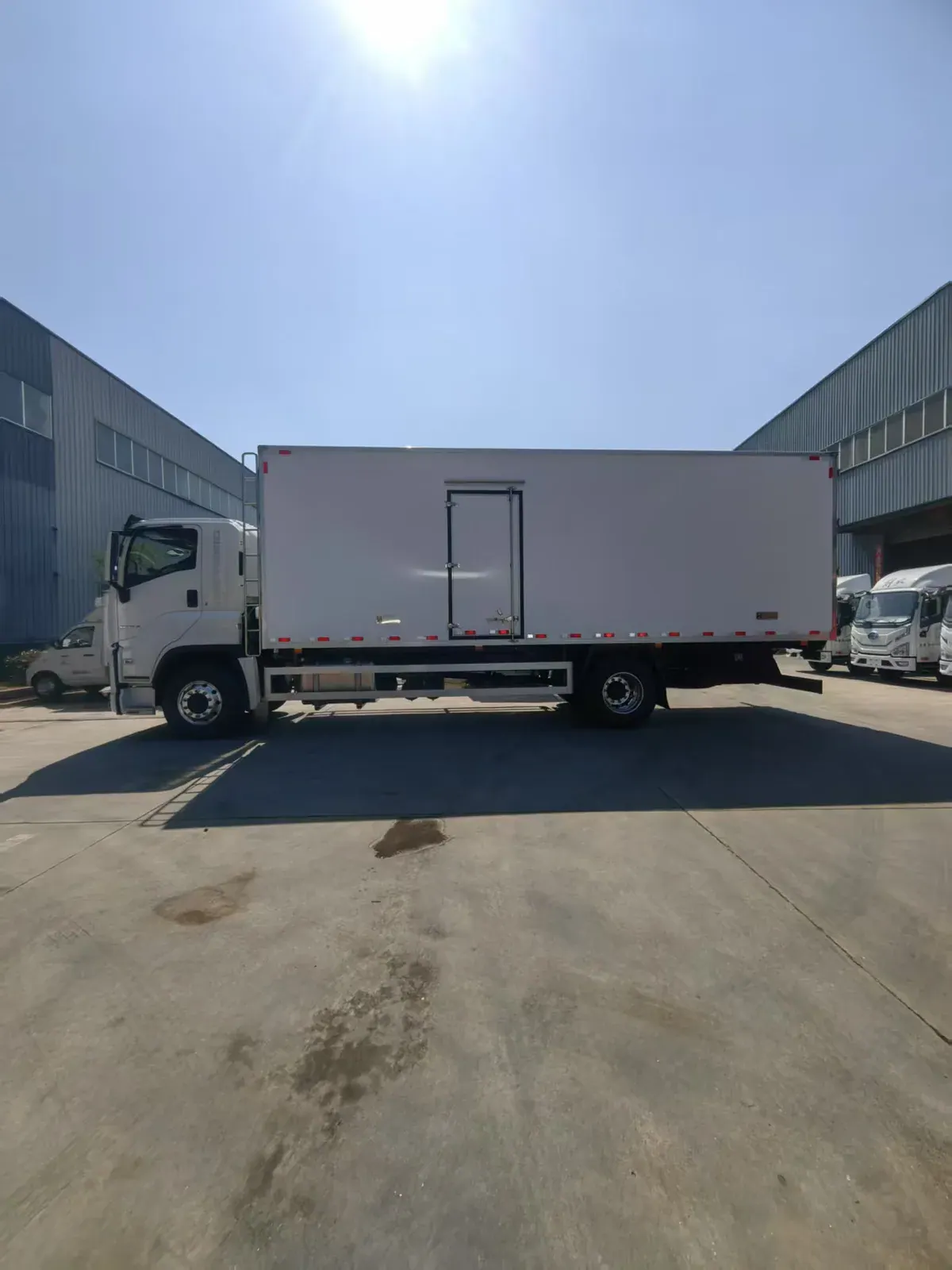
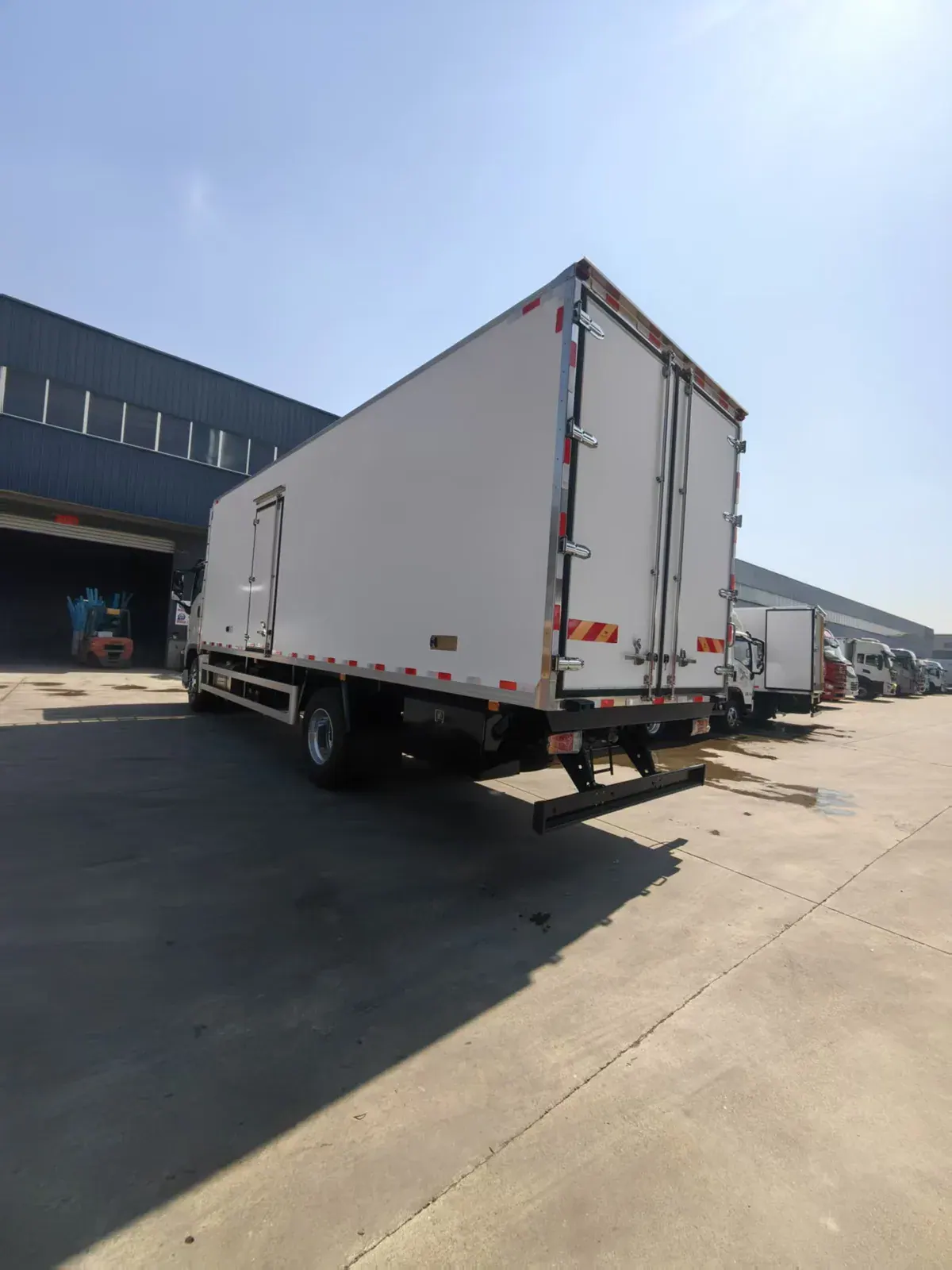
ISUZU SCS5180XLC3 Box Truck Exported to Costa Rica — 5,800 mm Wheelbase Project

This exported Costa Rica project records an ISUZU SCS5180XLC3 box truck with a 5,800 mm wheelbase, a 7,930 × 2,500 × 2,620 mm cargo body, a 6HK1-TCG61 engine, Euro III wording, 240 CV maximum power, and an 8F/2R transmission. The linked customs and carrier records support export through Puerto Caldera in March 2025. Payload, gross vehicle weight, steering position, and intended cargo remain unstated. Separate photographs show an enclosed ISUZU body but are not linked to the shipped vehicle.

ISUZU SCS5180XLC3 box truck configuration presented against a plain background
Destination
Costa Rica
Vehicle
ISUZU SCS5180XLC3
Quantity
one unit
Configuration
Recorded 5,800 mm wheelbase and 7,930 x 2,500 x 2,620 mm cargo body
Shipment
March 2025
Evidence
Project documents + shipment record

Project at a glance

The project record connects the destination, vehicle and configuration to the documented shipment stage.

FieldRecorded Project Information
DestinationCosta Rica
Project statusExported; PI-to-customs-to-bill-of-lading chain verified
Destination portPuerto Caldera, Costa Rica
Shipment monthMarch 2025
Chassis brandISUZU
Final recorded vehicle modelSCS5180XLC3; FVR and GIGA remain unresolved media labels
Vehicle typeBox truck
Recorded wheelbase5,800 mm
Recorded cargo-body dimensions7,930 × 2,500 × 2,620 mm
Recorded engine and emission wording6HK1-TCG61; Euro III
Recorded body constructionFiberglass-reinforced plastic with thermal insulation
Evidence reviewedProject PI, customs release, bill of lading, media manifest, and four public-safe configuration images

Order and shipment record

The matched record reaches the shipped-on-board stage.

StageVerified Record
Order confirmedProject PI records the Costa Rica ISUZU box-truck configuration.
Vehicle configuration recordedThe PI records wheelbase, engine, transmission, body dimensions and construction, and selected equipment.
Final model recordedThe linked customs record identifies SCS5180XLC3.
Sea shipment recordedThe customs-to-bill-of-lading chain records one unit shipped by sea.
Destination portPuerto Caldera, Costa Rica.
Shipment monthMarch 2025.

ISUZU SCS5180XLC3 recorded technical configuration

These values come from the reviewed project PI.

SpecificationRecorded Value
Destination countryCosta Rica
BrandISUZU
Final recorded vehicle modelSCS5180XLC3
Standard vehicle typeBox truck
Wheelbase5,800 mm
Engine6HK1-TCG61
Emission wordingEuro III
Maximum power240 CV
Transmission8 forward / 2 reverse
Tyres295/80R22.5 18PR
Air conditioningFitted
Cargo-body dimensions7,930 × 2,500 × 2,620 mm; the project record does not label these as clear internal dimensions
Cargo-body materialFiberglass-reinforced plastic with thermal insulation
Overall dimensions10,400 × 2,550 × 3,990 mm, recorded as a reference value
Additional recorded equipmentRear camera, reversing radar sensor, and alloy wheels

What These Specifications Mean for Buyers

Recorded SpecificationPractical InterpretationWhat to Confirm for a Similar Order
5,800 mm wheelbaseDefines the recorded axle spacing and strongly affects turning, body support, rear overhang, and axle distribution.Minimum turning space, cab-to-axle dimension, rear overhang, completed axle loads, and exact chassis code
7,930 × 2,500 × 2,620 mm cargo bodyDefines the recorded body envelope, but not necessarily the clear internal loading space.Whether each value is external or internal, plus clear door openings, lining thickness, floor height, and usable volume
6HK1-TCG61, Euro III, 240 CVIdentifies the recorded engine and emission wording, not destination acceptance or final as-built certification.Engine data plate, fuel and after-treatment specification, current Costa Rica acceptance, cooling duty, and service support
8F/2R transmission and 295/80R22.5 18PR tyresRecords the gearbox pattern and tyre size relevant to gradeability, road speed, load rating, and replacement supply.Gearbox model, axle ratios, tyre load and speed indices, spare arrangement, and locally available equivalents
Reference overall dimensions of 10,400 × 2,550 × 3,990 mmProvides a preliminary route envelope only; the source explicitly marks it as reference.Certified finished dimensions after body installation, legal limits, gate and dock clearance, and route survey results
Rear camera, reversing radar, and alloy wheelsRecords support equipment without proving final installation or destination compliance.Component specifications, field of view, alarm coverage, wheel ratings, documentation, and final inspection evidence

Configuration Suitability and Limitations

This Configuration May Be Suitable For

The recorded 7,930 mm enclosed body may suit high-volume dry cargo, packaged goods, furniture, appliances, or other freight when the verified internal space, payload, floor rating, doors, and route access match the operation. Its fiberglass-reinforced plastic and insulated construction may help separate cargo from ambient conditions, but the project record does not include a refrigeration unit or temperature performance. Rear and side access appear only in the matched media and must be confirmed in the controlled body drawing.

A Different Configuration May Be Needed When

A shorter body or wheelbase may be needed for narrow roads, restricted yards, steep access, or tight turning. Dense cargo may require a higher chassis and axle class rather than the recorded long body. Controlled-temperature, hygienic, fragile, wheeled, or unusually tall cargo may require refrigeration, a different panel system, added restraint, a tail lift, stronger floors, or different doors. The exact chassis family, steering position, emissions equipment, ground clearance, and safety systems must still be selected for the route and current Costa Rica acceptance pathway.

What Is a Box Truck?

A box truck is a rigid commercial vehicle with a separate, enclosed cargo body mounted behind the cab. It may also be called a box van or enclosed cargo truck. Rear or side doors provide access, while the body protects goods from weather and unauthorised access. Unlike a panel van, the cargo enclosure is an independently engineered body installed on a truck chassis. The body therefore changes completed tare, payload, axle distribution, height, length, centre of gravity, and service access. Buyers should approve the chassis sheet, body drawing, mass calculation, floor and restraint ratings, and completed-vehicle documents as one coordinated package.

Recorded Intended Use and Typical Applications

Intended Use Recorded for This Project

Typical Applications of This Vehicle Type

Typical applications include parcels, retail stock, packaged food and drink, furniture, appliances, tools, and industrial components. Each has different volume, mass, point-load, door, restraint, hygiene, moisture, and handling requirements. These examples explain the vehicle type and should not be read as evidence about the Costa Rica buyer's intended use.

Key Specifications Buyers Should Compare

Decision FactorWhy It MattersQuestions to Ask the Supplier
Exact chassis identityThe project record includes the engine and wheelbase but no chassis model; the FVR/GIGA media conflict still affects ratings, parts, and documents.What full model code, VIN-level build record, data plate, model year, and market specification support the recorded configuration?
Cargo density and load positionA 7,930 mm body can fill by volume before mass for light cargo, while dense cargo may reach axle or tyre limits with space remaining.What unit dimensions, masses, positions, and representative load cases were used?
Internal, external, and overall dimensionsThe project record includes body dimensions and reference overall dimensions, but does not define clear internal space or certify the finished envelope.What are the controlled body interior, body exterior, door opening, overhang, and certified overall dimensions?
Completed mass and axle calculationBody, doors, driver, fluids, options, and load position determine legal payload.What are the finished tare, payload, tyre limits, centre-of-gravity assumptions, and front/rear axle results?
Insulated composite body and floorThe recorded body material does not define panel thickness, thermal performance, floor strength, or refrigeration.What panel build-up, insulation, frame, floor, seals, distributed load, point-load rating, and repair method apply?
Engine and emissions acceptanceEuro III is recorded wording, not evidence that the completed vehicle is accepted in Costa Rica.Which engine and emission documents apply, and has the exact configuration been reviewed through the current local process?
Route and site geometryThe 10,400 × 2,550 × 3,990 mm reference envelope can conflict with bends, slopes, gates, docks, and overhead clearance.Has a certified finished vehicle been checked against the complete route survey and operating sites?
Maintenance and partsChassis and insulated-body uptime require the correct model documentation and repair materials.Which local engine, drivetrain, tyre, diagnostic, composite-panel, and body-hardware support is available?

What the Costa Rica importer should confirm before ordering

Confirmation ItemWhy It MattersWho Should Confirm It
Customs and first-registration fileChassis identity, customs evidence, and completed-body characteristics must be consistent.Importer, customs broker, National Registry specialist, and supplier
Euro III engine and technical-inspection routeEuro III is recorded in the project configuration, but the current acceptance path depends on vehicle status, category, engine documentation, and local rules.MOPT or responsible inspection authority, importer, and qualified local adviser
Certified dimensions, masses, and axle limitsThe recorded overall dimensions are marked reference, and no completed tare, payload, GVW, or axle calculation was supplied.Body engineer, transport authority, importer, and supplier
Body-conversion and material documentationThe fiberglass-reinforced plastic insulated body changes registered characteristics and requires a controlled construction record.Body builder, supplier, registration specialist, and authority
Terrain, braking, tyres, and supportThe 5,800 mm wheelbase, tyre specification, grades, road surfaces, climate, and parts access affect manoeuvrability and uptime.Fleet operator, supplier, and local service provider

Common Selection Mistakes

  • Calling the order an FVR because the source folder uses that label.
  • Calling the order a GIGA because the badge is visible in matched media.
  • Treating the media-folder 8 m label as a project dimension instead of using the recorded 7,930 mm body length.
  • Treating the recorded reference overall dimensions as certified finished dimensions.
  • Assuming an insulated fiberglass-reinforced plastic body includes refrigeration or guarantees a temperature range.
  • Maximising body volume without modelling cargo mass and axle position.
  • Treating the recorded engine and Euro III wording as proof of Costa Rica acceptance.
  • Quoting payload before the completed body, driver, restraints, options, and axle distribution are calculated.

What Buyers Can Learn From This Project

  • A recorded project configuration can establish dimensions and components without resolving a conflicting media model label.
  • The 5,800 mm wheelbase and 7,930 mm body must be evaluated with cargo density, route geometry, and completed axle loads.
  • Insulated composite body construction does not replace a controlled panel, floor, thermal, and repair specification.
  • Chassis identity, body drawing, mass calculations, emission records, and registration documents should use one controlled vehicle identity.
  • Costa Rica's current import and inspection path must be confirmed for the exact completed configuration.

What to confirm for a repeat order

The recorded Recorded 5,800 mm wheelbase and 7,930 x 2,500 x 2,620 mm cargo body can be a comparison point, not an automatic specification for another buyer. Recalculate the route, mass, cargo access, Costa Rica acceptance path for the next vehicle.

Inputs, controlled records and responsible parties for a comparable order
WorkstreamInputs to confirmRecord requiredWho confirms it
Cargo and routeOperating task, route conditions, intended load, work cycle and performance target.Controlled duty-cycle and performance requirement sheet.Buyer / fleet operator and vehicle supplier
Body and accessCargo dimensions, clear door openings, internal layout, lining, restraint and optional equipment.Controlled cargo drawing and signed option list with installation locations.Buyer, vehicle supplier and body or fit-out provider
Mass and rangeTarget payload or rated capacity, full model codes, completed tare, axle loads and tyre limits.Controlled technical sheet plus completed mass and axle-load calculation.Vehicle supplier, body engineer and buyer
Costa Rica documentsSteering position, service plan and current Costa Rica import and registration checklist.Document-responsibility list and written importer confirmation.Importer, licensed electrician, supplier and competent local authority

Who confirms what before the next import

KEEYAK coordinates the comparison and open-item review. The vehicle supplier owns product records; the buyer owns the duty cycle; the Costa Rica importer and competent local parties own local acceptance and filing decisions.

Responsibility and timing for a comparable import
OwnerResponsibilityWhen
Buyer / fleet operatorDefine the box truck task, cargo, route, payload target, stop pattern and service expectations.Before configuration selection
Vehicle supplier / manufacturerConfirm the exact model and major component codes, controlled technical data, ratings, warranty and product records.Before quotation and production release
Body or fit-out providerConfirm cargo dimensions, door openings, installed options, restraint, finished mass and axle-load effects.Before fit-out approval
Costa Rica importer / customs brokerObtain the current customs, import and filing checklist for the exact completed vehicle.Before shipment commitment
Competent local authority / adviserDecide vehicle acceptance, registration and road-use requirements.Before import and registration
KEEYAK project teamCompare the buyer inputs with the recorded configuration and identify items that still require supplier or local confirmation.During configuration review

Costa Rica ISUZU SCS5180XLC3 project FAQ

Where and when was this ISUZU box truck shipped?

The reviewed customs and bill-of-lading chain records shipment to Puerto Caldera, Costa Rica, in March 2025. Customer identity, document numbers, VIN, amount, payment terms, and vessel details are intentionally omitted from the public case.

Is the chassis an ISUZU FVR or an ISUZU GIGA?

Neither is confirmed. The recorded project configuration identifies ISUZU, a 5,800 mm wheelbase, and a 6HK1-TCG61 engine, but does not name the chassis model. FVR appears only in the media-folder label, while GIGA badges are visible in separate matched photographs. Resolve the conflict with the chassis data plate, VIN-level build record, and controlled project ledger before using either model name.

What dimensions are recorded in this project configuration?

The project configuration records a 5,800 mm wheelbase and cargo-body dimensions of 7,930 × 2,500 × 2,620 mm. It also lists 10,400 × 2,550 × 3,990 mm as reference overall dimensions. The separate media folder's 8 m label is not a project specification. A controlled drawing must still identify internal versus external body dimensions, door openings, rear overhang, and certified finished dimensions.

Which engine and transmission are recorded?

The recorded configuration includes a 6HK1-TCG61 engine, Euro III wording, 240 CV maximum power, and an 8-forward/2-reverse transmission. These are project values, not proof of the final data plate, as-built vehicle, or Costa Rica acceptance. Confirm the engine serial and model data, gearbox model, axle ratios, emission documents, and completed-vehicle inspection records.

Does the insulated body mean this is a refrigerated truck?

No. The project configuration records fiberglass-reinforced plastic with thermal insulation, but it does not include a refrigeration unit or temperature-performance target. Confirm panel construction, insulation thickness, floor and door thermal bridges, heat-load assumptions, refrigeration capacity if needed, test conditions, and the required cargo temperature range before treating the body as temperature controlled.

Why are only four photographs shown?

Two source images contain visible people: one at the cab and one at the edge of the cargo interior. They were excluded pending privacy and rights review.

What Costa Rica requirements remain open?

The project file still needs the applicable customs and first-registration route, vehicle origin status, technical inspection, acceptance of the quoted Euro III configuration, certified dimensions, legal masses and axle limits, body-conversion documentation, steering position, markings, and document legalisation requirements. These should be confirmed for the exact completed vehicle by the importer and responsible Costa Rican authorities.

What should be sent with a request for a similar truck?

Send the cargo matrix, unit masses and dimensions, route survey, required internal space, doors, floor loading, insulation or temperature requirement, handling equipment, payload, preferred chassis, steering position, emissions requirement, terrain, and optional equipment. Ask the supplier to return a controlled chassis sheet, body drawing, mass and axle model, thermal specification where relevant, compliance matrix, and responsibility schedule.

Evidence and public boundaries

The recorded project stage and technical configuration are supported by separate records. Customer identity, prices, document numbers, VIN, vessel details and contacts are withheld.

The review covered the project PI, customs release, bill of lading, KEEYAK media manifest, and four public-safe configuration images. Customer identity, document numbers, VIN, amount, payment details, vessel information, and contacts are not published. Two images containing people remain excluded. The PI supports the listed configuration, while the customs and carrier records support final model identity, sea shipment, port, and month. They do not prove every manufacturing inspection, body test, arrival, import eligibility, or registration outcome. The media folder's FVR and 8 m labels and the visible GIGA badges remain separate media evidence.

  1. P1
    Project PIRestricted project record · reviewed 30 April 2026
    Supports
    Costa Rica, ISUZU SCS5180XLC3, Box truck, quantity and the recorded technical configuration.
  2. S1
    Carrier bill of ladingRestricted shipment record · reviewed 30 April 2026
    Supports
    The customs-to-bill-of-lading chain records one unit shipped by sea. Destination port: Puerto Caldera, Costa Rica Shipment month: March 2025
  3. M1
    KEEYAK media manifest and 3 public-safe configuration imagesAuthorized public-safe media · reviewed 30 April 2026
    Supports
    Visible configuration and layout observations.
  4. D1
    ISUZU Motors global truck overview Public context · reviewed 30 April 2026
    Supports
    Manufacturer-family or general regulatory context cited in this article.
  5. D2
    Costa Rica MOPT repository: Decree 41837 Public context · reviewed 30 April 2026
    Supports
    Manufacturer-family or general regulatory context cited in this article.
  6. D3
    Costa Rica National Registry 2025 movable-property guide Public context · reviewed 30 April 2026
    Supports
    Manufacturer-family or general regulatory context cited in this article.

How this project record was prepared

Author
KEEYAKExport Project Documentation
Technical review
KEEYAK Technical TeamConfiguration and evidence review
Updated
Public country context reviewed on the same date
Method
Project facts, shipment facts, configuration media and public context were checked as separate evidence layers.

Looking to plan a similar procurement?

Send the destination, required job or cargo, target payload or capacity, route and site conditions, preferred chassis, operating constraints and importer document checklist. KEEYAK can turn those inputs into a comparable configuration review.