HOWO Aerial Work Platform Truck Order Project for Ethiopia — 20 m Media Configuration Project
This confirmed-order case covers a HOWO aerial work platform truck for Ethiopia. The order evidence does not state the final chassis model, working height, wheelbase, drive, steering, engine, emissions, brakes, tyres, completed mass, platform outreach, basket rating, or stabilizer reactions. A separate media folder is labelled 20 m and 3360, and its images show a HOWO truck-mounted platform, but the folder has no shared order or vehicle identifier. Every technical field therefore requires an exact PI, final specification, or inspection record before repeat purchase.

- Destination
- Ethiopia
- Vehicle
- HOWO Not stated in the order record
- Configuration
- HOWO aerial platform order; separate 20 m media label
- Shipment
- Confirmed order; later project stages not evidenced
- Evidence
- Order record + separate media
Project at a glance
The project record connects the destination, vehicle and configuration to the recorded order stage.
| Field | Recorded Project Information |
|---|---|
| Destination | Ethiopia |
| Project status | Confirmed order; later project stages not evidenced |
| Vehicle | HOWO aerial work platform truck |
| Separate media labels | 20 m and 3360; not used as actual order parameters |
| Evidence reviewed | Order record, local evidence-folder inventory, quotation exclusion review, media manifest, and six configuration images |
HOWO Not stated in the order record recorded technical configuration
These values come from the reviewed project PI.
| Specification | Recorded Value |
|---|---|
| Destination country | Ethiopia |
| Chassis brand | HOWO |
| Standard vehicle type | Aerial work platform truck |
| Platform outreach, basket rating and stabilizer reactions | To be confirmed in the final technical specification |
| Intended use | To be confirmed by the buyer |
What These Specifications Mean for Buyers
| Recorded Specification | Practical Interpretation | What to Confirm for a Similar Order |
|---|---|---|
| HOWO aerial platform order | Establishes the brand and vehicle type, not the full configuration. | Exact chassis model, platform model, final drawing, and identity across all documents |
20 m media label | Suggests a comparison height class but is not an order value. | Measurement definition, full reach chart, basket load, and order-to-media link |
| Unrecorded chassis package | Prevents route, mass, and acceptance analysis. | Drive, steering, wheelbase, engine, emissions, brakes, tyres, and service plan |
| Unrecorded platform data | Prevents safe site selection. | Outreach, basket rating, stabilizer footprint, reactions, slope, wind, and rescue system |
Configuration Suitability and Limitations
This Configuration May Be Suitable For
A HOWO aerial work platform may suit street-light, sign, facade, communications, tree-care, or municipal maintenance when the verified work envelope covers every target point and the completed chassis can reach the site. Suitability depends on basket load, outreach, stabilizer space, ground capacity, slope, wind, and local operating controls.
A Different Configuration May Be Needed When
Choose a different chassis or platform when the task requires greater outreach, a higher basket rating, rough-terrain drive, a shorter turning envelope, stronger axles, a different emissions level, ABS, higher-altitude cooling, electrical insulation or a different stabilizer layout. The final machine must remain within its completed mass and axle limits in both travel and operating conditions.
What Is an Aerial Work Platform Truck?
An aerial work platform truck is a road vehicle fitted with an elevating boom and a guarded work basket. Hydraulic or electro-hydraulic systems position workers and tools within a defined operating envelope, while stabilizers commonly support the chassis during operation. Buyers may also search for a truck-mounted aerial platform or access platform truck. Unlike a mobile crane, its primary purpose is to position people rather than suspend loads from a hook. Height, outreach, basket load, wind, slope and stabilizer conditions must be evaluated together.
Recorded Intended Use and Typical Applications
Intended Use Recorded for This Project
It should be defined through target work points, horizontal setback, occupants, tools, ground conditions, road access and rescue requirements before the final specification is approved.
Typical Applications of This Vehicle Type
Typical applications include street-light and sign maintenance, facade access, tree care, communications work and municipal maintenance.
Key Specifications Buyers Should Compare
| Decision Factor | Why It Matters | Questions to Ask the Supplier |
|---|---|---|
| Height definition and reach envelope | Maximum height is only one point in a load-dependent operating area. | What does 20 m measure, and can you supply the full reach chart for each permitted basket load? |
| Basket capacity | Occupants, tools and materials all consume rated capacity. | What are the rated load, occupant limit, basket dimensions and derating rules? |
| Stabilizers and ground reactions | Safe setup depends on footprint, pad loads, slope, soil and interlocks. | What are the deployed dimensions, individual reactions, pad requirements and slope limits? |
| Chassis, axles and completed mass | The platform, subframe and equipment must remain within chassis limits. | Provide the completed mass, front/rear axle calculations, dimensions and subframe interface documents. |
| Braking and safety systems | The order-specific brake and ABS configuration is unrecorded. | What brake system, ABS package and completed-vehicle test evidence are supplied? |
| Controls, rescue and service | Power or control failure requires a defined recovery method. | Which upper/lower controls, emergency lowering, overload protection, rescue instructions, training and spare parts are included? |
What the Ethiopia importer should confirm before ordering
| Confirmation Item | Why It Matters | Who Should Confirm It |
|---|---|---|
| Import and completed-vehicle classification | The chassis and aerial-platform conversion need a defined customs and registration file. | Ethiopian customs broker and competent transport authority |
| 20 m definition and platform documentation | Height terminology, outreach and basket load determine whether the platform reaches the intended work points. | Buyer, platform manufacturer and qualified inspection body |
| Emissions acceptance and fuel compatibility | The order-specific emissions package is unrecorded. | Importer, local compliance adviser and chassis service provider |
| Brake and ABS requirement | The order-specific brake package is unrecorded. | Competent authority, supplier engineer and qualified vehicle inspector |
| Axle values, completed mass and dimensions | Undefined axle labels cannot replace completed-vehicle calculations or measured weights. | Supplier engineer, importer and competent road authority |
| Manuals, training, rescue and service support | Operators and technicians need controlled instructions and a local recovery plan. | Buyer's safety team, supplier and local service provider |
Common Selection Mistakes
- Buying on the unlinked 20 m media label without confirming the order's actual platform model.
- Copying chassis values from a similar HOWO quotation instead of the Ethiopia order documents.
- Ignoring stabilizer footprint, pad reactions, slope and underground voids.
- Approving the platform without checking completed mass, axle loads and subframe integration.
- Leaving emergency lowering, rescue roles, inspection and training until handover.
What Buyers Can Learn From This Project
- Treat the 20 m media label as a search aid until an order-specific platform record confirms it.
- Confirm the exact chassis model, wheelbase, drive, powertrain, brakes, and completed dimensions.
- Define axle ratings and measure completed axle loads before acceptance.
- Review the road vehicle and elevating work equipment as one completed machine.
Configuration media
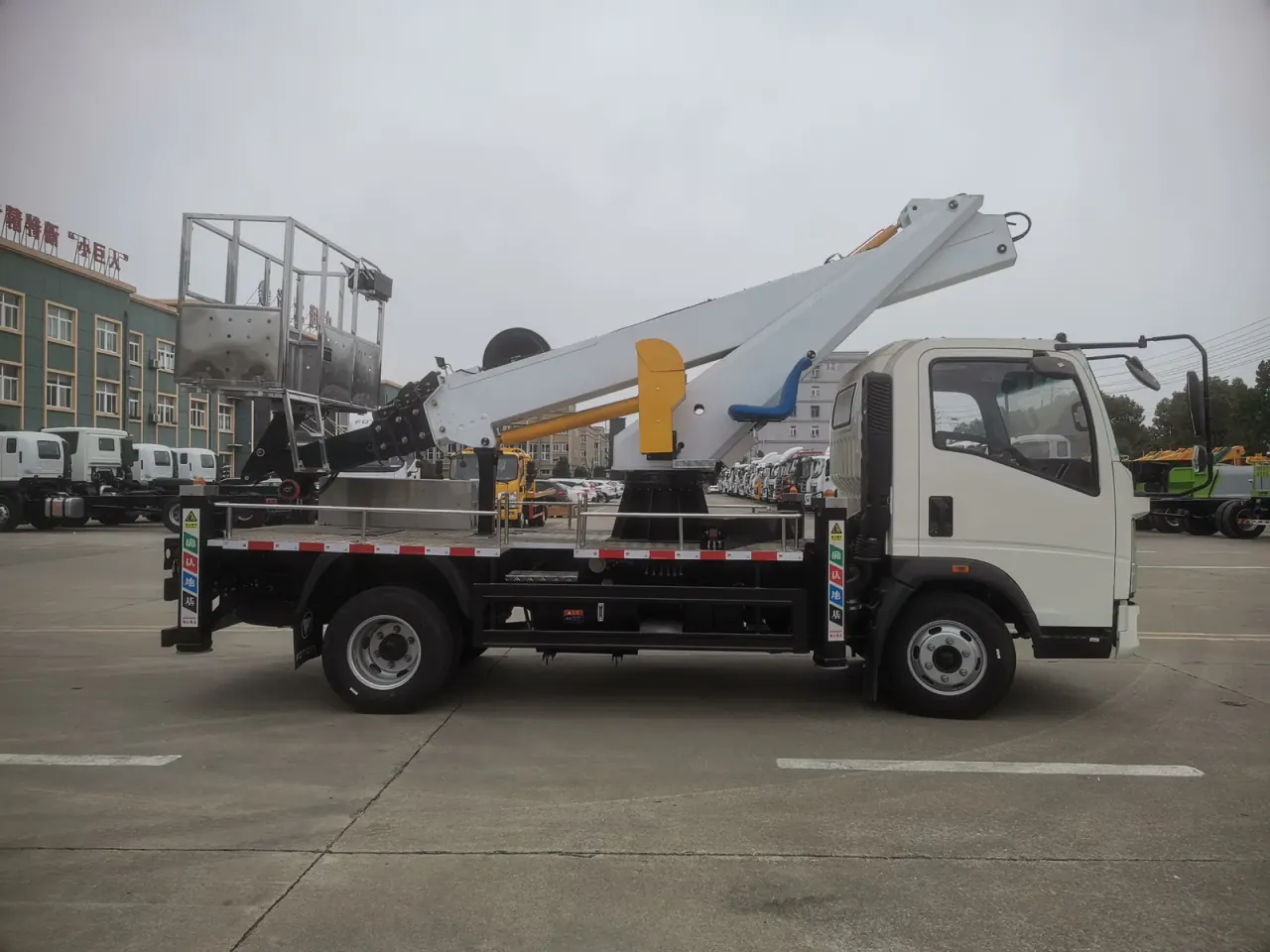
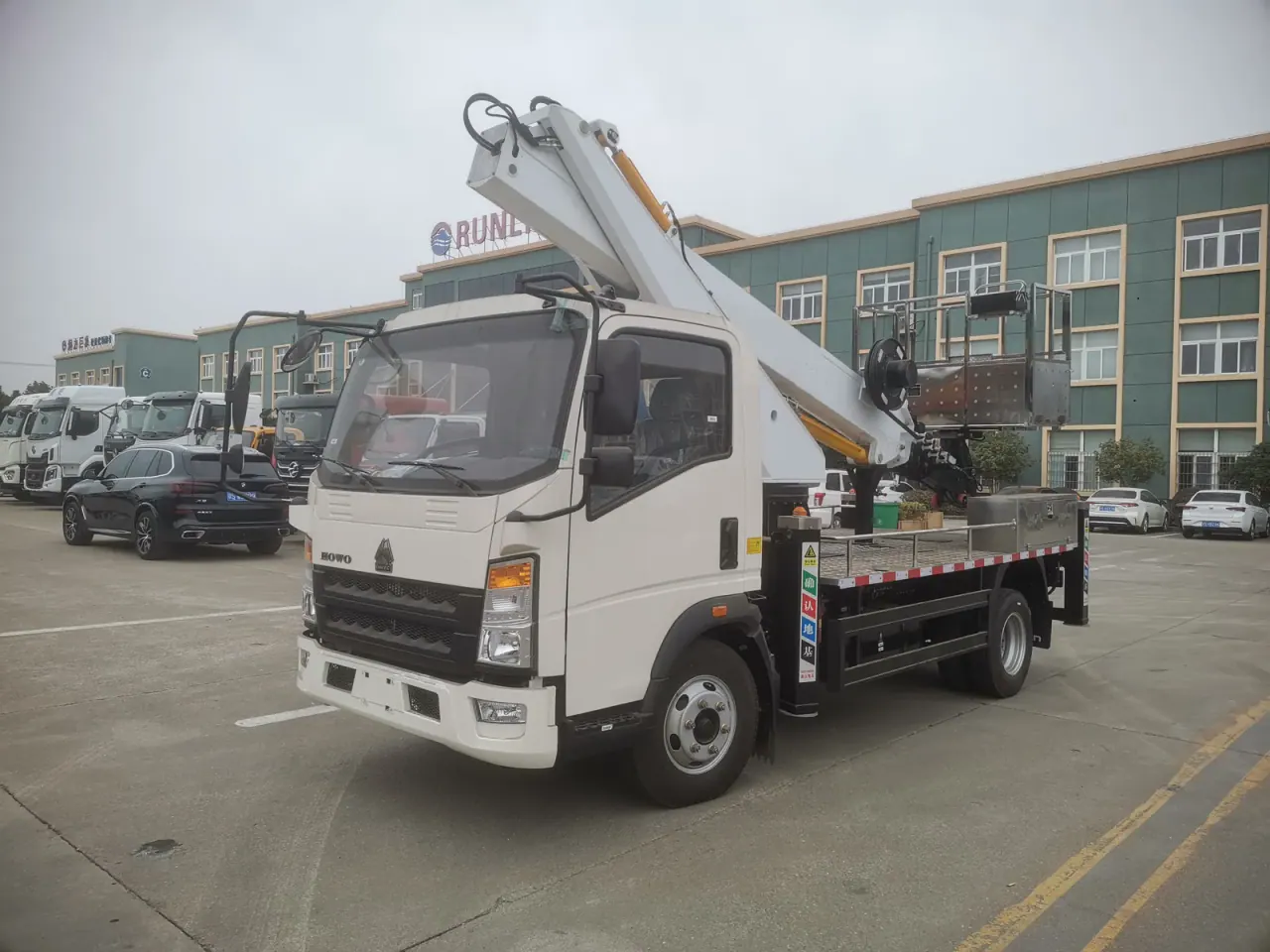
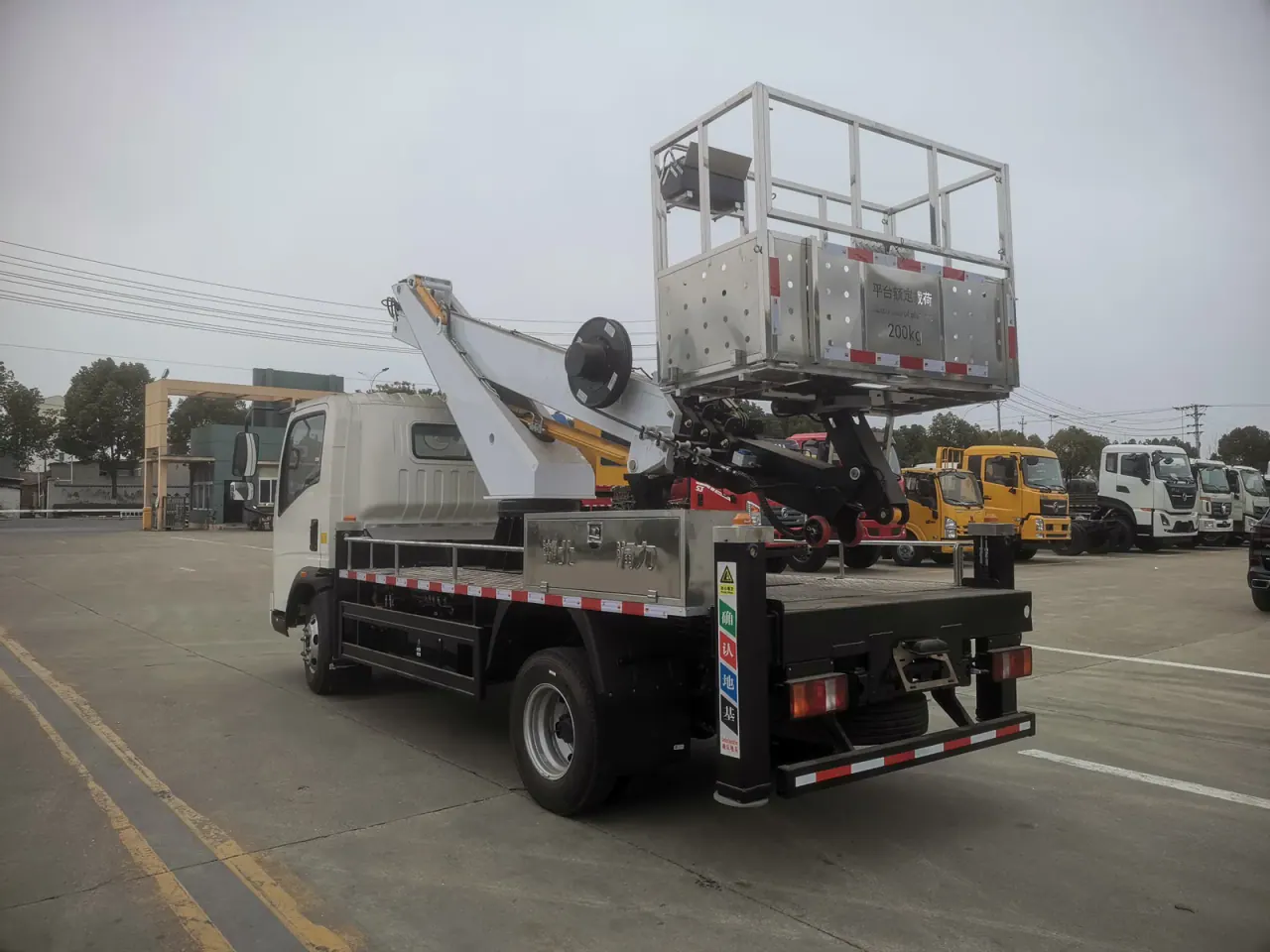
4 public-safe configuration images for HOWO Not stated in the order record help buyers inspect the visible exterior, cargo area and equipment layout.


What to confirm for a repeat order
The recorded HOWO aerial platform order; separate 20 m media label can be a comparison point, not an automatic specification for another buyer. Recalculate the route, mass, cargo access, Ethiopia acceptance path for the next vehicle.
| Workstream | Inputs to confirm | Record required | Who confirms it |
|---|---|---|---|
| Work points | Operating task, route conditions, intended load, work cycle and performance target. | Controlled duty-cycle and performance requirement sheet. | Buyer / fleet operator and vehicle supplier |
| Boom and load chart | Cargo dimensions, clear door openings, internal layout, lining, restraint and optional equipment. | Controlled cargo drawing and signed option list with installation locations. | Buyer, vehicle supplier and body or fit-out provider |
| Stability and controls | Target payload or rated capacity, full model codes, completed tare, axle loads and tyre limits. | Controlled technical sheet plus completed mass and axle-load calculation. | Vehicle supplier, body engineer and buyer |
| Ethiopia rules | Steering position, service plan and current Ethiopia import and registration checklist. | Document-responsibility list and written importer confirmation. | Importer, licensed electrician, supplier and competent local authority |
Who confirms what before the next import
KEEYAK coordinates the comparison and open-item review. The vehicle supplier owns product records; the buyer owns the duty cycle; the Ethiopia importer and competent local parties own local acceptance and filing decisions.
| Owner | Responsibility | When |
|---|---|---|
| Buyer / fleet operator | Define the aerial work platform truck task, cargo, route, payload target, stop pattern and service expectations. | Before configuration selection |
| Vehicle supplier / manufacturer | Confirm the exact model and major component codes, controlled technical data, ratings, warranty and product records. | Before quotation and production release |
| Body or fit-out provider | Confirm cargo dimensions, door openings, installed options, restraint, finished mass and axle-load effects. | Before fit-out approval |
| Ethiopia importer / customs broker | Obtain the current customs, import and filing checklist for the exact completed vehicle. | Before shipment commitment |
| Competent local authority / adviser | Decide vehicle acceptance, registration and road-use requirements. | Before import and registration |
| KEEYAK project team | Compare the buyer inputs with the recorded configuration and identify items that still require supplier or local confirmation. | During configuration review |
Ethiopia HOWO Not stated in the order record project FAQ
What does the 20 m value mean for this case?
It is a separate media-folder label, not a confirmed Ethiopia order value. Before ordering, the controlled specification must state the actual platform model, define its height convention, and provide the corresponding outreach and basket-load chart.
Is the 3360 media label the Ethiopia-order wheelbase?
No. It appears only in the unlinked media folder. The Ethiopia-order wheelbase must come from the exact PI, chassis sheet, final drawing, or vehicle record.
What chassis values still need confirmation?
Confirm the chassis model, drive, steering, wheelbase, engine, emissions, brakes, ABS, tyres, rated masses, and front and rear axle limits, then compare them with the completed platform vehicle.
Is ABS recorded for this order?
No order-specific ABS value was found. The buyer should ask the competent Ethiopian authority and a qualified vehicle engineer what is required for the current vehicle class, route, and duty before signing the contract.
Does the visible 200 kg basket marking set the ordered capacity?
No. It is visible in one case image, but the signed specification and rating plate must define the approved basket load, occupants, tools, operating envelope and any derating rules for the final vehicle.
Does citing ISO 16368 or ISO 18893 prove conformity?
No. These standards help define design, inspection, maintenance and operating questions. A citation does not prove that the final machine was tested to a particular edition or accepted in Ethiopia.
What information should be sent for a similar quotation?
Send the destination, intended application, required work points, horizontal setback, occupants and tools, basket load, preferred chassis, emissions requirement, ABS requirement, road and terrain conditions, stabilizer-space limits and the destination authority's document checklist.
Evidence and public boundaries
The review covered the order record, the local evidence-folder inventory, the quotation master exclusion review, the media manifest, and six public-safe images. Customer identity and commercial terms remain confidential. No exact PI-to-bill-of-lading match or order-specific final configuration was established. No claim is made that production, testing, shipment, registration, or delivery has been verified.
- P1Project PIRestricted project record · reviewed 30 May 2026
- Supports
- Ethiopia, HOWO Not stated in the order record, Aerial Work Platform Truck, quantity and the recorded technical configuration.
- M1KEEYAK media manifest and 4 public-safe configuration imagesAuthorized public-safe media · reviewed 30 May 2026
- Supports
- Visible configuration and layout observations.
- D1ISO 16368:2024 — Mobile elevating work platforms: Design, calculations, safety requirements and test methods Public context · reviewed 30 May 2026
- Supports
- Manufacturer-family or general regulatory context cited in this article.
- D2ISO 18893:2024 — Mobile elevating work platforms: Safety principles, inspection, maintenance and operation Public context · reviewed 30 May 2026
- Supports
- Manufacturer-family or general regulatory context cited in this article.
- D3Ethiopia Ministry of Transport and Logistics transport-law resources Public context · reviewed 30 May 2026
- Supports
- Manufacturer-family or general regulatory context cited in this article.
- D4Addis Ababa Driver and Vehicle Licensing and Control Authority Public context · reviewed 30 May 2026
- Supports
- Manufacturer-family or general regulatory context cited in this article.
How this project record was prepared
- Author
- KEEYAKExport Project Documentation
- Technical review
- KEEYAK Technical TeamConfiguration and evidence review
- Updated
- Public country context reviewed on the same date
- Method
- Project facts, order-stage facts, configuration media and public context were checked as separate evidence layers.