ISUZU KV100 Aerial Work Platform Truck Order Project for Russia — 18 m Project
This confirmed-order case establishes an ISUZU KV100 aerial work platform truck for Russia and an 18 m order value. A previously used ISUZU chassis quotation was not linked to this order and its wheelbase, engine, transmission, cab, axle, brake and tyre values have been removed. Buyers should request the final chassis sheet, complete working envelope, stabilizer and basket ratings, cold-weather package, completed mass and destination conformity file before repeat purchase.

- Destination
- Russia
- Vehicle
- ISUZU KV100
- Configuration
- 18 m order value
- Shipment
- Confirmed order; later project stages not evidenced
- Evidence
- Order record + separate media
Project at a glance
The project record connects the destination, vehicle and configuration to the recorded order stage.
| Field | Recorded Project Information |
|---|---|
| Destination | Russia |
| Project status | Confirmed order; later project stages not evidenced |
| Vehicle | ISUZU KV100 aerial work platform truck |
| Primary height value | 18 m; measurement definition to be confirmed |
| Separate media label | 20 m; not used as the order height |
| Evidence reviewed | Order record, quotation exclusion review, shipping-file inventory, media manifest and five separate configuration images |
ISUZU KV100 recorded technical configuration
These values come from the reviewed project PI.
| Specification | Recorded Value |
|---|---|
| Destination country | Russia |
| Chassis brand and model | ISUZU KV100 |
| Standard vehicle type | Aerial work platform truck |
| Order height value | 18 m |
| Height definition | To be confirmed in the final technical specification |
| Platform outreach, basket rating and stabilizer reactions | To be confirmed in the final technical specification |
| Completed mass and rear axle rating | To be confirmed in the final technical specification |
| Intended use | To be confirmed by the buyer |
What These Specifications Mean for Buyers
| Recorded Specification | Practical Interpretation | What to Confirm for a Similar Order |
|---|---|---|
| ISUZU KV100 order identity | Establishes the ordered commercial chassis family, not its complete market package. | Exact chassis code, wheelbase, completed dimensions, turning circle, ground clearance, body-builder interface and axle-load calculation. |
| 18 m order value | The value identifies the intended access class but does not define lateral reach or the measurement convention. | Whether 18 m means working height or platform-floor height and the full load-dependent reach chart. |
| Unrecorded powertrain and running gear | Prevent route, service and destination-compliance assessment. | Engine, emissions, gearbox, steering, brakes, tyres, cold-start performance and parts support. |
| Unrecorded completed masses and axles | Prevent a reliable road and operating-state load assessment. | Completed tare, GVW, axle ratings and travel and stabilizer load cases. |
| Separate 20 m media label | Identifies the media folder but conflicts with the 18 m order value. | Shared project identifier and the signed platform model, height definition and work-envelope chart. |
Configuration Suitability and Limitations
This Configuration May Be Suitable For
This 18 m ISUZU KV100 aerial platform case may suit street-light, sign, facade, communications, tree-care or municipal maintenance where the compact chassis can reach the site and the verified work envelope covers every target point. Suitability depends on basket load, lateral outreach, stabilizer space, ground capacity, slope, wind, road access and seasonal temperature.
A Different Configuration May Be Needed When
Choose a different chassis or platform when the task requires greater height or outreach, a higher basket rating, rough-terrain drive, a stronger axle package, more ground clearance, a different cold-weather system, electrical insulation or another stabilizer layout. The finished machine must remain within its axle and mass limits in travel and operating conditions.
What Is an Aerial Work Platform Truck?
An aerial work platform truck is a road-going chassis fitted with an elevating boom and guarded personnel basket. Hydraulic or electro-hydraulic systems position the basket within a manufacturer-defined operating envelope, normally while stabilizers support the vehicle. Common buyer terms include truck-mounted aerial platform and access platform truck. Unlike a mobile crane, the machine's primary function is to position people rather than suspend loads from a hook. Maximum height alone is insufficient: outreach, basket load, boom position, wind, slope and setup condition jointly determine the permitted work area.
Recorded Intended Use and Typical Applications
Intended Use Recorded for This Project
Before approval, document target work points, obstacles, horizontal setback, occupants, tools, ground conditions, road access, climate and rescue needs.
Typical Applications of This Vehicle Type
Typical applications include street-light and sign work, facade access, tree maintenance, communications work and industrial or municipal maintenance.
Key Specifications Buyers Should Compare
| Decision Factor | Why It Matters | Questions to Ask the Supplier |
|---|---|---|
| Height definition and full reach envelope | Maximum height is one point; many tasks require lateral access around obstacles. | What exactly does 18 m measure, and can you supply the load-dependent reach diagram? |
| Basket load and occupants | People, tools and materials consume rated capacity and can reduce permitted reach. | What are the rated load, occupant limit, basket dimensions and derating rules? |
| Stabilizers and ground reactions | Stability depends on footprint, pad loads, soil, slope, wind and boom position. | What are the deployed dimensions, individual reactions, pad requirements, slope and wind limits and interlocks? |
| Chassis and axle integration | The platform and subframe change mass distribution, dimensions and handling. | Supply completed mass, front/rear axle calculations, body drawing and subframe documents. |
| Cold-weather chassis package | Low temperatures affect starting, fluids, batteries, air systems, hydraulics and materials. | What design temperature, heaters, fluids, seals, battery capacity and test evidence apply? |
| Controls, rescue and inspection | Failures require safe lowering and a practiced response. | Which upper/lower controls, overload systems, auxiliary lowering, rescue instructions, tests and training are included? |
What the Russia importer should confirm before ordering
| Confirmation Item | Why It Matters | Who Should Confirm It |
|---|---|---|
| Completed-vehicle classification | A chassis plus elevating equipment may engage vehicle and machinery requirements differently. | Russian accredited conformity body and registration specialist |
| Applicable technical regulations | The exact completed configuration determines the conformity route and evidence package. | Russian accredited conformity body |
| Electronic vehicle passport and registration file | Registration documentation must identify the completed vehicle consistently. | Registration specialist and competent authority |
| Powertrain, emissions and service support | The exact unrecorded package must suit fuel, diagnostics, parts and local requirements. | Importer and authorized chassis service provider |
| Dimensions, mass and axle loads | No order-linked completed dimensions or axle values were found. | Supplier engineer, conformity body and registration specialist |
| Cold-weather operation and local support | Hydraulics, brakes, batteries, materials, fluids and rescue procedures must match the duty. | Buyer's technical team and local service provider |
Common Selection Mistakes
- Treating 18 m as self-explanatory instead of defining the height convention and reach at load.
- Selecting the chassis before calculating completed front and rear axle loads.
- Copying an unlinked chassis quotation instead of confirming the final powertrain, braking and tyre package.
- Inferring platform performance or stability from folded-boom photographs.
- Omitting pad reactions, stabilizer footprint, wind, slope and ground-bearing limits.
- Leaving cold-weather validation, emergency lowering, inspection and training until handover.
What Buyers Can Learn From This Project
- Pair the 18 m order value with a controlled height definition and complete working envelope.
- Verify that the final KV100 wheelbase and completed dimensions fit both the transport route and operating site.
- Calculate completed axle loads using the final chassis and platform assembly.
- Confirm the exact emissions, service support, winter package and braking documentation for the duty.
- Map the Russian conformity and registration route before freezing the specification.
Configuration media
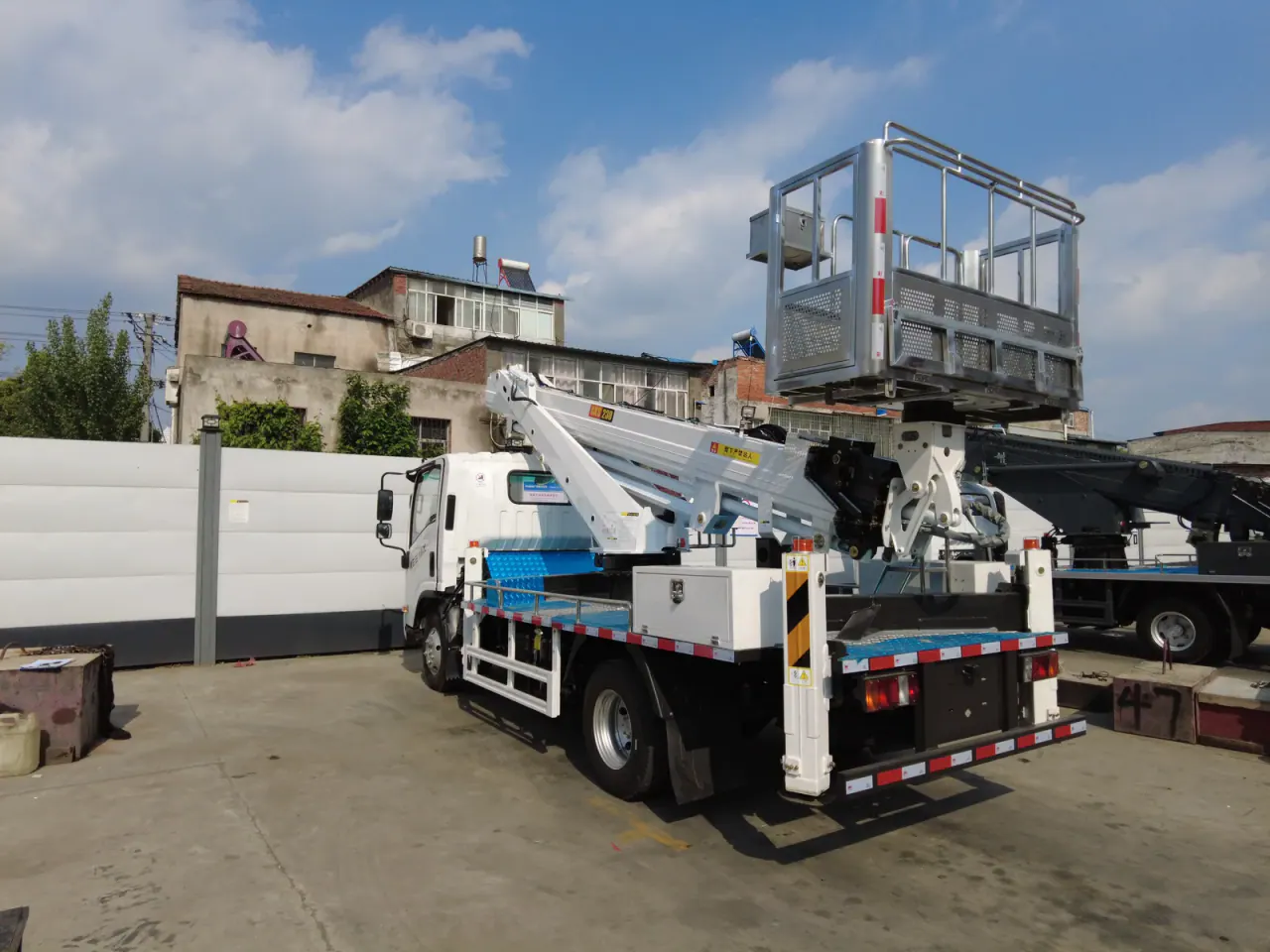
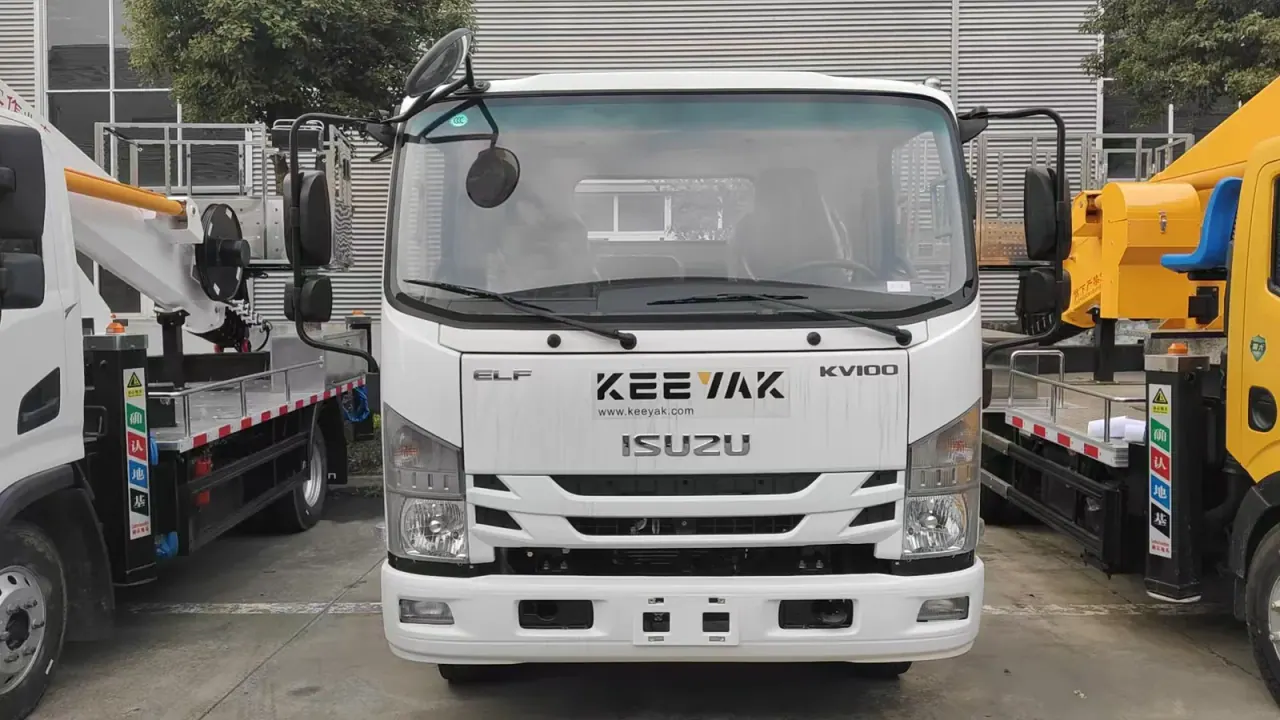
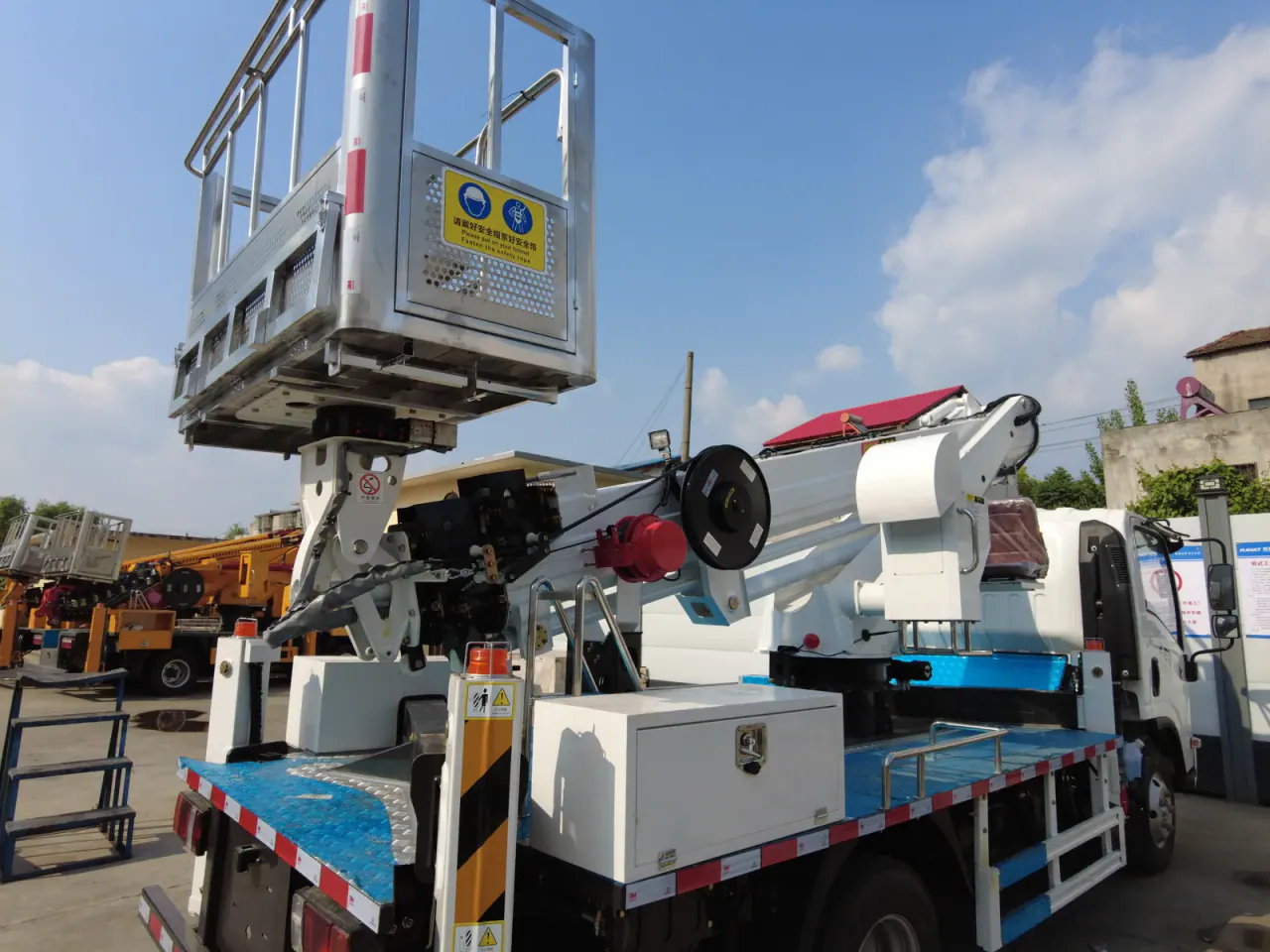
4 public-safe configuration images for ISUZU KV100 help buyers inspect the visible exterior, cargo area and equipment layout.


What to confirm for a repeat order
The recorded 18 m order value can be a comparison point, not an automatic specification for another buyer. Recalculate the route, mass, cargo access, Russia acceptance path for the next vehicle.
| Workstream | Inputs to confirm | Record required | Who confirms it |
|---|---|---|---|
| Work points | Operating task, route conditions, intended load, work cycle and performance target. | Controlled duty-cycle and performance requirement sheet. | Buyer / fleet operator and vehicle supplier |
| Boom and load chart | Cargo dimensions, clear door openings, internal layout, lining, restraint and optional equipment. | Controlled cargo drawing and signed option list with installation locations. | Buyer, vehicle supplier and body or fit-out provider |
| Stability and controls | Target payload or rated capacity, full model codes, completed tare, axle loads and tyre limits. | Controlled technical sheet plus completed mass and axle-load calculation. | Vehicle supplier, body engineer and buyer |
| Russia rules | Steering position, service plan and current Russia import and registration checklist. | Document-responsibility list and written importer confirmation. | Importer, licensed electrician, supplier and competent local authority |
Who confirms what before the next import
KEEYAK coordinates the comparison and open-item review. The vehicle supplier owns product records; the buyer owns the duty cycle; the Russia importer and competent local parties own local acceptance and filing decisions.
| Owner | Responsibility | When |
|---|---|---|
| Buyer / fleet operator | Define the aerial work platform truck task, cargo, route, payload target, stop pattern and service expectations. | Before configuration selection |
| Vehicle supplier / manufacturer | Confirm the exact model and major component codes, controlled technical data, ratings, warranty and product records. | Before quotation and production release |
| Body or fit-out provider | Confirm cargo dimensions, door openings, installed options, restraint, finished mass and axle-load effects. | Before fit-out approval |
| Russia importer / customs broker | Obtain the current customs, import and filing checklist for the exact completed vehicle. | Before shipment commitment |
| Competent local authority / adviser | Decide vehicle acceptance, registration and road-use requirements. | Before import and registration |
| KEEYAK project team | Compare the buyer inputs with the recorded configuration and identify items that still require supplier or local confirmation. | During configuration review |
Russia ISUZU KV100 project FAQ
Is 18 m the confirmed project height value?
Yes. The order record states 18 m. The final controlled specification must still define whether it means maximum working height, platform-floor height or another measurement and provide the matching reach and load chart.
Why does the source record also mention a 20 m media label?
The matched image folder is labelled 20 m, while the order project states 18 m. The two values remain separate; the 18 m order value controls this case, and the final signed contract must identify the exact platform configuration.
Is the KV100 wheelbase confirmed for this order?
No. The matched order evidence does not state wheelbase. Buyers should confirm the final chassis code, wheelbase, turning circle, transport dimensions, stabilizer packaging, completed mass and axle loads.
Are the completed axle ratings confirmed?
No. The order-linked axle ratings were not found. Approval requires front and rear ratings, gross and curb masses and measured or calculated front/rear loads for the complete chassis-platform assembly.
What cold-weather details should be specified?
State the minimum design and start temperatures, hydraulic and engine fluids, battery and heater package, seals and hoses, air-system moisture control, tyre plan, cab heating, emergency lowering method and local service arrangements.
Do the cited Russian sources prove conformity?
No. They identify relevant regulatory and registration frameworks. An accredited Russian conformity body must determine the exact route and required evidence for the final completed vehicle.
What should a buyer submit for a similar configuration?
Submit the destination, intended application, target work points, horizontal setback, basket payload, occupants and tools, preferred chassis, emissions requirement, climate, road and terrain conditions, stabilizer-space limit and the destination specialist's conformity-document list.
Evidence and public boundaries
The case scope covers the Russia destination, ISUZU KV100 order identity, 18 m value and aerial-platform vehicle type. The review included the order record, quotation-master exclusion check, local shipping-file inventory, media manifest and five website-authorized photographs. No exact final specification or PI-to-bill-of-lading match was established. Customer identity and commercial details are withheld. The 18 m definition, platform outreach, basket capacity, stabilizer reactions, completed mass and axle ratings require controlled technical documents. No technical test, manufacturing completion, shipment or delivery is asserted.
- P1Project PIRestricted project record · reviewed 13 August 2026
- Supports
- Russia, ISUZU KV100, Aerial Work Platform Truck, quantity and the recorded technical configuration.
- M1KEEYAK media manifest and 4 public-safe configuration imagesAuthorized public-safe media · reviewed 13 August 2026
- Supports
- Visible configuration and layout observations.
- D1ISO 16368:2024 — Mobile elevating work platforms: Design, calculations, safety requirements and test methods Public context · reviewed 13 August 2026
- Supports
- Manufacturer-family or general regulatory context cited in this article.
- D2ISO 18893:2024 — Mobile elevating work platforms: Safety principles, inspection, maintenance and operation Public context · reviewed 13 August 2026
- Supports
- Manufacturer-family or general regulatory context cited in this article.
- D3Russian official publication record for Government Resolution No. 1764 Public context · reviewed 13 August 2026
- Supports
- Manufacturer-family or general regulatory context cited in this article.
- D4Eurasian Economic Commission normative base Public context · reviewed 13 August 2026
- Supports
- Manufacturer-family or general regulatory context cited in this article.
How this project record was prepared
- Author
- KEEYAKExport Project Documentation
- Technical review
- KEEYAK Technical TeamConfiguration and evidence review
- Updated
- Public country context reviewed on the same date
- Method
- Project facts, order-stage facts, configuration media and public context were checked as separate evidence layers.