JAC 8×4 Knuckle-Boom Crane Truck Order for Peru: 9.6 m Body

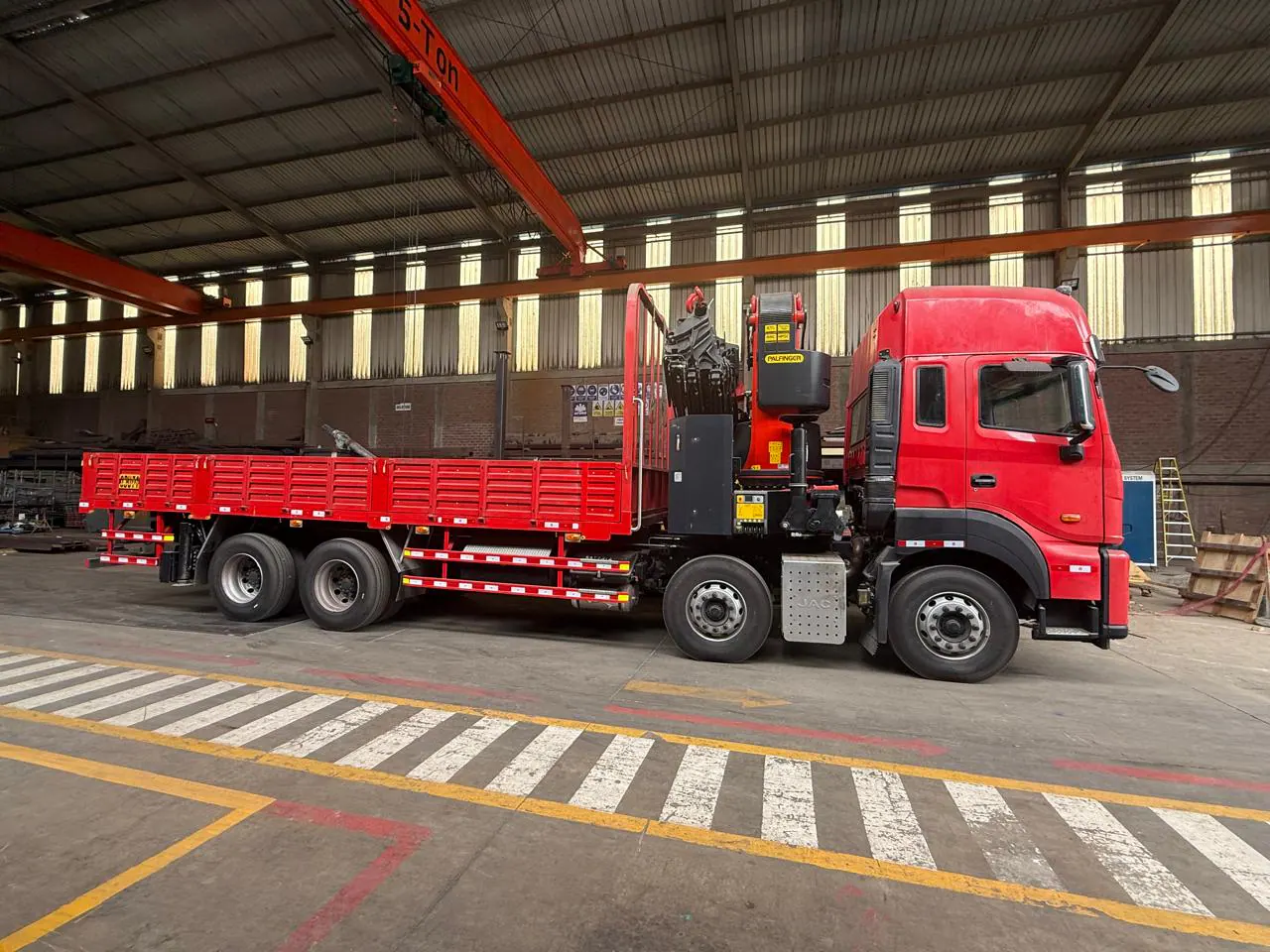
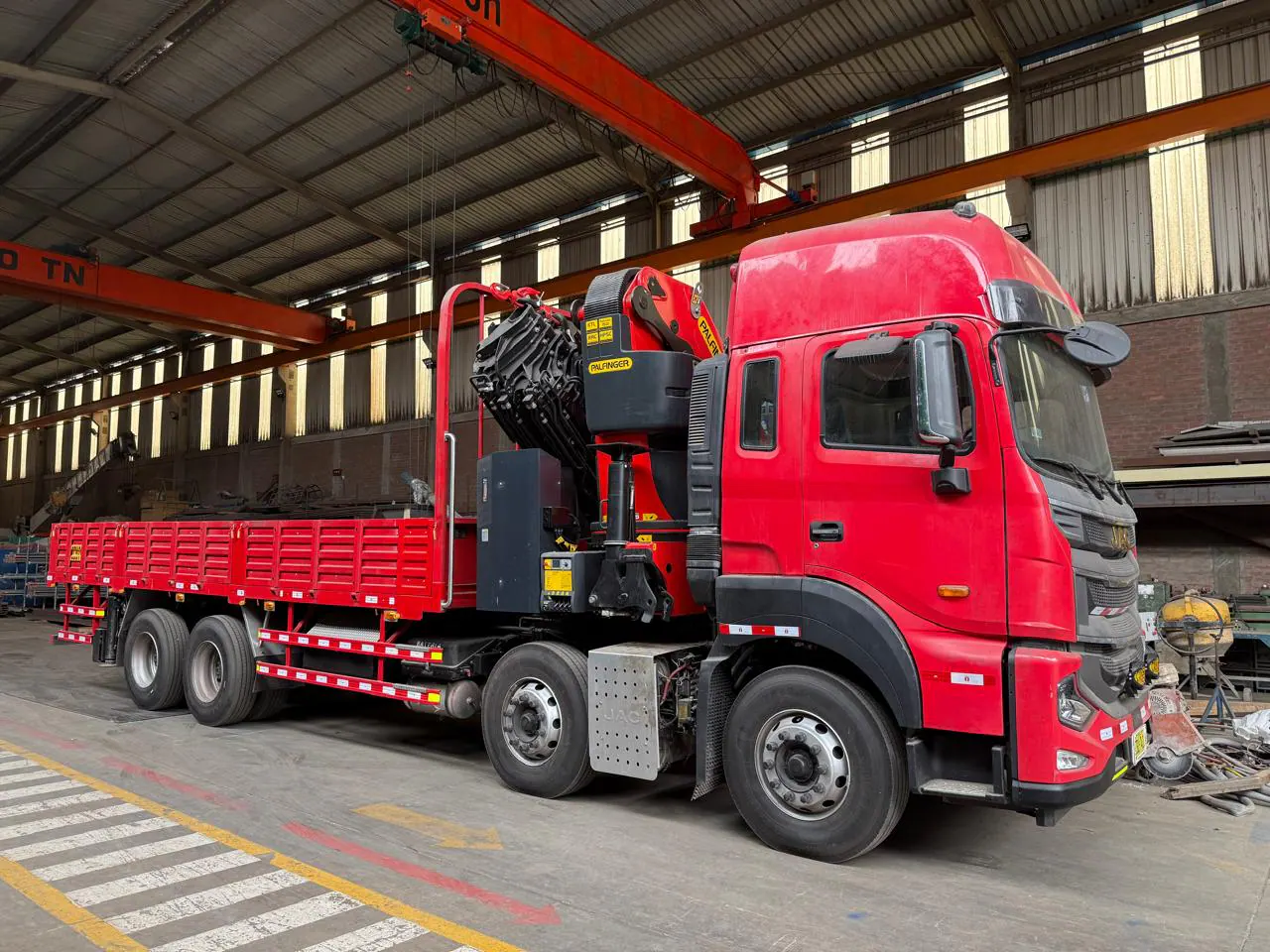
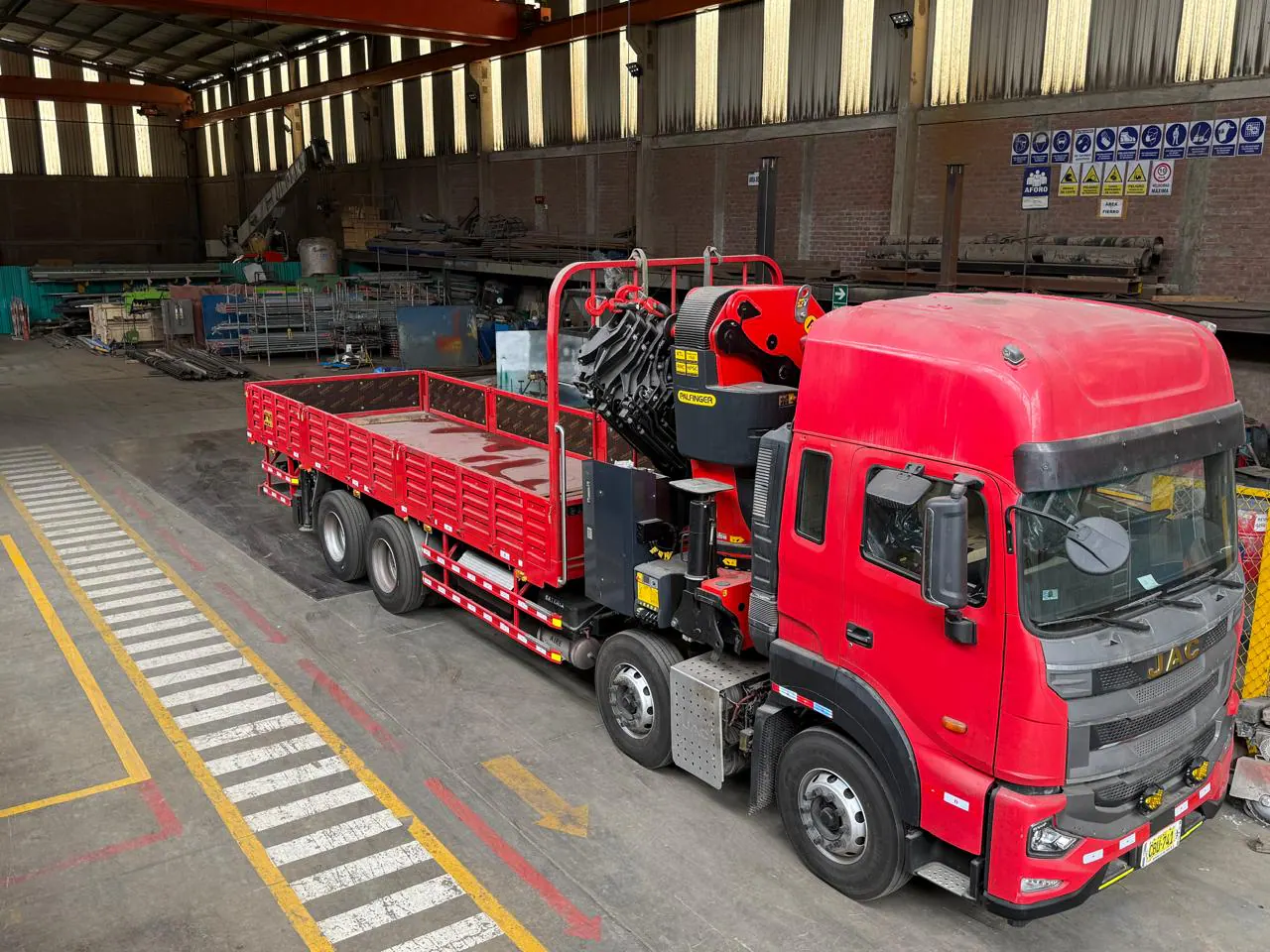
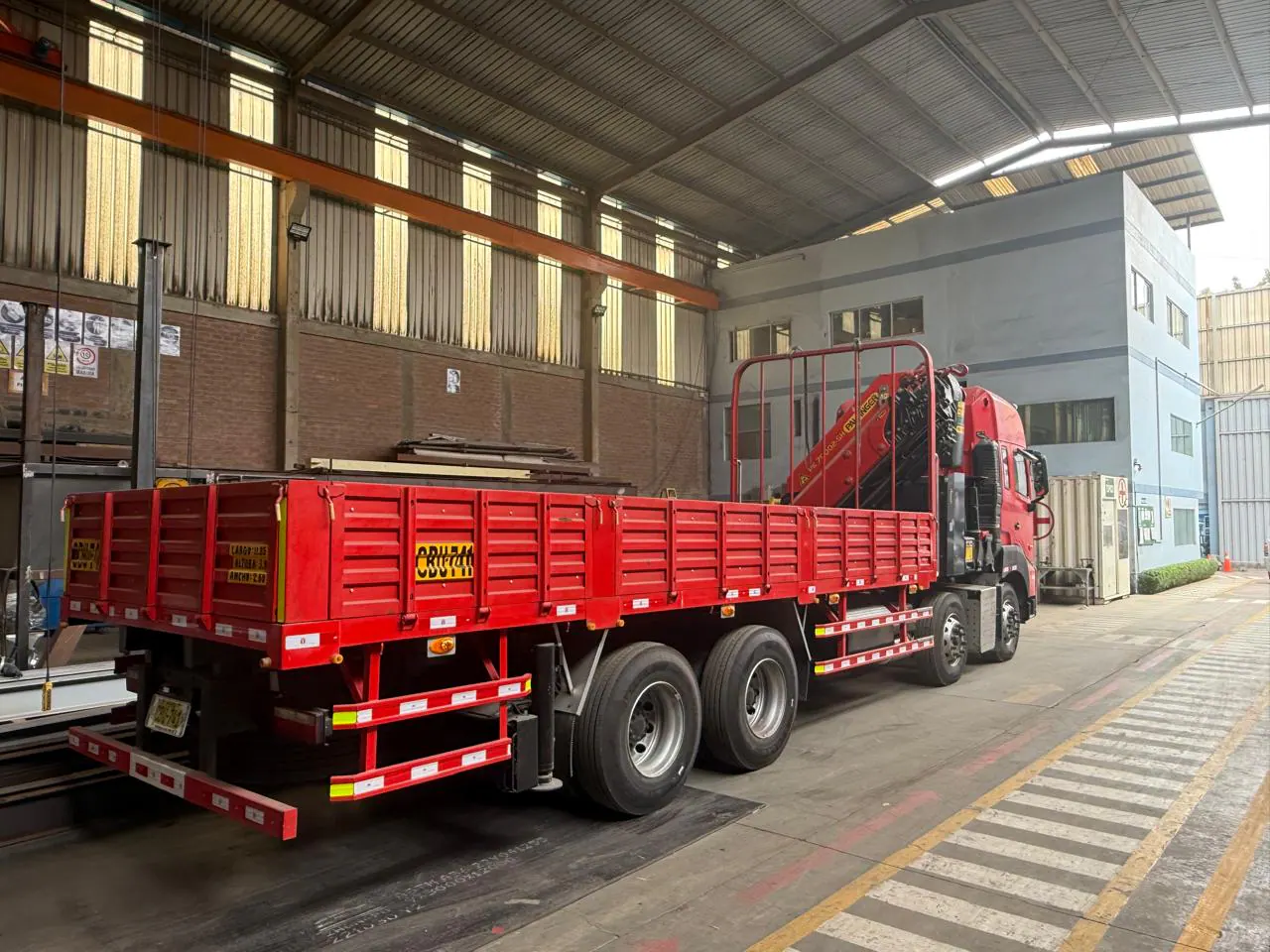
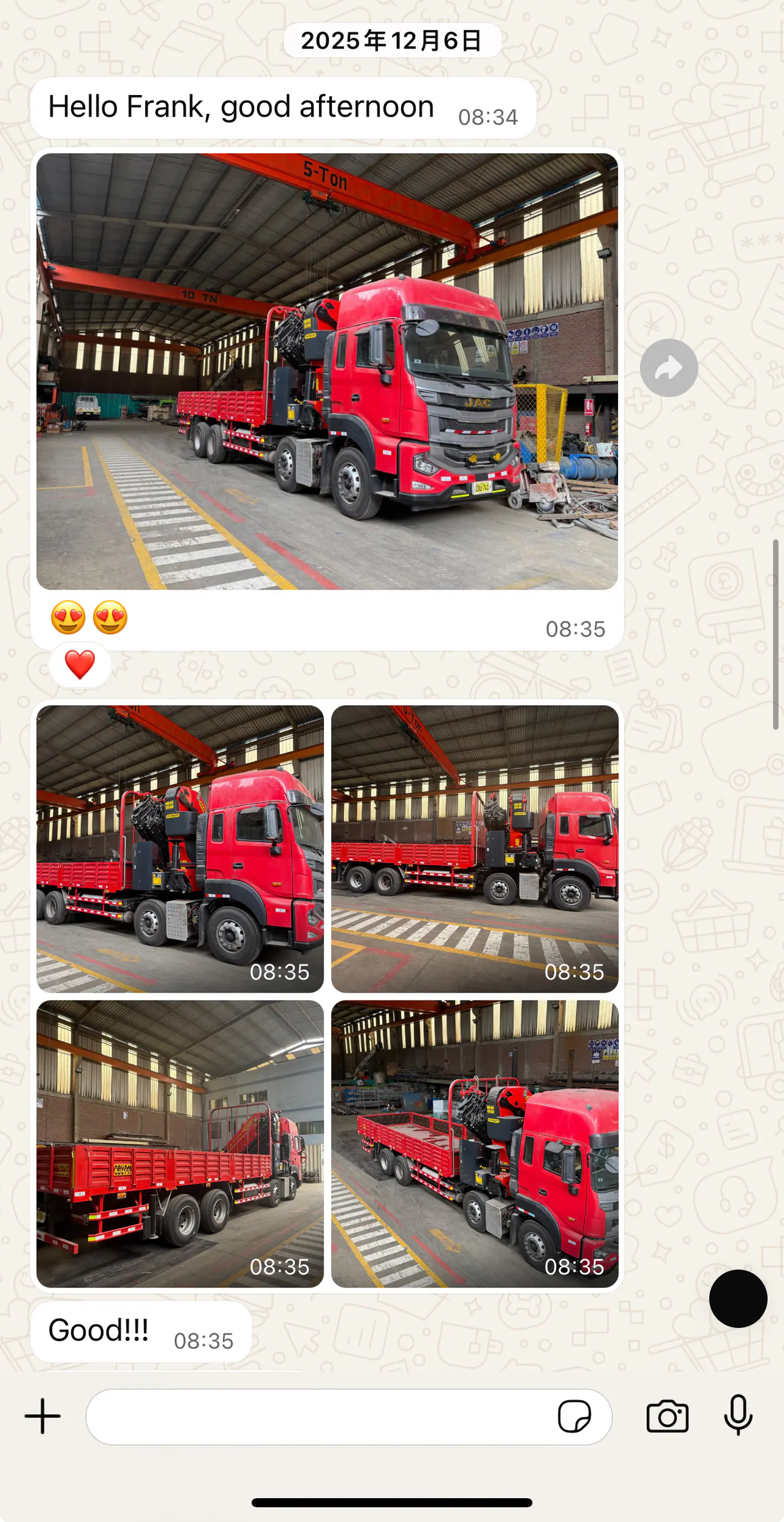
A buyer in Peru ordered this red JAC 8×4 with a knuckle-boom crane behind the cab and a long drop-side body. The messages confirm the 460 hp chassis choice, the 9.6 m body design and a power take-off for the crane hydraulics. Four factory photographs show the completed installation. The exact crane rating and load chart stay in the controlled technical package.

JAC knuckle-boom truck-mounted crane configuration shown in an editorial vehicle view
Destination
Peru
Vehicle
JAC
Configuration
JAC 8×4 chassis, 460 hp selection, 9.6 m body design and PTO-equipped knuckle-boom crane configuration
Shipment
Confirmed order record
Evidence
Confirmed order record + configuration media

Project at a glance

The project record connects the destination, vehicle and configuration to the recorded order stage.

FieldProject record
DestinationPeru
Project statusConfirmed order record
Chassis brandJAC
Axle configuration8×4
Vehicle typeKnuckle-boom truck-mounted crane
Crane locationBehind the cab
Cargo bodyLong drop-side body
Recorded chassis selection460 hp
Recorded body design length9.6 m
Hydraulic drive inputPower take-off recorded for crane operation
Factory photographsFour workshop views of the completed vehicle installation
Evidence limitFactory-stage configuration only; no customs, shipment, arrival or registration claim

JAC recorded technical configuration

This table presents the recorded order values and the completed configuration parameters for this vehicle.

SpecificationProject value
Destination countryPeru
Chassis brandJAC
Axle configuration8×4
Chassis power selection460 hp
Crane arrangementKnuckle-boom crane mounted behind the cab
Crane transport positionFolded vertically behind the cab
Crane hydraulic drivePower take-off recorded in the project communication
Cargo-body typeLong drop-side cargo body
Cargo-body design length9.6 m project design input
Cab and body colourRed in the supplied factory photographs
Outrigger arrangementVisible beside the crane installation in the factory views
Exact crane model and capacityControlled project load-chart field outside the public record
Completed tare, payload and axle loadsControlled mass-calculation fields outside the public record
Certified overall dimensionsControlled final-inspection fields outside the public record

Project communication record

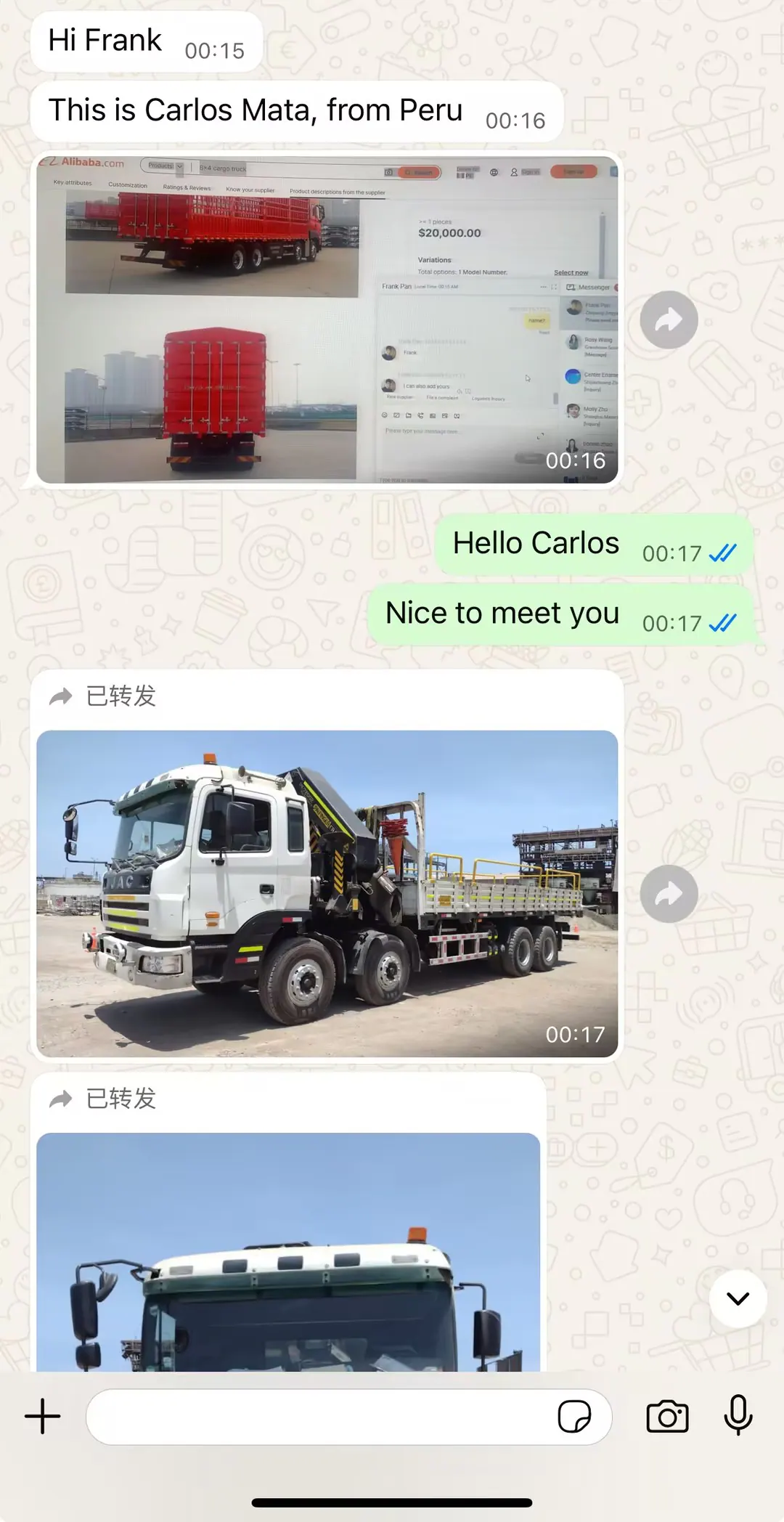
Initial customer communication identifying a Peru crane-truck requirement and sharing reference truck images
Original project chat recording the initial Peru enquiry and vehicle references.
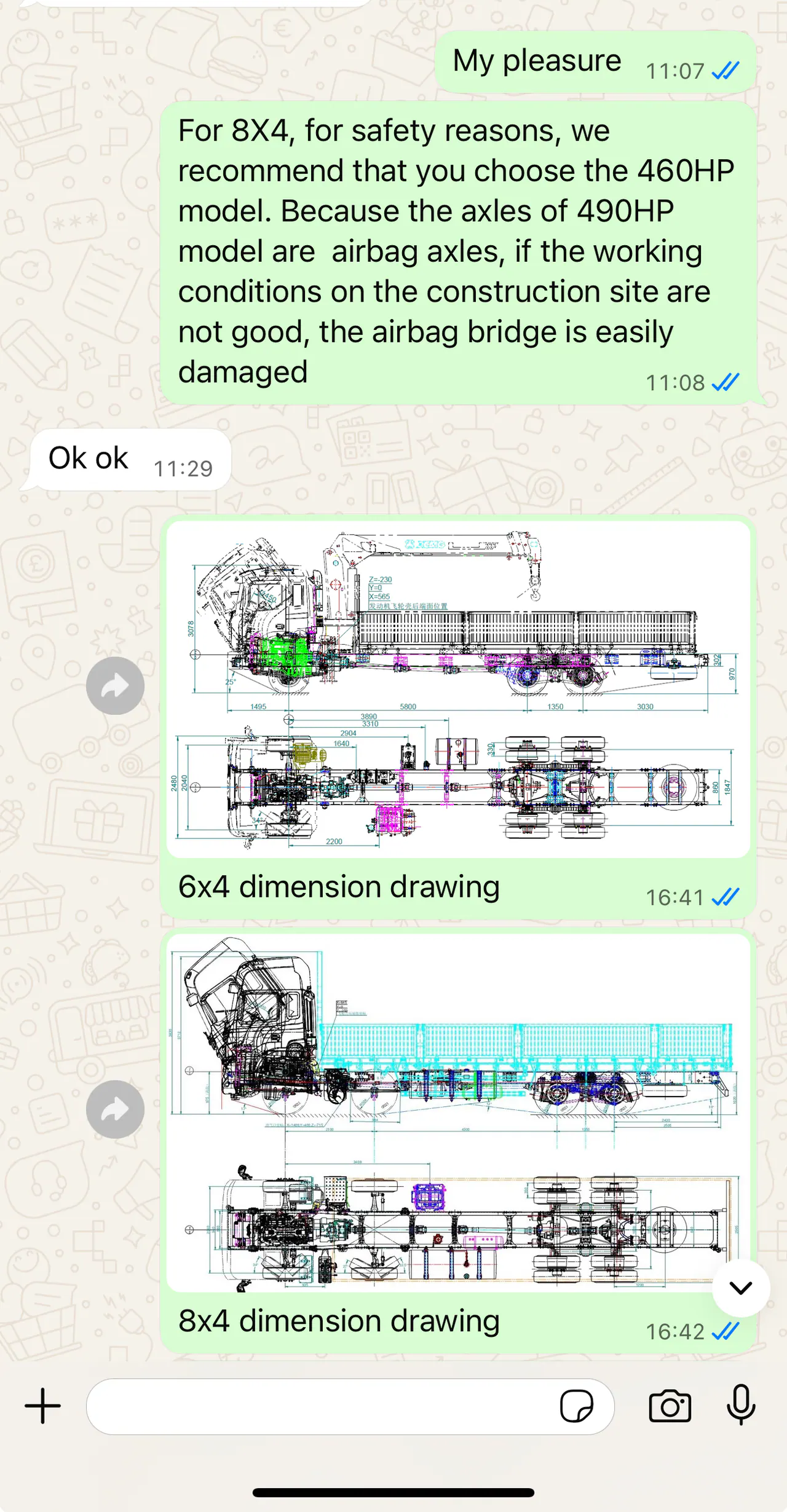
Customer communication comparing the 6x4 and 8x4 chassis drawings for the Peru crane-truck project
Original project chat showing the 6×4 and 8×4 layout comparison.
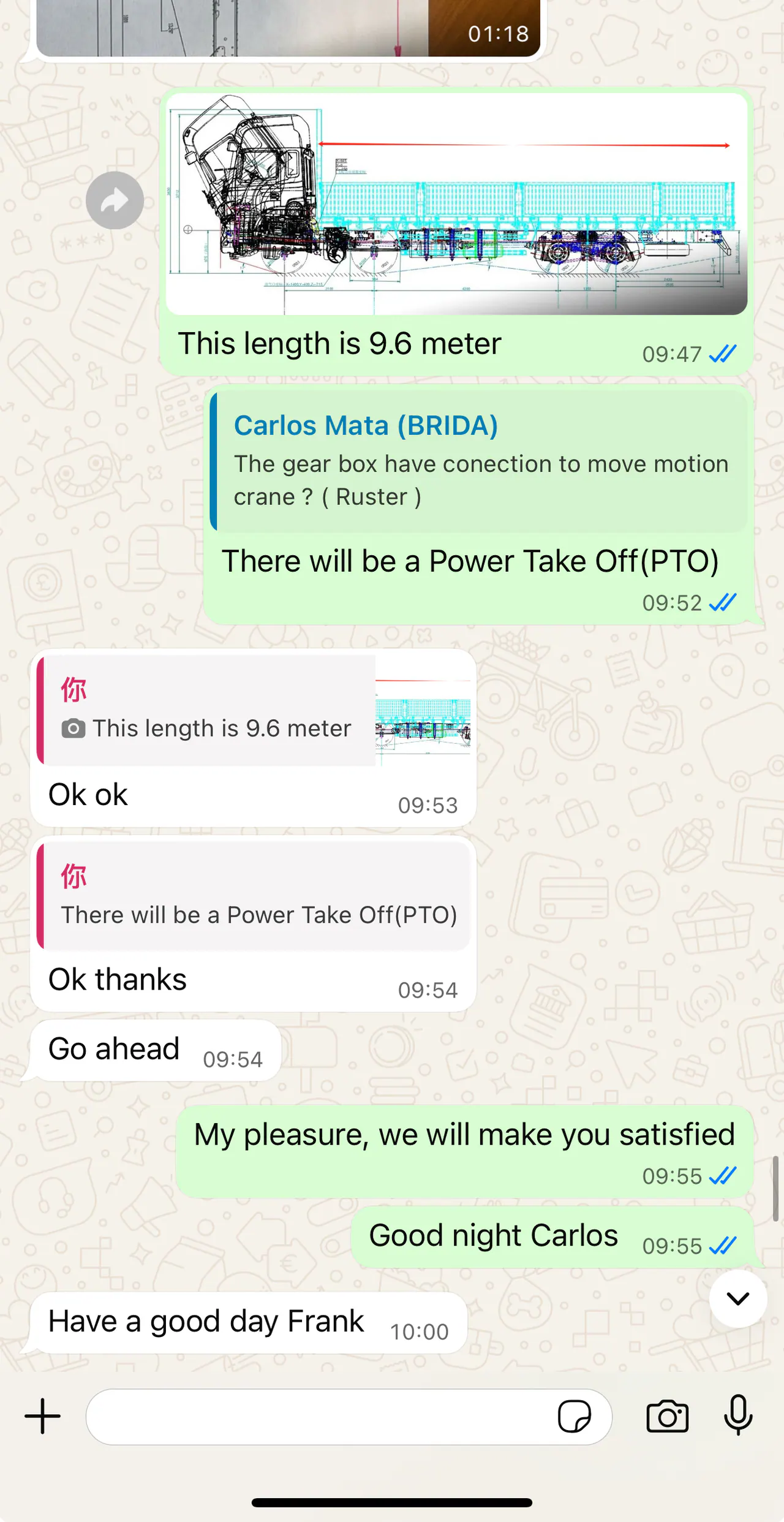
Customer communication confirming the 9.6 m body design and power take-off for the crane hydraulics
Original project chat recording the 9.6 m body design and PTO response.
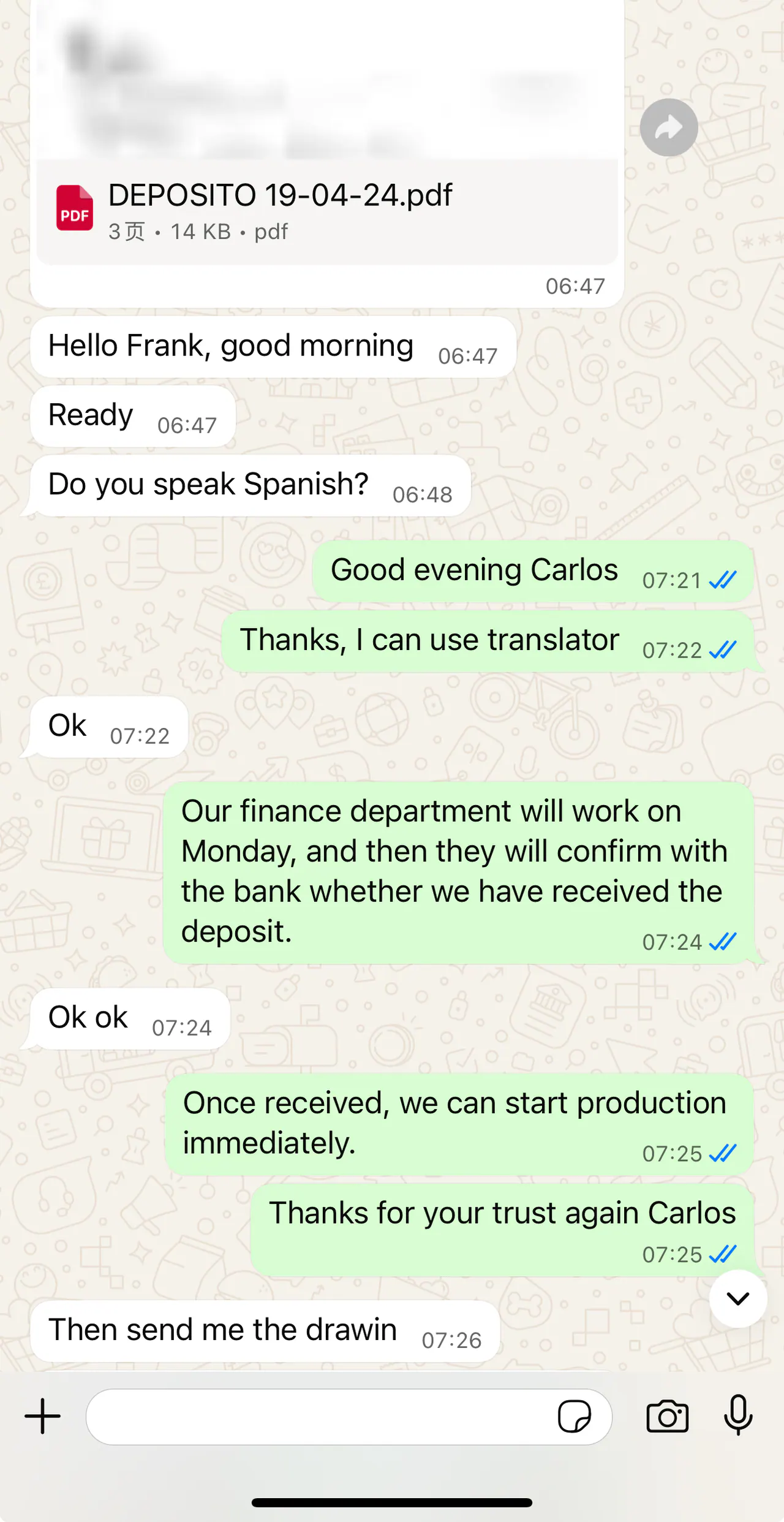
Customer communication sharing a deposit record and discussing bank confirmation before production
Original project chat showing that a deposit record was shared and bank confirmation was discussed before production.
Customer communication acknowledging factory photographs of the completed red JAC crane truck
Original project chat acknowledging the completed factory-stage configuration.

Evidence reviewed and public scope

The evidence set contains four factory photographs and selected messages supplied for this case. All four photographs show the same red four-axle JAC, folded crane and long drop-side body in the same workshop. The messages establish the Peru destination and the discussion of the 8×4 layout, 460 hp chassis, 9.6 m body design and PTO connection.

Shipment and customs documents sit outside the accepted evidence set. The published status stops at factory configuration; shipment, arrival and registration are outside the claim. Only the selected communication screenshots are public.

Order review and factory record

StepEvidence
Initial enquiryThe buyer asked for a truck-mounted crane for use in Peru.
Chassis layoutThe discussion compared layouts and settled on 8×4 for the long crane-and-body package.
Power choiceThe project team recommended the 460 hp chassis.
Body drawingThe drawing used a 9.6 m cargo-body design length.
Crane hydraulicsThe messages specify a PTO connection for the crane pump.
Factory follow-upFour photographs show the completed red chassis, body and folded crane installation.
Published statusConfirmed order at factory configuration stage.

Implications for a repeat build

Recorded choiceEffect on the vehicleInformation still needed
8×4 chassisFour axles provide a long platform and additional axle groups for the cab, crane, body and cargo.Finished mass model, legal axle limits, tyre ratings, turning space and route access
460 hp selectionPower is only one part of gradeability. Torque, gearing, gross mass and gradients also matter.Engine model, torque curve, gearbox, axle ratio, cooling package and destination fuel quality
9.6 m body designThe long body adds deck space but changes rear overhang, turning and load distribution.Clear internal deck length, body structure, rear overhang, centre of gravity and certified overall length
Cab-rear knuckle-boom craneThe crane folds behind the cab, which keeps the cargo body accessible.Crane model, rated moment, working radius, boom extensions, hook height, load chart and stowed envelope
PTO hydraulic driveThe PTO drives the hydraulic pump. Crane speed and heat depend on the matched hydraulic circuit.PTO ratio, pump displacement, hydraulic flow, pressure, cooling, control logic and duty cycle
Drop-side cargo bodyHinged panels allow side loading and retain cargo in transport.Deck rating, side-board height, floor material, lashing points, load restraint and loading method

Limits of the published specifications

The order table omits generic crane-capacity ranges. The available evidence identifies the truck layout and several integration decisions, while the exact crane model and load chart remain in controlled project documents. This prevents a product-family range from being mistaken for the rating of this truck.

For a repeat build, select the crane against the heaviest load at the required radius. The maximum headline capacity cannot replace the full load chart because capacity falls as working radius increases. Check the chassis, subframe, outriggers and hydraulic system together with the load-restraint plan.

Suitable work and layout limits

This layout suits work that needs onboard lifting and a long cargo deck. Typical loads include construction materials, machinery parts, packaged equipment and site supplies, provided the selected crane's load chart covers the lift. The folded boom sits behind the cab and leaves the body available for cargo.

Choose another layout if the job needs unusually long reach, frequent high-cycle lifting or concentrated point loads. Restricted axle weights, narrow access roads and a short turning envelope can also change the choice. Evaluate body length, crane position and rear overhang together because a longer body changes frame stress, manoeuvrability and axle distribution.

Knuckle-boom crane layout and operation

A knuckle-boom crane has articulated sections that fold at one or more joints. On a truck, the folded crane normally sits behind the cab or at the rear of the body. Hydraulic cylinders unfold the boom, and outriggers transfer working loads into the ground. Compared with a straight telescopic boom, the folded package is compact and can work around some obstacles. Actual reach and capacity still depend on the crane model and boom extensions.

The crane is only one part of the vehicle. Safe integration starts with the truck frame and mounting subframe, then adds the PTO, pump and hydraulic circuit. The design must also account for outrigger reactions, controls, body structure, axle loads, tyres, brakes and operating procedures.

Intended use and typical applications

Similar trucks can carry structural materials, machinery components, packaged site equipment and utility supplies when the crane is rated for the required lift.

For crane selection, define the load mass and dimensions, pickup and placement radii, lift height, duty cycle and ground conditions. Transport planning must then cover cargo position, deck loads and restraint, together with route width, gradients, bridge limits, overhead clearance and turning space.

Information needed for a comparable quotation

DecisionWhy it mattersDetails to provide
Load and radius matrixCrane selection depends on lifting capacity at each working radius.Heaviest load, minimum and maximum radius, lift height and boom path
Chassis and axle modelCrane, body, cargo and outriggers create concentrated frame and axle loads.Chassis code, axle ratings, tyre ratings, wheelbase and legal mass limits
Body length and load layoutA 9.6 m body changes rear overhang, cargo position and turning requirements.Cargo dimensions, loading positions, restraint points and site geometry
PTO and hydraulicsCrane speed, heat and duty cycle depend on the matched PTO, pump and hydraulic circuit.Required flow, pressure, operating cycle, oil capacity, filtration and cooling
Subframe and mountingThe subframe distributes crane and body forces into the chassis.Mounting drawing, materials, fasteners, reinforcement and fatigue assumptions
Outrigger reactionsStability depends on ground support and available deployment space.Maximum reaction, spread, pad size, ground bearing capacity and slope
Controls and safety devicesOperator visibility and interlocks affect safe lifting.Control stations, remote control, emergency stop, overload protection and alarms
Service and partsCrane, hydraulic and chassis support determine uptime.Parts list, filters, seals, hoses, diagnostic tools, manuals and training

Peru configuration checklist

CheckReasonResponsible parties
Import and registration document setChassis identity, body conversion and crane installation must use consistent records.Importer, customs broker, registration specialist and supplier
Finished dimensions and legal massesThe body and crane change total length, height, tare and axle distribution.Vehicle engineer, body builder, importer and responsible authority
Steering, lighting and markingsDestination road rules affect the completed vehicle specification.Importer, qualified local adviser and supplier compliance team
Crane load chart and certificationThe lifting task depends on model-specific capacity at radius and outrigger condition.Crane manufacturer, supplier and qualified lifting-equipment specialist
Route and worksite accessLong body length and four-axle geometry affect turning, gradients and ground clearance.Fleet operator, site manager and transport planner
Ground support for outriggersStability depends on soil, paving, slope and pad selection.Site manager, crane supervisor and operator
Operator training and maintenanceThe integrated crane, PTO and hydraulic system require defined procedures.Fleet operator, equipment trainer and service provider

Common selection mistakes

  • Choosing a crane by its maximum advertised tonnage without checking capacity at the working radius.
  • Treating the 9.6 m body design as the vehicle's certified overall length.
  • Quoting payload before adding the crane, subframe, body, fluids and options to tare.
  • Using engine power alone to estimate gradeability without torque, gearing, gross mass and route data.
  • Selecting the PTO and pump without the crane's required flow, pressure and duty cycle.
  • Ignoring outrigger reactions and ground-bearing capacity.
  • Maximising body length without checking rear overhang, turning and axle loads.
  • Using factory photographs in place of the model load chart and final inspection record.

Lessons from this order

Start with the lifting task and the transport task, then fit both to one chassis. The 8×4 layout, 460 hp choice and 9.6 m body design are major packaging decisions, not a complete technical specification. The crane model and duty cycle still determine the PTO, pump and hydraulic requirements.

The long body provides more deck space but makes mass distribution and route geometry more important. Factory photographs help a buyer review the installation, while drawings, calculations and certificates control the ratings. Selected messages can support public verification with customer permission without being presented as a testimonial.

Evidence note

We reviewed four factory photographs and selected messages for this Peru JAC 8×4 case. This page uses only the fields supported by those materials. It withholds contact details, prices, bank-account details, deposit-document contents and restricted document numbers. Only the selected customer-approved screenshots are public.

Quick answer

This Peru order covers a red JAC 8×4 with a knuckle-boom crane behind the cab, a long drop-side body, a 460 hp chassis, a 9.6 m body design and PTO-driven crane hydraulics. The evidence confirms the factory-stage installation. A comparable quotation still needs the exact crane rating, mass calculation, hydraulic specification, body drawing and destination documents.

Repeat-order configuration checklist

Use the recorded JAC 8×4 chassis, 460 hp selection, 9.6 m body design and PTO-equipped knuckle-boom crane configuration as the project baseline. Define the route, mass, cargo access, Peru acceptance path for the next vehicle.

Inputs, controlled records and responsible parties for a comparable order
WorkstreamProject inputsRecord requiredResponsible parties
Operating taskOperating task, route conditions, intended load, work cycle and performance target.Controlled duty-cycle and performance requirement sheet.Buyer / fleet operator and vehicle supplier
Body dimensionsCargo dimensions, clear door openings, internal layout, lining, restraint and optional equipment.Controlled cargo drawing and signed option list with installation locations.Buyer, vehicle supplier and body or fit-out provider
Mass and ratingsTarget payload or rated capacity, full model codes, completed tare, axle loads and tyre limits.Controlled technical sheet plus completed mass and axle-load calculation.Vehicle supplier, body engineer and buyer
Peru documentsSteering position, service plan and current Peru import and registration checklist.Document-responsibility list and written importer confirmation.Importer, licensed electrician, supplier and competent local authority

Project execution responsibilities

KEEYAK coordinates configuration comparison and document preparation. The vehicle supplier owns product records; the buyer owns the duty cycle; the Peru importer and competent local parties own local acceptance and filing decisions.

Responsibility and timing for a comparable import
OwnerResponsibilityWhen
Buyer / fleet operatorProvide the knuckle-boom truck-mounted crane task, cargo, route, payload target, stop pattern and service expectations.Before configuration selection
Vehicle supplier / manufacturerIssue the exact model and major component codes, controlled technical data, ratings, warranty and product records.Before quotation and production release
Body or fit-out providerIssue the controlled cargo drawing, door openings, installed-option list, restraint plan, finished mass and axle-load calculation.Before fit-out approval
Peru importer / customs brokerComplete the current customs, import and filing checklist for the exact completed vehicle.Before shipment commitment
Competent local authority / adviserIssue the vehicle acceptance, registration and road-use requirements.Before import and registration
KEEYAK project teamCompile the buyer inputs, recorded configuration, supplier records and local approval inputs.During configuration review

Peru JAC project FAQ

What configuration is recorded for the Peru order?

The order uses a red JAC 8×4 chassis with a knuckle-boom crane behind the cab, a long drop-side body, a 460 hp chassis, a 9.6 m body design and a power take-off for the crane hydraulics.

What does the 9.6 m value represent?

The 9.6 m value is the cargo-body design length shown in the project drawing. It is a design input rather than the certified overall length of the completed truck.

How is crane hydraulic power provided?

The buyer asked how the gearbox would provide the crane drive. The response specifies a PTO. The final integration package must state the PTO ratio, pump displacement, flow and pressure.

Which crane capacity and outreach apply?

Factory views show a folded knuckle-boom crane behind the cab. Its exact rating comes from the controlled project load chart, including the model, rated moment, working radii, capacity at each radius and outrigger reactions.

What information is needed for a comparable crane-truck order?

Provide the heaviest load, lifting radius, lifting height, work frequency, cargo dimensions and mass, body length, route and site conditions, outrigger space, steering position, preferred chassis, emissions requirement and destination document checklist.

Project documentation

The project records document the order stage, vehicle identity and displayed technical configuration. Customer identity, prices, document numbers, VIN, vessel details and contacts are withheld.
  1. P1
    Project PIRestricted project record · reviewed 8 September 2026
    Supports
    Peru, JAC, Knuckle-boom truck-mounted crane, quantity and the recorded technical configuration.
  2. M1
    KEEYAK media manifest and 4 public-safe configuration imagesAuthorized public-safe media · reviewed 8 September 2026
    Supports
    Visible configuration and layout observations.
  3. D1
    KEEYAK truck-mounted crane category Public context · reviewed 8 September 2026
    Supports
    Manufacturer-family and regulatory context cited in this article.

How this project record was prepared

Prepared by
KEEYAK Export Project Editorial TeamProject documentation and buyer-facing editorial preparation
Technical review
Alicia JuneConfiguration and evidence review
Vehicle category contact
Frank PanVehicle Category Lead · +86 180 4242 3328
WhatsApp
Published
First publication date for this web article
Evidence reviewed
Project evidence and public country context review
Method
Project facts, order-stage facts, configuration media and public context were checked as separate evidence layers.

Looking to plan a similar procurement?

Send the destination, required job or cargo, target payload or capacity, route and site conditions, preferred chassis, operating constraints and importer document checklist. KEEYAK can turn those inputs into a comparable configuration review.