
Two JMC Dropside Trucks Delivered to Algeria
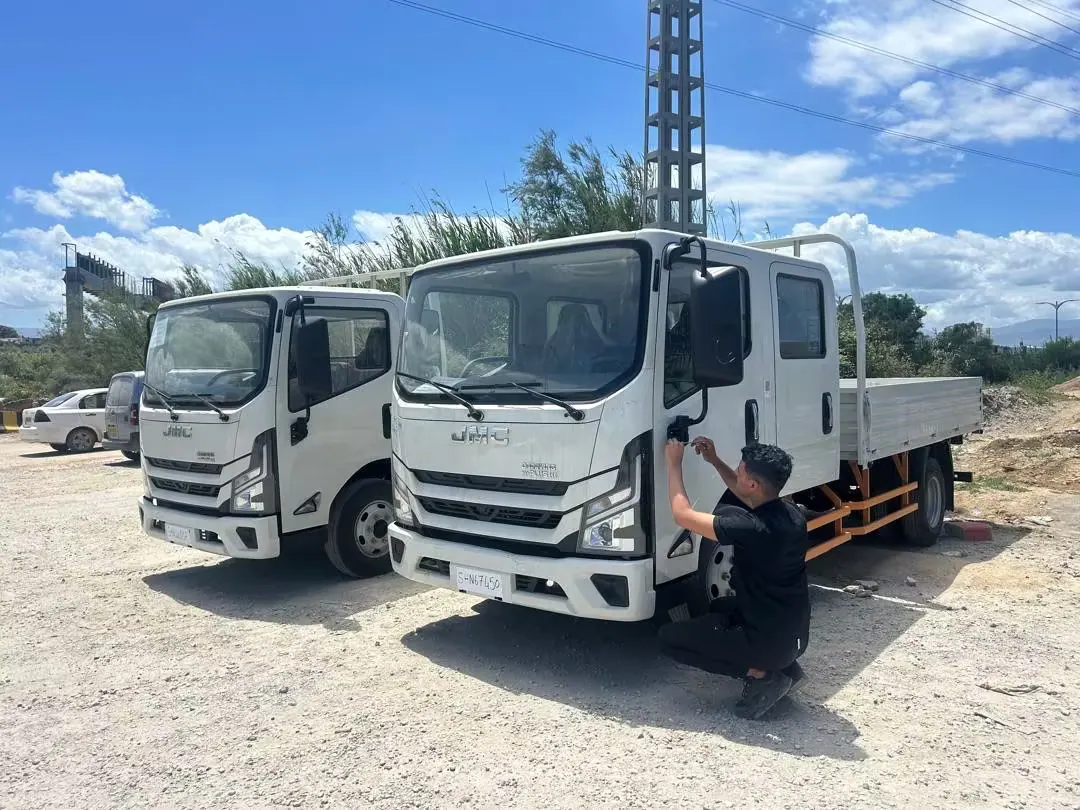
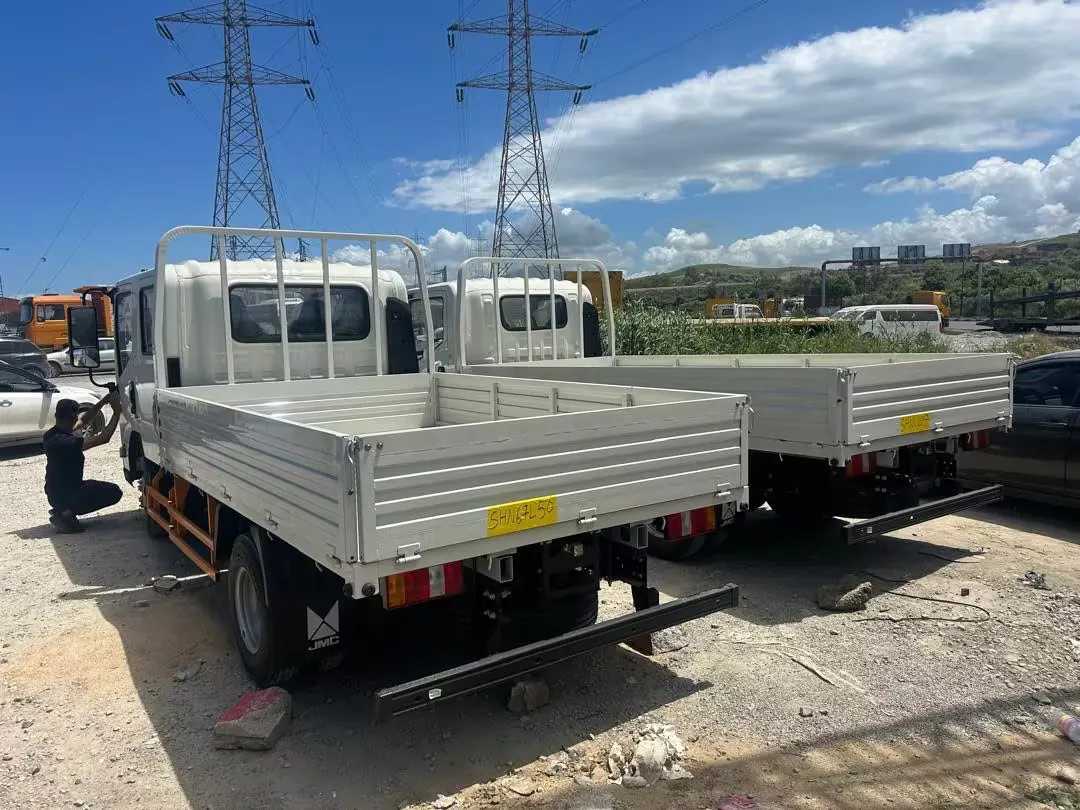
We supplied two white JMC dropside trucks to our customer in Algeria: one single cab and one double cab. After collecting them from the port, the customer sent us photographs of the trucks together.

A single cab and a double cab in one order
The order combined two different cab arrangements on white JMC dropside trucks. The single cab has one row of three seats; the double cab has two rows with five seats. Both vehicles are diesel trucks with opening side panels around the cargo deck.
The seating arrangement is the clearest difference between the two. In the customer’s front photograph, the longer double cab sits beside the single-cab truck. The rear photograph shows the two cargo bodies, their headboards and the closed side panels.
| Specification | Configuration |
|---|---|
| Single-cab truck | One unit; one row, three seats |
| Double-cab truck | One unit; two rows, five seats |
| Shared configuration | JMC chassis brand, diesel power and a dropside body |
| Cab colour | White on both trucks |
The destination and collection update
Djen Djen was the destination port for this Algeria order. We followed up with the customer to ask whether the trucks had arrived. The customer confirmed receipt and shared a vehicle photograph, then sent a further update after taking the trucks out of the port.
The front and rear photographs above came from that follow-up. They show the two trucks together after collection, with both cab arrangements and cargo bodies visible. The customer also sent us a short message: “Thanks, they are very good trucks.”


Planning the seating and cargo space together
For a similar order, start with the number of people who need to travel in each vehicle. Here the two arrangements provide three seats and five seats respectively. That is a useful starting point for comparing the cabs, but the cargo requirements still need their own specification.
Tell us the dimensions and weight of the goods, the cargo-body length you need and how the truck will be loaded. Those details help us review the cab and body as one vehicle. The dropside arrangement gives access through the side panels as well as the rear; the loading method and size of the goods determine which openings matter most.
When comparing quotations, check the body dimensions and rated payload for each proposed truck. Two vehicles can share a brand, colour and body style while having different seating and cargo specifications.
Compare usable deck space, not just body length
For your own truck, measure the goods with their packaging and supports included. A pallet, stillage or bundle may need clearance around it for handling and securing. Ask for the finished internal length and width of the body, with the side panels closed, rather than relying on the external dimensions alone.
The loading method matters too. If a forklift will load from the side, show where it will approach and how much room is available to lower the panels. If a crane will load from above, describe the size and position of the load on the deck. Posts, hinges and the headboard should be shown on the body drawing so the loading arrangement can be reviewed.
Side-panel height is worth specifying separately. Higher panels change access to the load; they do not establish a higher payload or replace an agreed cargo-securing arrangement.
For a fuller comparison of body layouts, see our dropside and flatbed truck guide.
Allow for the people and equipment on board
When comparing a three-seat and a five-seat configuration, give the intended number of occupants for each truck. Ask what the quoted ready-for-work vehicle mass already includes, such as fuel, occupants, tools and securing equipment. Items already included should not be deducted twice; anything excluded still needs to be accounted for.
The available cargo allowance also depends on the completed body and axle limits. A heavy item near the rear can load the axles differently from the same item placed farther forward, even when the total cargo weight stays the same. For a delivery route, describe how the remaining load will be arranged after some goods have been unloaded.
A drawing with cargo positions and an agreed mass schedule makes two quotations easier to compare. Ask for these to be updated if you add a rack, toolbox or other equipment before confirming the order.
The dimensions and weight checks are explained in our dropside body size and payload guide.
Quoting a mixed order
If you need both single-cab and double-cab trucks, send the quantity and requirements for each separately. For example, list the passenger count and cargo dimensions against each cab type, then give the destination port for the order.
We can use that information to discuss the two configurations with you. The JMC pair shown here is an example of supplying different cab arrangements within one order; your vehicle specification should follow the people and goods you need to carry.
Single cab or double cab?
Tell us how many trucks you need, your seating preference and the cargo-body requirements. We can discuss the two configurations with you.