HOWO Wrecker Truck Order Project for Palau — 4 t Winch Project

This confirmed-order record concerns a HOWO wrecker truck for Palau. The recorded project configuration includes a 4×2, left-hand-drive chassis, 3360 mm wheelbase, 5300 × 2200 mm recovery bed, 4-ton winch loading, 4-ton tow loading, and 3-ton rear-arm lifting. These are recorded values, not tested recovery results or vehicle payload. A separate six-image set shows a flatbed recovery layout but is not linked to the project records. Buyers should verify casualty-vehicle fit, completed mass and axle loading, braking and ABS requirements, recovery ratings, restraints, and Palau acceptance before approval.

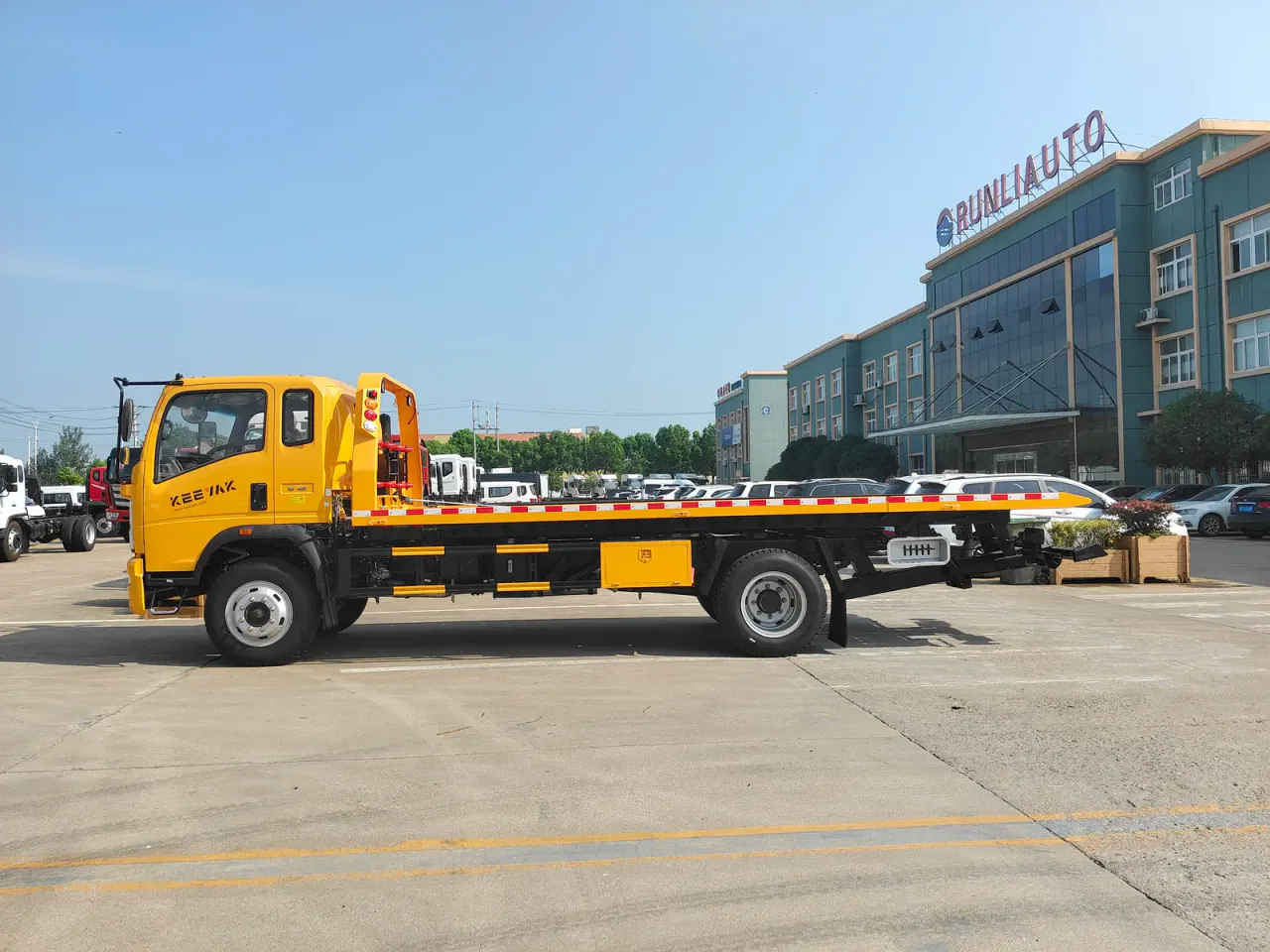
HOWO Not stated in the project records reviewed wrecker truck configuration presented against a plain background
Destination
Palau
Vehicle
HOWO Not stated in the project records reviewed
Configuration
3360 mm wheelbase; 5300 × 2200 mm recovery bed
Shipment
Confirmed order; production, shipping, export, and delivery not evidenced
Evidence
Order record + separate media

Project at a glance

The project record connects the destination, vehicle and configuration to the recorded order stage.

FieldRecorded Project Information
DestinationPalau
Project statusConfirmed order; production, shipping, export, and delivery not evidenced
Chassis brandHOWO
Vehicle typeWrecker truck
Recorded vehicle configurationHOWO tow/wrecker truck, 4×2, left-hand drive
Primary recorded specification3360 mm wheelbase; 5300 × 2200 mm recovery bed
Recorded recovery valuesWinch loading: 4 tons; tow loading: 4 tons; rear-arm lifting: 3 tons
Recorded engine lineYN4102QBZL; 116 hp; 3760 ml; Euro 3
Brake and ABS entryAir brake; recorded without ABS
Evidence reviewedInternal order record, recorded project configuration, raw vehicle description, editorial QA record, media manifest, and six separate photographs

HOWO Not stated in the project records reviewed recorded technical configuration

These values come from the reviewed project PI.

The values below are the recorded case configuration, not test results, production confirmation, or delivery evidence.

SpecificationRecorded Value
Destination countryPalau
Chassis brandHOWO
Standard vehicle typeWrecker truck
Drive configuration4×2
Steering positionLeft-hand drive
Engine modelYN4102QBZL
Engine power116 hp
Engine displacement3760 ml
Recorded emission levelEuro 3; destination acceptance and the exact completed-vehicle documentation require confirmation
Chassis/cab options entryA/C; recorded without ABS and without central locking
Front/rear axle values2.4 / 4.2 tons, as written in the project record; the exact rating definition requires confirmation
Wheelbase3360 mm
BrakeAir brake
Tyre7.50R16
Recovery bed5300 mm long × 2200 mm wide × 4 mm thick
Rear lifting length1300 mm
Winch entryRecorded winch loading: 4 tons; wire rope: 21 m
Tow-system entryRecorded tow loading: 4 tons; rear-arm lifting: 3 tons
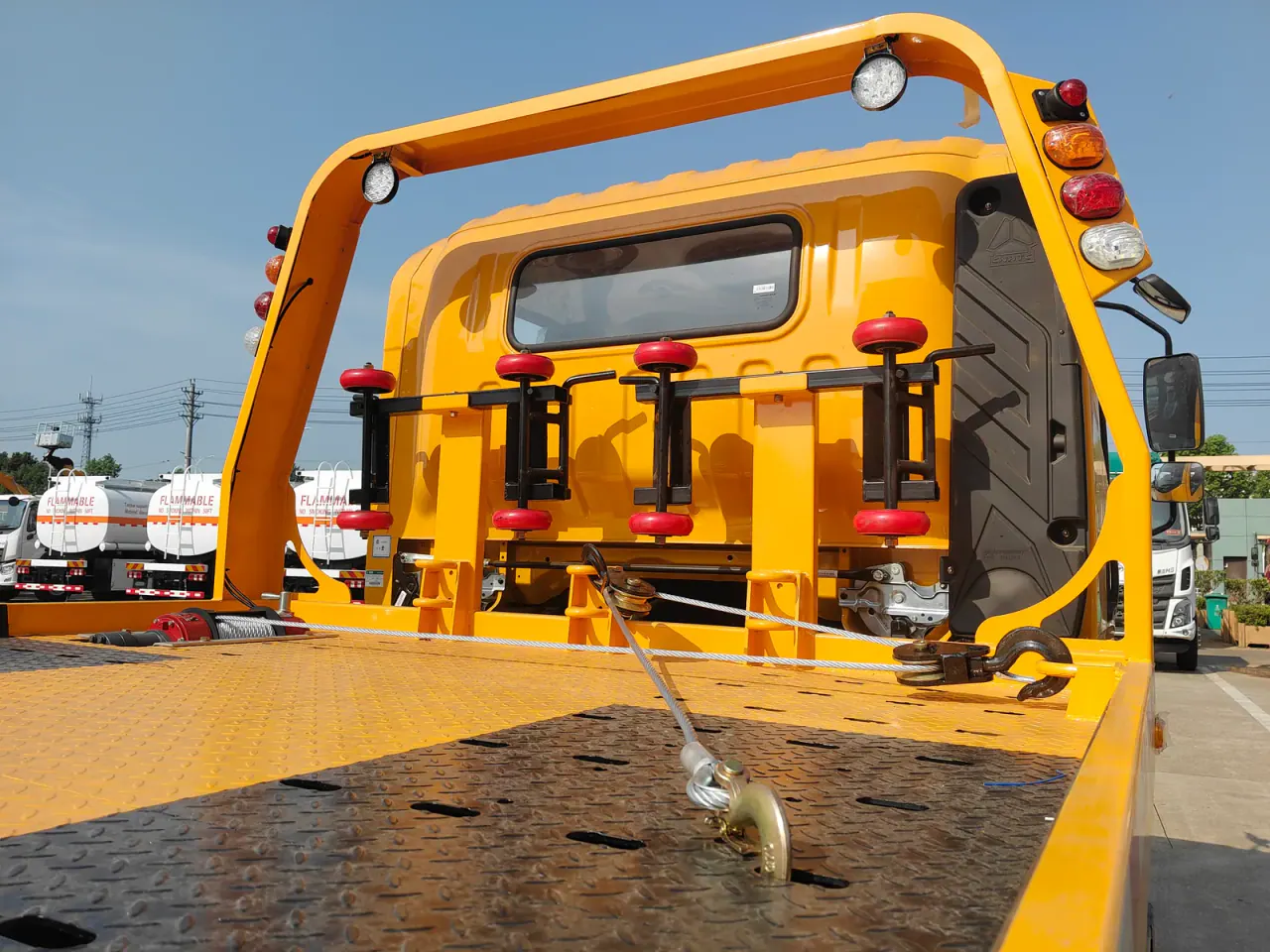
Recorded accessoriesTwo rear work lights; four tie-down straps; two sets of auxiliary trolleys; warning light; reflective strip; L-shaped tyre holder

What These Specifications Mean for Buyers

Recorded SpecificationPractical InterpretationWhat to Confirm for a Similar Order
3360 mm wheelbase and 4×2 driveThese affect manoeuvrability, traction, axle distribution, body packaging, and the casualty positions the completed chassis can support.Exact chassis designation, completed mass, loaded axle calculations, turning requirements, traction needs, and body-builder approval.
5300 × 2200 mm recovery bedRecorded external bed dimensions do not by themselves establish usable loading area, loading angle, deck rating, or casualty fit.Usable length and width, tilt/slide travel, loading angle, deck rating, overhang, centre-of-mass limits, and approved vehicle positions.
4-ton winch loading and 21 m wire ropeThis is a recorded winch-system value, not vehicle payload or proof of tested line pull in every rope layer.Winch model, line pull by layer, rope specification, brake, anchors, fairlead, duty cycle, test record, and approved rigging.
4-ton tow loading and 3-ton rear-arm liftingThese are separate recorded recovery-system values and must not be merged into one vehicle-capacity claim.Component definitions, rating plates, load cases, extension/geometry limits, axle loads, tests, and approved towing procedures.
Front/rear axle values of 2.4 / 4.2 tonsThe project record lists these axle values, but safe loaded operation also depends on completed empty mass and casualty position.Whether the values are rated capacities, plus certified empty and loaded axle calculations for representative recoveries.
Air brake; recorded without ABSABS absence is a material configuration point, not a minor convenience option. It can affect buyer risk assessment and destination acceptance.Current Palau registration and safety requirements, chassis documentation, braking tests, and whether an ABS-equipped chassis is required for the intended duty.
Euro 3 entryThe recorded engine line states Euro 3, but this does not prove completed-vehicle emissions approval in Palau.Accepted emissions level, fuel compatibility, documentary evidence, inspection route, parts, and diagnostic support.

Configuration Suitability and Limitations

This Configuration May Be Suitable For

The recorded flatbed-style wrecker configuration may suit breakdown recovery and workshop transfers only after controlled documents confirm that the casualty vehicle fits the usable bed, winch, tow system, rear arm, chassis, axle, tyre, and restraint limits. Carrying a casualty with its road wheels off the road may reduce some towing-related risks, but suitability still depends on vehicle placement and loaded axle distribution. These are possible applications, not a recorded Palau duty or a tested-capacity statement.

A Different Configuration May Be Needed When

A different chassis class, wheelbase, drive type, bed dimension, deck rating, winch system, wheel-lift, underlift, boom, outrigger, braking package, or auxiliary equipment may be required for buses, heavy trucks, long-wheelbase vehicles, locked wheels, low ground clearance, severe collision damage, off-road extraction, unstable loads, electric-vehicle incidents, restricted access, or Palau-specific road limits. An ABS-equipped or different-emissions chassis may be needed if required by the buyer’s risk controls or current local acceptance route. The buyer must match the equipment to defined casualty and recovery scenarios.

What Is a Wrecker Truck?

A wrecker truck is a vehicle equipped to recover, carry, or tow disabled vehicles using rated recovery equipment. Depending on its design, it may use a tilting and sliding carrier bed, winch, wheel-lift, underlift, recovery boom, or a combination. Buyers also search for recovery truck or tow truck. A flatbed carrier loads the casualty onto a deck; a wheel-lift or underlift raises part of it while other wheels remain on the road. Equipment types are not interchangeable, and each component, anchor, axle, tyre, and restraint system has its own rating.

Recorded Intended Use and Typical Applications

Intended Use Recorded for This Project

The project configuration records a flatbed, winch, tow system, and rear-arm arrangement, but it does not state the intended casualty vehicles or recovery duty. The buyer should provide the heaviest and longest expected casualty vehicles, wheelbases, tracks, ground clearances, tyre and steering conditions, likely damage, road environment, and whether carrying, towing, or off-road recovery is required.

Typical Applications of This Vehicle Type

Typical uses include breakdown response, workshop transfers, roadside clearance, and movement of inoperable light vehicles when the casualty fits the equipment ratings. Accident scenes, locked wheels, damaged steering, unstable loads, off-road pulls, and electric vehicles can require specialist procedures, additional equipment, isolation measures, and trained responders.

Key Specifications Buyers Should Compare

Decision FactorWhy It MattersQuestions to Ask the Supplier
Casualty-vehicle envelopeThe recorded case gives recovery-system values but not the mass, length, wheelbase, clearance, damage, or immobilization conditions they cover.Which defined casualty vehicles and conditions can the 5300 × 2200 mm bed, winch, tow system, and rear arm handle under approved procedures?
Winch, tow, and rear-arm ratingsThe project configuration separately lists 4-ton winch loading, 4-ton tow loading, and 3-ton rear-arm lifting. Each function has different geometry and load cases.Provide component models, rating plates, load charts, line pull by rope layer, structural tests, limits, and approved recovery methods.
Completed mass and axle distributionThe quoted 2.4/4.2-ton axle values do not replace completed empty and loaded axle calculations.Confirm the meaning of the quoted axle values and provide certified calculations for loading, transport, and representative casualty positions.
Braking, ABS, and emissionsThe project configuration states air brake, no ABS, and Euro 3. These affect risk assessment, maintenance, and destination acceptance.Does Palau accept the exact braking and emissions configuration, or is an ABS-equipped or different-emissions chassis required?
Restraints, visibility, and supportFour straps, rear work lights, a warning light, and auxiliary trolleys are listed, but safe roadside operation depends on their ratings and procedures.Which rated lashing points, wheel restraints, controls, emergency stops, warning-light approvals, manuals, training, diagnostics, and critical spares are supplied?

What the Palau importer should confirm before ordering

Confirmation ItemWhy It MattersWho Should Confirm It
Customs entry and classificationPalau Customs controls points of entry and imports, but its public role page does not approve this configuration.Palau Bureau of Customs and Border Protection and licensed customs broker
Registration and vehicle permitsThe project configuration identifies a 4×2, left-hand-drive HOWO recovery truck, but Executive Order 462 does not provide a model-specific acceptance decision.Traffic and Motor Vehicles Unit and competent justice/public-safety authority
Brakes, ABS, and emissionsThe project configuration states air brake, without ABS, and Euro 3. Only current local review can determine whether that configuration is acceptable for import, registration, and intended operation.Competent Palau authority, importer, and qualified compliance adviser
Completed dimensions, mass, and axle loadsThe quote gives bed and axle values but not completed dimensions, GVW, empty mass, or loaded axle calculations. These affect road access, registration, bridges, manoeuvring, and safe recovery.Supplier engineer, importer, and competent road authority
Warning lights and roadside operationPermitted colours, scene control, responder authority, and traffic procedures must be local.Bureau of Public Safety and relevant operating authority
Driver licence, business permission, and insuranceRecovery service may involve distinct driver, commercial, incident-scene, and liability obligations.Competent Palau authorities, insurer, and legal/compliance adviser
Parts, corrosion, hydraulics, and maintenanceIsland logistics and marine exposure can affect downtime and component life.Buyer’s technical team, supplier, and local service provider

Common Selection Mistakes

  1. Treating the media-folder labels “4500” and “6. 5 m” as project values despite the recorded 3360 mm wheelbase and 5300 mm bed length.
  2. Calling “4 tons” vehicle payload when the project configuration uses that value separately for winch loading and tow loading.
  3. Treating quoted winch, tow, or rear-arm values as tested performance without component ratings, load cases, and test evidence.
  4. Assuming the recorded no-ABS chassis is acceptable without current Palau registration and safety confirmation.
  5. Checking quoted axle values but not completed empty mass and loaded axle distribution during loading and transport.
  6. Using reference photographs or a winch line as substitutes for the signed equipment schedule and a complete rated restraint system.

What Buyers Can Learn From This Project

  • A recorded project configuration can add useful detail without proving production, testing, shipping, or delivery.
  • The recorded 3360 mm wheelbase and 5300 mm bed length must remain separate from the media folder’s “4500” and “6. 5 m” labels.
  • Winch loading, tow loading, rear-arm lifting, and vehicle payload are different decision fields.
  • The quoted no-ABS, Euro 3 configuration requires explicit destination and buyer review.
  • Bed, recovery equipment, restraints, chassis, completed mass, axle loading, brakes, tyres, and local acceptance must be approved as one system.

What to confirm for a repeat order

The recorded 3360 mm wheelbase; 5300 × 2200 mm recovery bed can be a comparison point, not an automatic specification for another buyer. Recalculate the route, mass, cargo access, Palau acceptance path for the next vehicle.

Inputs, controlled records and responsible parties for a comparable order
WorkstreamInputs to confirmRecord requiredWho confirms it
Recovery jobsOperating task, route conditions, intended load, work cycle and performance target.Controlled duty-cycle and performance requirement sheet.Buyer / fleet operator and vehicle supplier
Rated equipmentCargo dimensions, clear door openings, internal layout, lining, restraint and optional equipment.Controlled cargo drawing and signed option list with installation locations.Buyer, vehicle supplier and body or fit-out provider
Mass and stabilityTarget payload or rated capacity, full model codes, completed tare, axle loads and tyre limits.Controlled technical sheet plus completed mass and axle-load calculation.Vehicle supplier, body engineer and buyer
Palau rulesSteering position, service plan and current Palau import and registration checklist.Document-responsibility list and written importer confirmation.Importer, licensed electrician, supplier and competent local authority

Who confirms what before the next import

KEEYAK coordinates the comparison and open-item review. The vehicle supplier owns product records; the buyer owns the duty cycle; the Palau importer and competent local parties own local acceptance and filing decisions.

Responsibility and timing for a comparable import
OwnerResponsibilityWhen
Buyer / fleet operatorDefine the wrecker truck task, cargo, route, payload target, stop pattern and service expectations.Before configuration selection
Vehicle supplier / manufacturerConfirm the exact model and major component codes, controlled technical data, ratings, warranty and product records.Before quotation and production release
Body or fit-out providerConfirm cargo dimensions, door openings, installed options, restraint, finished mass and axle-load effects.Before fit-out approval
Palau importer / customs brokerObtain the current customs, import and filing checklist for the exact completed vehicle.Before shipment commitment
Competent local authority / adviserDecide vehicle acceptance, registration and road-use requirements.Before import and registration
KEEYAK project teamCompare the buyer inputs with the recorded configuration and identify items that still require supplier or local confirmation.During configuration review

Palau HOWO Not stated in the project records reviewed project FAQ

What configuration is recorded for the Palau case?

It records a HOWO 4×2, left-hand-drive tow/wrecker truck with a 3360 mm wheelbase and a 5300 × 2200 mm recovery bed. It also lists 4-ton winch loading, 4-ton tow loading, 3-ton rear-arm lifting, air brakes, and a Euro 3 engine line. These are project values, not tested-capacity or delivery claims.

Are 4500 and 6.5 m confirmed project specifications?

No. Those values appear only in the matched media-folder label. The project configuration instead records a 3360 mm wheelbase and a 5300 mm bed length. Because the media has no shared order or vehicle identifier, the labels cannot be redefined, averaged, or used to prove the recorded configuration.

Does 4 tons mean the vehicle payload?

No. The project configuration uses 4 tons separately for winch loading and tow loading, while it lists 3 tons for rear-arm lifting. It does not state vehicle payload, GVW, completed mass, or a universal recovery capacity. Each function needs its own definition, rating evidence, geometry, operating limits, and axle-load assessment.

Does the recorded configuration include a flatbed wrecker body?

Yes. It lists a recovery bed, winch, tow loading, rear-arm lifting, straps, auxiliary trolleys, and warning equipment. The separate photographs still cannot be described as the ordered truck.

Is ABS included in the recorded project configuration?

No. The project configuration states that the chassis is without ABS. This is a material configuration point that should be reviewed against the buyer’s braking-risk requirements and current Palau import, registration, and vehicle-safety requirements. If ABS is required or preferred, the supplier should document a different chassis configuration.

Can the photographs verify the recorded dimensions and ratings?

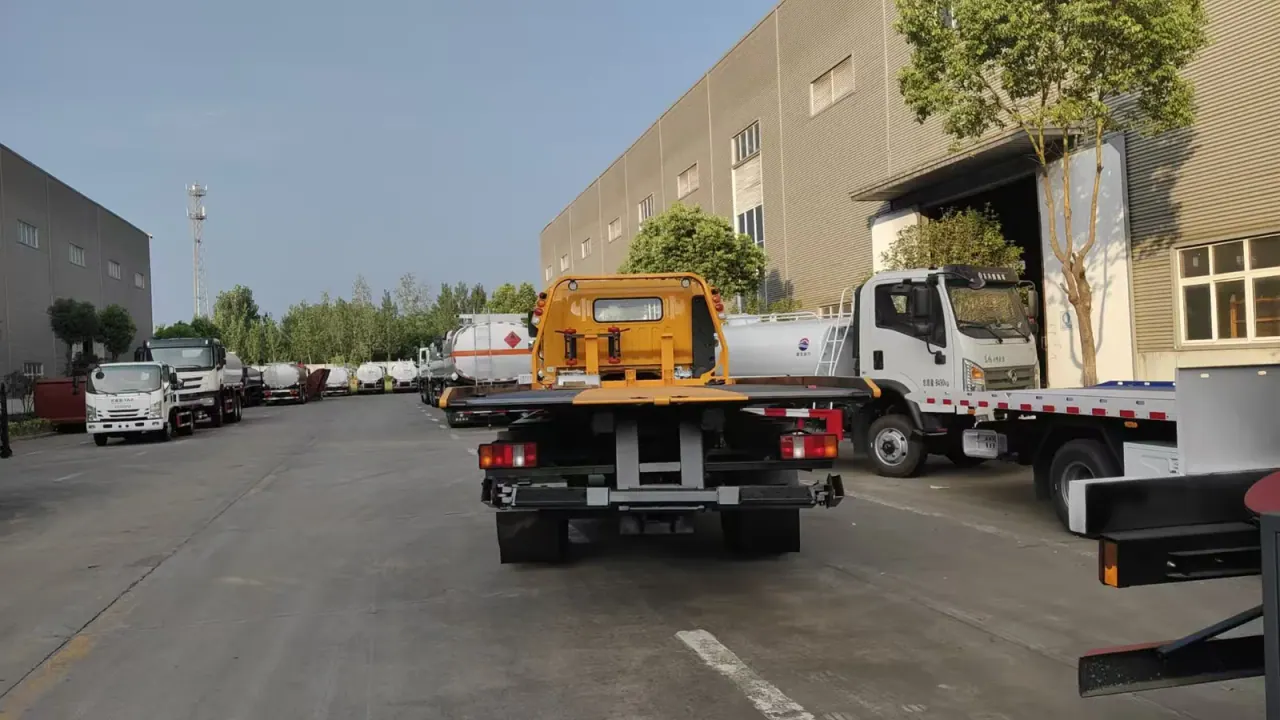
No. The photographs have no shared order, VIN, or project-ledger identifier, and their folder labels differ from the recorded values. They can illustrate a visible flatbed, winch area, and rear loading structure only. Controlled drawings, rating plates, calculations, and tests must verify the project configuration.

Do the Palau government sources approve this configuration?

No. The Customs page describes border and revenue functions, while Executive Order 462 identifies Traffic and Motor Vehicles Unit responsibilities. Neither is a model-specific technical acceptance decision. The importer should obtain current written confirmation covering customs, registration, inspection, vehicle limits, warning equipment, and operations.

What should a buyer submit for a similar wrecker?

Submit the destination country, intended recovery duty, casualty-vehicle envelope, required vehicle payload and separately required recovery ratings, preferred chassis, steering position, ABS requirement, emissions requirement, usable bed needs, road and terrain conditions, loading scenarios, required wheel-lift or underlift, warning equipment, restraints, spare parts, and local document checklist.

Evidence and public boundaries

The recorded project stage and technical configuration are supported by separate records. Customer identity, prices, document numbers, VIN, vessel details and contacts are withheld.

KEEYAK reviewed the internal order record, recorded Palau/HOWO tow-truck configuration, raw vehicle description, six selected WebP images, media manifest, and associated editorial QA record. Customer identity, internal references, quantity, price, freight, payment terms, trade terms, delivery terms, sales information, and other commercial details are not disclosed. Project tables below identify recorded case values. They do not convert listed ratings into tested capacity or prove the completed vehicle’s performance. The photographs support visible equipment only and remain unlinked to the destination order. Their “4500” and “6. 5 m” folder labels do not match the recorded 3360 mm wheelbase and 5300 mm bed length. General recovery-vehicle explanations and Palau confirmation items are procurement guidance, not evidence of conformity, customs acceptance, registration, or operating permission. No production, inspection, shipping, export, or delivery stage is claimed.

  1. P1
    Project PIRestricted project record · reviewed 14 July 2026
    Supports
    Palau, HOWO Not stated in the project records reviewed, Wrecker Truck, quantity and the recorded technical configuration.
  2. M1
    KEEYAK media manifest and 4 public-safe configuration imagesAuthorized public-safe media · reviewed 14 July 2026
    Supports
    Visible configuration and layout observations.
  3. D1
    SAE J2512 — Towing Equipment, Ratings, and Practices Public context · reviewed 14 July 2026
    Supports
    Manufacturer-family or general regulatory context cited in this article.
  4. D2
    Palau Bureau of Customs and Border Protection Public context · reviewed 14 July 2026
    Supports
    Manufacturer-family or general regulatory context cited in this article.
  5. D3
    Palau Executive Order 462 Public context · reviewed 14 July 2026
    Supports
    Manufacturer-family or general regulatory context cited in this article.
  6. D4
    Palau Bureau of Public Safety Public context · reviewed 14 July 2026
    Supports
    Manufacturer-family or general regulatory context cited in this article.

How this project record was prepared

Author
KEEYAKExport Project Documentation
Technical review
KEEYAK Technical TeamConfiguration and evidence review
Updated
Public country context reviewed on the same date
Method
Project facts, order-stage facts, configuration media and public context were checked as separate evidence layers.

Looking to plan a similar procurement?

Send the destination, required job or cargo, target payload or capacity, route and site conditions, preferred chassis, operating constraints and importer document checklist. KEEYAK can turn those inputs into a comparable configuration review.